
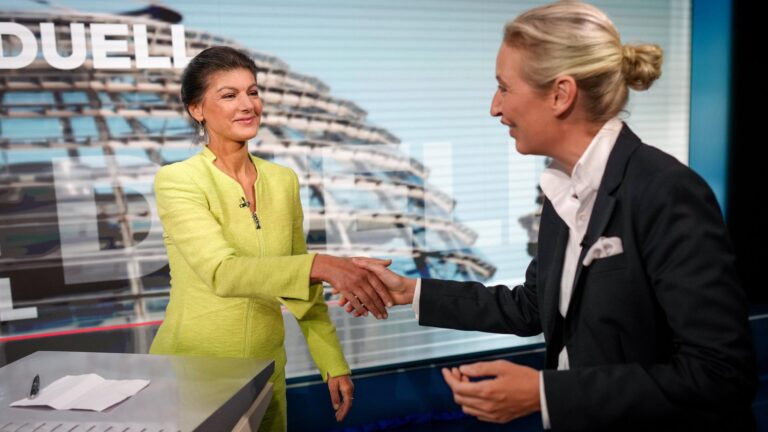
Twenty-one members of the Sahra Wagenknecht Alliance (BSW) in the German state of Saxony-Anhalt simultaneously resigned from the party. Those leaving included members of district councils and local party leaders from Halle, Burgenlandkreis, and Mansfeld-Südharz. In a joint statement, they cited the party leadership’s authoritarian style, undemocratic competition for internal positions, and BSW’s increasing political rapprochement with the far-right Alternative for Germany (AfD) as the principal reasons for their departure. They stressed that they were unwilling to support a political course that increasingly mirrors AfD’s rhetoric and emphasized their determination to preserve their own democratic political convictions. In response, Daniel L. Dietrich, head of the BSW’s regional organization in Saxony-Anhalt, accused the departing members of indirectly helping preserve the political dominance of the Christian Democratic Union (CDU).
The departure of twenty-one politicians from the left-populist BSW illustrates the deepening internal crisis within the party, particularly regarding its increasingly visible political convergence with the AfD. At the same time, the incident demonstrates that a significant group of German politicians remains willing to openly oppose political radicalization and defend democratic principles despite growing pressure within the country’s increasingly polarized political environment.
The controversy also raises broader concerns regarding the internal political culture of both the BSW and the AfD. Reports of rigid internal discipline, centralized decision-making, authoritarian leadership practices, and limited tolerance for internal criticism reinforce concerns about both parties’ commitment to democratic norms. Should either political force significantly expand its influence or participate in future governments, such organizational practices could raise broader questions regarding political pluralism, internal party democracy, and the protection of democratic rights and civil liberties in Germany.
Beyond the immediate personnel dispute, the crisis reflects a broader strategic dilemma confronting the BSW. Since its establishment, the party has sought to position itself as a left-populist alternative to Germany’s traditional political establishment by combining economic interventionism, expansive social welfare policies, and criticism of neoliberal economic policies with restrictive positions on migration and increasing skepticism toward European Union policies. However, its growing overlap with the AfD on issues such as migration, sanctions against Russia, military assistance to Ukraine, and criticism of the federal government has generated mounting concerns among many party members that the BSW risks sacrificing its distinct political identity in pursuit of protest voters.
The resignations therefore represent more than an internal organizational dispute. They illustrate an emerging struggle over the party’s long-term strategic direction—whether it should preserve its identity as an independent democratic left-populist movement or increasingly compete with the AfD by adopting elements of its political messaging. This debate is likely to shape not only the future of the BSW but also the broader configuration of Germany’s opposition politics ahead of forthcoming state and federal elections.
For Germany’s political system, the significance of this crisis extends well beyond the fortunes of a single party. Continued fragmentation of the political landscape, particularly within eastern Germany, could complicate coalition formation, strengthen protest parties, and further polarize public debate. These developments would also create a more favorable environment for external influence operations seeking to exploit domestic political divisions and weaken Germany’s ability to pursue coherent policies within NATO and the European Union.
BSW, the AfD, and the Strategic Future of Germany’s Protest Politics
The resignation of twenty-one members from the BSW organization in Saxony-Anhalt is not merely evidence of an internal party crisis but also reflects deeper disagreements over the party’s long-term strategic orientation and its place within Germany’s political system. Although the Sahra Wagenknecht Alliance (BSW) and the Alternative for Germany (AfD) increasingly adopt similar positions on migration, sanctions against Russia, military assistance to Ukraine, criticism of the European Union, and distrust of Germany’s traditional political establishment, significant ideological differences continue to separate the two parties.
The BSW presents itself as a left-populist movement that combines economic interventionism, expanded social protections, stronger state regulation of the economy, and greater protection of workers’ rights with more restrictive migration policies and criticism of the European Union’s current political direction. In contrast, the AfD remains fundamentally a right-wing populist party advocating economic liberalism, reduced state intervention, stricter immigration controls, stronger national sovereignty, and a fundamental reassessment of European integration. Consequently, the growing convergence between the two parties is driven primarily by shared opposition to the political establishment rather than genuine ideological compatibility.
Since establishing the BSW, Sahra Wagenknecht has repeatedly rejected the possibility of entering a formal coalition with the AfD, emphasizing fundamental disagreements over economic policy, democratic governance, and constitutional values. Nevertheless, in several eastern German states, representatives of both parties have increasingly cooperated informally at the local level, particularly during votes concerning migration policy, energy policy, and criticism of state governments. It is precisely this pattern of pragmatic cooperation that has become the principal source of internal conflict within the BSW, as many party members regard even informal collaboration with the AfD as incompatible with the party’s democratic identity.
The events in Saxony-Anhalt suggest that the conflict has now evolved beyond routine personnel disputes into a struggle over the party’s strategic future. One faction seeks to preserve the BSW as an independent democratic left-populist alternative, while the leadership increasingly appears willing to compete directly for the AfD’s protest electorate by adopting similar political narratives. Although such a strategy could broaden the party’s electoral appeal in the short term, it simultaneously risks eroding the BSW’s distinctive political identity and alienating moderate supporters who originally viewed the party as a democratic alternative to both the traditional political establishment and the far right.
The current crisis also reflects the distinctive political dynamics of eastern Germany. More than three decades after reunification, many eastern federal states continue to experience lower levels of trust in federal institutions, persistent socio-economic disparities, and significantly stronger electoral support for protest parties. Within this political environment, both the BSW and the AfD compete for many of the same voters—residents of industrial regions, smaller cities, and rural communities who express dissatisfaction with migration policy, sanctions against Russia, rising living costs, and the performance of the federal government. As competition for this electorate intensifies, both parties increasingly rely on similar political messaging, reinforcing internal tensions within the BSW while simultaneously strengthening the AfD’s ability to attract dissatisfied voters.
Future Scenarios
Several medium-term scenarios appear plausible.
Scenario 1 – Controlled Centralization .
The party leadership successfully consolidates authority around Sahra Wagenknecht, strengthens internal discipline, and suppresses internal dissent. Additional resignations by regional officials remain likely, particularly among members opposed to the party’s strategic convergence with the AfD’s protest agenda. While this approach would preserve organizational unity, it would simultaneously weaken regional party structures and reduce the diversity of internal political debate.
Scenario 2 – Organizational Fragmentation.
The BSW gradually divides into a pragmatic leadership faction and a democratic reformist wing. This could result in the creation of separate political platforms or the departure of members to parties such as Die Linke, the SPD, or local civic organizations. Such fragmentation would substantially reduce the BSW’s electoral competitiveness ahead of future state elections and diminish its influence within Germany’s opposition landscape.
Scenario 3 – Incremental Political Convergence with the AfD.
Without entering formal coalition agreements, the BSW and the AfD increasingly cooperate at the local level through coordinated voting on selected issues, joint opposition to state governments, and support for mutually beneficial political initiatives. Such cooperation would likely deepen the BSW’s isolation from Germany’s mainstream democratic parties and significantly reduce its prospects of participating in future governing coalitions at either the state or federal level.
Strategic Assessment
For Germany’s political system, the significance of the BSW’s internal crisis extends well beyond the future of a single political party. It reflects the gradual erosion of the traditional political “firewall” surrounding the AfD in parts of eastern Germany, intensifying competition for the protest vote and contributing to the fragmentation of the country’s political landscape.
If the convergence of political narratives between the BSW and the AfD continues, Germany may experience deeper societal polarization, increasingly complex coalition negotiations, and reduced political stability at both the state and federal levels. A more fragmented Bundestag and weaker governing coalitions would complicate Berlin’s ability to pursue consistent domestic and foreign policies, particularly regarding NATO, the European Union, sanctions against Russia, and continued support for Ukraine.
From a broader strategic perspective, such political fragmentation would also create more favorable conditions for foreign influence operations. Russia has consistently sought to exploit political divisions within European democracies to weaken Euro-Atlantic cohesion, undermine support for Ukraine, and reduce the effectiveness of coordinated Western policies. Although the current BSW crisis is fundamentally a domestic political development, its long-term consequences could extend beyond Germany’s internal politics by creating opportunities for external actors to capitalize on an increasingly polarized political environment.
Russian Interests, the AfD, the BSW, and the Potential Expansion of the Crisis
Which Party Better Serves Russian Interests: The AfD or the BSW?
From the Kremlin’s perspective, both the Alternative for Germany (AfD) and the Sahra Wagenknecht Alliance (BSW)contribute—albeit in different ways—to Russia’s broader strategic objective of weakening Germany’s political cohesion and reducing Berlin’s support for Ukraine. However, the AfD currently represents the more valuable long-term political partner because of its larger electoral base, stronger regional structures, and greater capacity to influence public debate, particularly in eastern Germany.
The AfD consistently promotes positions that closely align with key Kremlin narratives, including calls to end military assistance to Ukraine, lift sanctions against Russia, restore economic cooperation with Moscow, and reassess Germany’s relationship with the European Union and NATO. Its growing electoral support enhances its ability to shape political discourse, complicate coalition formation, and increase polarization within German politics. Although the AfD remains largely excluded from governing coalitions due to the political Brandmauer (“firewall”) maintained by mainstream parties, its continued electoral growth provides Moscow with a valuable instrument for undermining political consensus inside Germany.
The BSW serves Russian interests in a more indirect manner. Unlike the AfD, it appeals to left-wing, socially oriented, and traditionally anti-militarist voters who might otherwise support the Social Democratic Party (SPD), Die Linke, or the Greens. By advocating negotiations with Russia, criticizing sanctions, and opposing continued military assistance to Ukraine, the BSW introduces skepticism toward Germany’s Ukraine policy within segments of the electorate that have historically supported mainstream democratic parties. This broadens the social and political reach of narratives favorable to Moscow beyond the traditional far-right constituency.
From a strategic perspective, the Kremlin benefits most when both parties expand simultaneously. The AfD weakens Germany’s political center from the right, while the BSW exerts pressure from the left. Together, they contribute to the fragmentation of the political landscape, making coalition formation increasingly difficult and reducing the likelihood of a broad political consensus on issues central to German and European security policy.
How Is Russia Likely to Support Their Political Growth?
Although there is no publicly available evidence that the Kremlin directly finances either party, Russia possesses numerous instruments for indirectly strengthening political actors whose positions objectively align with its strategic interests.
These instruments include: amplification of favorable narratives through Russian state media and affiliated online platforms; coordinated social media campaigns designed to increase the visibility of selected political messages; disinformation operations targeting mainstream democratic parties while portraying protest parties more favorably; exploitation of migration, energy prices, inflation, and anti-war sentiment to reinforce anti-establishment narratives; support from proxy media outlets, online influencers, and networks that disseminate content favorable to Russia’s strategic objectives.
Rather than attempting to secure the electoral victory of any single political party, Moscow’s broader objective is to deepen political fragmentation, reduce public trust in democratic institutions, complicate coalition formation, and weaken Germany’s ability to pursue coherent policies within NATO and the European Union.
Could the Crisis Spread Beyond Saxony-Anhalt?
The internal conflict within the BSW is unlikely to remain confined to Saxony-Anhalt. Similar tensions may emerge in other eastern German states where the party competes directly with the AfD for the same protest electorate. States such as Thuringia, Saxony, Brandenburg, and Mecklenburg–Western Pomerania exhibit many of the political and socioeconomic characteristics that contributed to the current dispute, including comparatively stronger support for protest parties, greater skepticism toward the federal government, and more critical attitudes toward sanctions and military assistance to Ukraine.
Several factors increase the likelihood of additional internal disputes: growing competition with the AfD for anti-establishment voters; disagreements regarding informal cooperation with the AfD at the municipal and regional levels; centralized party leadership and limited internal decision-making; differing regional interpretations of the party’s political identity and long-term strategy.
If the party leadership continues to prioritize electoral competition with the AfD over maintaining its distinct ideological profile, further resignations among local officials and regional leaders are likely. Such developments could weaken the BSW’s organizational cohesion while simultaneously strengthening the AfD’s position as the dominant protest party in eastern Germany.
Strategic Forecast
The dispute in Saxony-Anhalt should therefore be viewed not as an isolated regional incident but as an early indicator of structural tensions affecting the BSW nationwide. As the party expands into additional federal states and confronts the practical realities of coalition politics, internal disagreements over ideology, leadership, and relations with the AfD are likely to become more pronounced.
From a broader European security perspective, continued fragmentation within Germany’s political system serves Russia’s strategic interests regardless of which opposition party ultimately benefits electorally. The Kremlin’s principal objective is not necessarily to bring any specific party to power but to weaken Germany’s political cohesion, complicate policymaking, and reduce Berlin’s capacity to maintain consistent leadership within NATO and the European Union. Should political polarization continue to deepen ahead of future federal elections, Germany could face increasingly fragmented coalition negotiations, more unstable governing majorities, and greater difficulties in sustaining long-term commitments on European defense, sanctions policy, and military assistance to Ukraine. Such an outcome would represent a significant strategic gain for Moscow by weakening one of Europe’s most influential political and economic powers without the use of conventional military force.

More on this story: Threat Assessment: Kremlin Exploitation of Pacifist Networks in Germany