
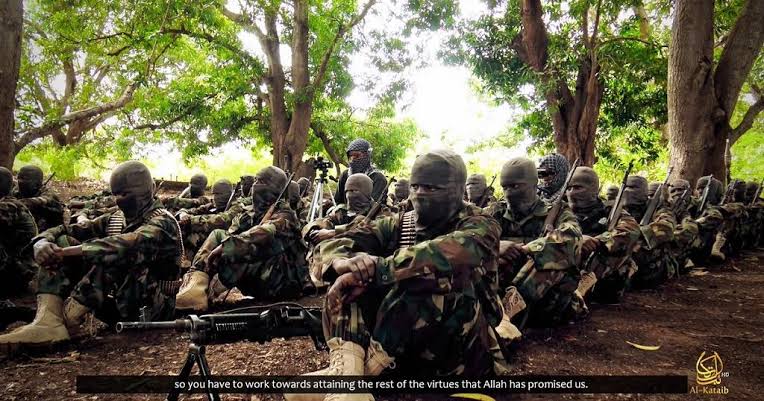
Somalia is entering a dangerous phase in which political fragmentation is becoming a force multiplier for jihadist expansion. The latest EUAA assessment indicates that Al-Shabaab’s resilience is not primarily the result of battlefield superiority, but of the Somali state’s inability to sustain unified pressure across federal and regional lines.
The militant group benefits from three interlocking vulnerabilities. First, disputes between the federal government and regional administrations undermine intelligence-sharing and joint operations. Second, weak institutions allow Al-Shabaab to preserve parallel systems of taxation, coercion, and dispute resolution. Third, international security support remains vulnerable to funding gaps, especially as the African Union mission faces severe financial constraints.
The most important warning sign is Al-Shabaab’s reported expansion in Hiiraan, Middle Shabelle, Bay, and Bakool. These areas are strategically relevant because they connect central and southern Somalia, provide access to rural support networks, and allow militants to threaten both local administrations and routes toward Mogadishu. The group’s model remains adaptive: it avoids fixed confrontation where state pressure is high, then re-enters contested districts when political attention shifts.
Puntland presents a contrasting case. Its operations in Bari against Islamic State show that coherent local command can degrade jihadist networks. Yet this also reveals Somalia’s structural problem: counterterrorism success is increasingly regionalized rather than national. Puntland can weaken IS in the northeast, while Al-Shabaab simultaneously exploits federal paralysis in the south and center.
Turkey’s expanded role changes the military balance but not the political equation. Turkish combat support may improve strike capacity, logistics, and training, but airpower cannot substitute for governance. Without reliable local administration after clearing operations, Al-Shabaab can return, intimidate communities, and punish collaborators.
The most likely scenario is continued fragmentation: Puntland maintains pressure on IS, while Al-Shabaab expands or consolidates influence in central and southern Somalia. A more dangerous scenario would emerge if AU mission funding declines faster than Somali forces can replace it, creating security vacuums around key towns and transport corridors.
Risk Matrix
| Risk | Probability | Impact |
| Al-Shabaab expands in central/southern regions | High | High |
| Federal–regional disputes block joint operations | High | High |
| IS recovers in Puntland after tactical losses | Medium | Medium |
| AU funding crisis weakens front-line security | High | High |
| Turkish support creates tactical gains without strategic results | Medium | High |
- Is Al-Shabaab coordinating expansion through local clan mediation or coercion?
- Can Puntland’s anti-IS model be replicated elsewhere?
- What Turkish aircraft and systems are being deployed in Somalia?
- Are Turkish-supported operations producing durable territorial control?
- How quickly would AU funding cuts reduce operational capacity?
- Is Al-Shabaab preparing a major campaign near Mogadishu?
- What role do Gulf, Turkish, Ethiopian, and Kenyan interests play in federal–regional divisions?
- Are IS fighters relocating from Bari into other Somali regions?
- Which districts are most vulnerable to militant re-entry after clearing operations?
Somalia’s central challenge is not the absence of military support but the absence of political cohesion. Al-Shabaab is expanding because the Somali state remains divided, externally dependent, and institutionally weak. Puntland’s progress against IS proves that jihadist networks can be degraded, but unless Mogadishu and the regional administrations restore security coordination, Somalia risks a two-track conflict: tactical victories in isolated theaters and strategic deterioration nationwide.
The disputes most directly disrupting anti-Shabaab operations are:
- Federal constitutional dispute with Puntland. Puntland rejected Mogadishu’s 2024 constitutional amendments, arguing they centralize power and were adopted without broad consensus. This has weakened federal–Puntland security coordination and diverts Puntland’s forces toward autonomous priorities rather than national anti-Shabaab planning.
- Jubaland–federal confrontation. The dispute over Jubaland’s leadership and local elections escalated into clashes between federal troops and Jubaland forces in Raskamboni, a strategic area near Kenya and Al-Shabaab zones. This directly drains forces, disrupts command unity, and creates openings for militants.
- Control of security forces and liberated areas. Mogadishu and federal member states disagree over who commands local forces, collects revenue, appoints administrations, and controls towns after Al-Shabaab is pushed out. This prevents durable “clear-hold-build” operations.
- Clan militia dependence. The federal government still relies on clan militias against Al-Shabaab, but clan rivalries can redirect armed groups from counterterrorism to local disputes. Human Rights Watch noted that Somalia continued relying on clan militias in anti-Shabaab operations.
- AUSSOM funding and political credibility crisis. The U.S. decision to stop backing UN logistical support for AUSSOM was reportedly linked partly to frustration with Somali political infighting and lack of progress against Al-Shabaab. This threatens food, fuel, transport, and medical support for nearly 12,000 AU troops.
Bottom line: the most damaging disputes are not ideological but institutional: who controls elections, forces, territory, revenue, and post-liberation governance. Al-Shabaab benefits when Somali actors fight over the state instead of coordinating against the insurgency.
There is substantial evidence that the al-Shabaab has infiltrated parts of the state, benefits from corruption, clan patronage, coercion, and economic relationships, and has sympathizers or coerced collaborators within government institutions. These relationships are opportunistic rather than ideological.
Does Al-Shabaab have supporters inside the Federal Government?
The answer is positive but through infiltration, corruption, coercion, and clan connections, not through an open political wing.
Intelligence penetration.Al-Shabaab’s intelligence service, the Amniyat, is regarded as one of the most capable clandestine organizations in East Africa.
Its functions include: infiltrating federal ministries; recruiting government employees; penetrating the Somali National Army (SNA); collecting intelligence on military operations; placing informants inside police and intelligence agencies; identifying officials for targeted assassinations.
The group has repeatedly demonstrated access to sensitive government information that would be difficult to obtain without insiders.
Corruption. Somalia remains one of the world’s most corrupt states.
Rather than “supporting” Al-Shabaab ideologically, some officials: sell military fuel; divert ammunition; leak operational plans; facilitate procurement; protect smuggling networks; accept bribes.
These activities indirectly strengthen the insurgency. Transparency International and anti-corruption assessments identify corruption and political patronage as major enablers of militant resilience.
Clan loyalties. Many government officials belong to clans whose members live in territories under Al-Shabaab influence.
Clan elders frequently: negotiate access; arrange prisoner exchanges; mediate taxation; seek local ceasefires.
These contacts should not automatically be interpreted as ideological support—they are often survival mechanisms in contested areas.
Coercion. Many local officials cooperate because refusal can mean: assassination; kidnapping; attacks on family members; destruction of property.
Al-Shabaab deliberately cultivates this climate of intimidation.
What is Al-Shabaab’s domestic base of support?
The organization draws support from several overlapping constituencies rather than a single social group.
Rural populations
Its strongest support lies in rural districts of south-central Somalia.
Many villages depend on Al-Shabaab because it: resolves disputes quickly; enforces contracts; protects trade routes; provides predictable taxation; maintains order where the state is absent.
In many areas, residents view Al-Shabaab as more effective than government institutions, even if they reject its ideology.
Business community
Contrary to common assumptions, many Somali businesses maintain pragmatic relationships with Al-Shabaab.
Large companies often pay taxes to both: the Federal Government; Al-Shabaab.
This is generally a business survival strategy rather than ideological support.
The organization has developed one of Africa’s most sophisticated illicit taxation systems. It taxes: telecommunications; trucking companies; livestock traders; ports; agricultural production; imports.
Some estimates suggest that a significant share of Al-Shabaab’s revenue is collected even in government-controlled Mogadishu.
Religious conservatives
Only a minority actively supports Al-Shabaab’s Salafi-jihadist ideology. However, some conservative religious networks may sympathize with aspects of its emphasis on Islamic governance while rejecting its violence.
Marginalized youth. Recruitment is strongest among: unemployed young men; internally displaced persons; communities lacking education; economically marginalized clans.
Drivers include: salaries; clan protection; coercion; ideology; revenge against local authorities.
Clan networks. Al-Shabaab is not a clan organization, but it skillfully exploits clan grievances.
It: mediates local disputes; recruits from multiple clans; avoids dependence on any single clan; punishes collective resistance while rewarding cooperation.
This flexibility has helped it survive leadership losses.
External base of support
Al-Qaeda. Al-Shabaab remains the largest and most capable formal affiliate of Al-Qaeda.
Al-Qaeda provides: ideological legitimacy; strategic guidance; some experienced operatives; access to global jihadist networks.
Operational financing, however, is largely generated inside Somalia.
Somali diaspora
The diaspora has historically contributed funds through: charitable donations; family remittances; informal money-transfer systems.
Most diaspora funding is humanitarian and lawful. A small minority of individuals have been prosecuted over the years for knowingly financing Al-Shabaab.
Gulf financial networks
Investigations have identified fundraising and financial facilitation involving individuals and informal networks in parts of the Gulf.
This does not imply state sponsorship. Most evidence points to private donors, charities abused by extremists, or commercial intermediaries rather than official government support.
Regional smuggling networks
The organization profits from: livestock trade; charcoal smuggling; sugar trafficking; road taxation; cross-border commerce with neighboring countries.
These criminal economies are a major source of financial resilience.
From an intelligence perspective, Al-Shabaab increasingly resembles a hybrid insurgent governance system rather than simply a terrorist organization. Its enduring strength is less a function of external sponsorship than of its ability to penetrate state institutions, exploit corruption, manipulate clan politics, and provide an alternative system of administration in areas where the Somali state remains weak. This combination of coercion, governance, and economic integration has enabled the movement to withstand sustained military pressure for more than fifteen years.

More on this story: Perspectives of Jihadism in Africa