
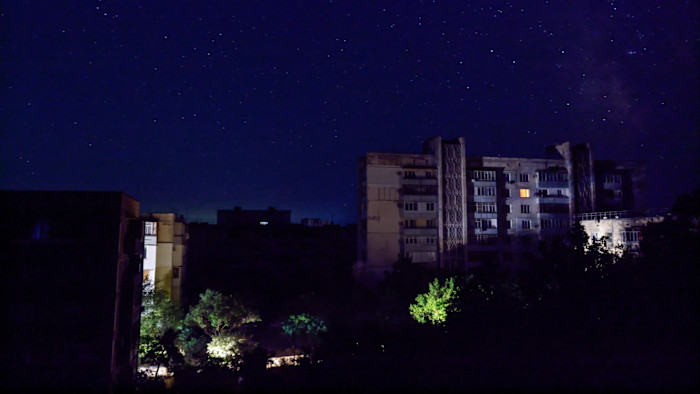
Following a large-scale drone attack, the Crimean Peninsula was left completely without electricity. The peninsula-wide blackout was officially confirmed by the hotline of Krymenergo, the regional electricity provider. Company representatives attributed the total power outage to an “external impact.” Emergency services continue to conduct repair and recovery operations in an effort to mitigate the consequences of the collapse. Although electricity has been restored in some areas, there is still no official estimate as to when power will be fully restored across the peninsula.
Damage to high-voltage transmission networks and strategic energy infrastructure—including the Simferopol high-voltage substation, a gas turbine power plant, and the TES oil and gas terminal at the Port of Kerch—resulted in a complete loss of electricity across every city and district of Crimea. The region has effectively become isolated, as the absence of a stable power supply has made it impossible to implement any meaningful restoration schedule.
The declaration of a regional state of emergency in Crimea and Sevastopol on June 26, 2026, amounted to a de facto acknowledgment by the local authorities of their inability to cope with the consequences of the total blackout and the accompanying fuel crisis. The decision to introduce strict centralized distribution of the remaining fuel reserves exclusively for emergency services and bread deliveries indicates a transition to survival mode under the guise of “manual crisis management.”
Traffic queues exceeding 2,400 vehicles at the Kerch Bridge demonstrate the inability of the Crimean administration to stabilize the situation. The spontaneous departure of residents, many transporting their remaining fuel supplies in jerrycans, has placed critical strain on the bridge’s already limited capacity.
The total blackout that has paralyzed the peninsula has effectively dismantled years of Russian state rhetoric regarding Crimea’s security. In 2014, Vladimir Putin declared that Crimea would become an “unsinkable aircraft carrier”—a symbol of strength and stability. Today, as a result of the Kremlin’s long-term strategic miscalculations and the continuing military campaign, the peninsula has become a massive logistical trap. The electricity outage has been compounded by a severe fuel shortage: gasoline is unavailable, generators cannot be refueled, and millions of Crimean residents have been left in darkness and isolation with little meaningful assistance.
The widespread power outage following damage to the Simferopol substation, the Kerch Thermal Power Plant, and the TES oil and gas terminal exposed the critical vulnerability of Crimea’s energy system. The blackout has undermined years of official claims regarding the reliability of the energy bridge linking Crimea with mainland Russia, while the collapse of scheduled rolling blackouts has demonstrated the authorities’ loss of effective control over the regional energy balance. This loss of control, combined with the absence of sufficient reserve generating capacity and the inability to rapidly restore damaged transmission networks, has transformed what might otherwise have been a temporary emergency into a prolonged infrastructure crisis.
The complete blackout in Crimea also reveals the true priorities of the Russian federal government toward the occupied peninsula. Since 2014, Moscow has primarily viewed Crimea as a strategic military stronghold. However, when confronted with a large-scale infrastructure emergency affecting millions of civilians, the authorities demonstrated their inability to ensure reliable electricity, fuel supplies, or logistics. By leaving the peninsula without power, fuel, and functioning supply chains, the Kremlin has exposed the lack of both the resources and a coherent contingency plan to protect the critical infrastructure that has been placed under continuous strain by Russia’s ongoing military campaign. While federal officials continue issuing routine appeals from the safety of Moscow, urging residents to “remain calm,” the peninsula faces an increasingly severe food, humanitarian, and economic crisis.
Official assurances that “the situation is under control” and that electricity supplies are gradually improving have been effectively undermined by the declaration of a regional state of emergency and the complete suspension of gasoline sales to private citizens. Attempts to downplay the scale of the crisis have failed. The combination of the total blackout and the shortage of fuel for backup generators has disrupted retail commerce, halted bread production, and interrupted regular food deliveries. Even emergency services, hospitals, and other elements of critical infrastructure reportedly remained without reliable electricity for more than twenty-four hours. The shutdown of banks and ATMs due to the power outage deprived Crimean residents of access to their own financial resources, triggering widespread financial paralysis across the peninsula.
Meanwhile, while ordinary Crimean residents remain without electricity, fuel, and essential supplies, the crisis appears to have had little impact on wealthy and politically connected Russians. Construction and renovation of luxury residential properties continue uninterrupted. Local authorities have accelerated the sale of protected natural areas, vineyards, and nature reserves for commercial development projects. At the same time, security agencies, military structures, banking interests, and major business groups have further restricted public access to the coastline, effectively dismantling long-standing claims that Crimea had been “saved from being plundered by Ukraine.”
According to local residents, the current redistribution of land and strategic assets exceeds any previous patterns of corruption witnessed on the peninsula. Rather than protecting Crimea’s natural and economic resources, the occupation authorities are accused of facilitating their systematic transfer into the hands of a narrow political and economic elite. While millions of residents face deteriorating living conditions, shortages of electricity, fuel, and basic necessities, privileged groups continue to secure access to valuable land, infrastructure, and investment opportunities.
The ongoing crisis therefore extends beyond a temporary infrastructure failure. It highlights broader structural weaknesses in the governance of occupied Crimea, including the vulnerability of its energy system, the fragility of its logistical network, and the limited resilience of civilian infrastructure under conditions of sustained military pressure. At the same time, it raises fundamental questions about the sustainability of Moscow’s long-term strategy for the peninsula, where extensive investment in military infrastructure has not been matched by comparable investment in civilian resilience or emergency preparedness.
The events also challenge one of the Kremlin’s central political narratives since 2014—that Russia’s annexation brought stability, security, and prosperity to Crimea. Instead, the peninsula’s dependence on a limited number of critical infrastructure nodes, combined with fuel shortages and disrupted supply chains, has exposed significant systemic vulnerabilities. The blackout demonstrates that, despite years of infrastructure projects and official claims of self-sufficiency, Crimea remains highly susceptible to disruptions affecting its energy and logistics networks.
From a broader strategic perspective, the crisis underscores the increasing importance of critical infrastructure as a decisive factor in modern warfare. The degradation of power generation, fuel distribution, and transportation networks not only affects civilian life but also has the potential to complicate military logistics, reduce operational flexibility, and increase the economic burden of sustaining long-term control over occupied territory. Consequently, the peninsula’s blackout represents not merely a local emergency but a development with wider implications for Russia’s ability to maintain Crimea as both a military hub and a politically stable occupied territory.
The peninsula-wide blackout exposes systemic vulnerabilities in Russia’s occupation model for Crimea and raises fundamental questions regarding Moscow’s ability to sustain the peninsula as both a strategic military hub and a viable civilian territory under conditions of prolonged war.
The simultaneous disruption of multiple critical energy facilities—including the Simferopol high-voltage substation, the Kerch Thermal Power Plant, and the TES oil and gas terminal—demonstrates the increasing vulnerability of Crimea’s integrated energy network. Years of Russian investment in the so-called “energy bridge” from mainland Russia failed to create a resilient and redundant power system capable of withstanding coordinated attacks on key infrastructure. Instead, the blackout revealed a highly centralized network in which damage to several critical nodes can rapidly cascade into a peninsula-wide collapse.
The crisis also highlights the growing tension between military requirements and civilian sustainability. Since the illegal annexation of Crimea in 2014, Moscow has transformed the peninsula into one of Russia’s most heavily militarized territories, concentrating naval, air-defense, aviation, and logistical assets while expanding military infrastructure to support operations in southern Ukraine and the Black Sea. However, investments in military capabilities appear to have outpaced improvements in civilian resilience. The blackout illustrates that military fortification alone cannot compensate for fragile energy infrastructure, inadequate reserve capacity, and limited emergency response capabilities.
Equally significant are the logistical implications. The simultaneous shortage of electricity and fuel creates a multiplier effect that extends well beyond civilian inconvenience. Fuel shortages reduce the ability to operate backup generators, sustain transportation networks, maintain communications infrastructure, and ensure continuous operation of hospitals, food distribution centers, and emergency services. Long queues at the Kerch Bridge and the emergency rationing of fuel suggest that Russian authorities have prioritized preserving strategic mobility while accepting severe restrictions on civilian movement and economic activity.
From a military perspective, prolonged energy disruptions could also complicate Russian operational planning. Modern military installations depend heavily on uninterrupted electrical power for communications, command-and-control systems, air-defense networks, radar installations, logistics management, ammunition storage, and maintenance facilities. Although military installations generally possess independent backup power, prolonged shortages of diesel fuel and maintenance capacity inevitably reduce operational resilience and increase the logistical burden on Russian forces stationed on the peninsula.
The declaration of a regional state of emergency is politically significant. Rather than demonstrating effective crisis management, it implicitly acknowledges that local occupation authorities lacked sufficient resources to restore normal functioning without extraordinary administrative measures. The introduction of centralized fuel distribution, restrictions on civilian gasoline sales, and prioritization of emergency services indicate that Russian authorities shifted from normal governance to crisis management under emergency conditions. Such measures inevitably undermine public confidence in the occupation administration’s ability to provide basic public services.
The blackout also weakens one of the Kremlin’s principal narratives since 2014—that Russian sovereignty would guarantee Crimea’s prosperity, security, and modernization. For more than a decade, Russian officials portrayed Crimea as a showcase of successful integration into the Russian Federation. The collapse of the peninsula’s energy system, however, illustrates the limits of that narrative. Rather than demonstrating resilience, the crisis exposed the dependence of Crimea on a small number of vulnerable infrastructure assets and the absence of sufficient redundancy to ensure continuity during wartime.
From an economic perspective, the consequences extend beyond temporary business interruptions. The suspension of banking services, disruption of retail commerce, interruption of food production, and paralysis of transportation networks collectively increase the long-term costs of occupying Crimea. Repeated infrastructure failures are likely to discourage private investment, accelerate capital flight, increase insurance costs, and deepen the peninsula’s dependence on financial transfers from the Russian federal budget.
The crisis also illustrates the emergence of a two-tier occupation economy. While ordinary residents faced shortages of electricity, fuel, banking services, and food supplies, construction of luxury residential developments and commercial exploitation of protected natural areas reportedly continued with limited interruption. This disparity reinforces perceptions that the occupation administration prioritizes politically connected elites, security structures, and investors over the welfare of the broader population. Such perceptions may gradually erode local confidence in Russian governance even among previously loyal constituencies.
From an information warfare perspective, the blackout presents a significant reputational challenge for the Kremlin. Russian state media has consistently portrayed Crimea as secure, economically successful, and fully integrated into Russia. A peninsula-wide infrastructure collapse directly contradicts these narratives and complicates Moscow’s efforts to demonstrate the effectiveness of its occupation. Consequently, Russian authorities are likely to intensify information management, restrict reporting on infrastructure damage, and emphasize restoration efforts while attributing responsibility exclusively to external attacks.
Perhaps the most important strategic implication concerns the changing character of the conflict. The attack demonstrates that critical infrastructure has become a decisive operational target capable of generating cascading effects across military logistics, civilian administration, economic activity, and public morale. Rather than focusing solely on the destruction of military equipment, operations against energy infrastructure can significantly increase the cost of sustaining Russian military operations while simultaneously exposing structural weaknesses in the occupation regime.
Ultimately, the blackout demonstrates that Crimea’s greatest vulnerability is no longer geographic isolation but systemic dependence on centralized infrastructure supporting both civilian life and military operations. The more extensively Moscow integrates the peninsula into Russia’s military architecture, the more civilian infrastructure becomes intertwined with military logistics, increasing the strategic consequences of disruptions to the energy system.
The blackout likely caused a temporary but meaningful degradation of Russian operational readiness in Crimea, especially in air defense, logistics, communications, fuel distribution, and base support. It probably did not fully disable Russian naval, air, or air-defense forces, because major military sites normally have backup generators and priority fuel allocations.
The strongest judgment is this: The blackout reduced Russia’s operational resilience in Crimea rather than immediately destroying its combat capability.
Likely effects
Russian forces were probably able to keep core military systems functioning on backup power, especially command posts, air-defense radars, air bases, naval facilities, and communications nodes. However, prolonged outages and fuel shortages would create several problems:
- Air-defense strain. Radar sites, S-300/S-400 batteries, Pantsir systems, electronic warfare units, and command nodes require stable power, fuel, and communications. Backup systems can sustain them for a period, but repeated outages increase maintenance pressure and reduce redundancy.
- Air operations disruption. Airfields need electricity for lighting, fuel pumping, maintenance, communications, storage, and air-traffic control. Combat aircraft can still operate, but sortie generation becomes harder if the outage is prolonged.
- Naval support degradation. The Black Sea Fleet’s shore infrastructure depends on power for repair facilities, fuel systems, ammunition handling, port services, and communications. Warships may remain operational, but base support becomes less efficient.
- Logistics bottlenecks. The fuel crisis is as important as the blackout. If fuel is rationed to emergency services and military users, civilian systems collapse first, but the military also faces higher transportation and distribution costs.
- Command-and-control vulnerability. Even if primary military networks survive, the blackout stresses civilian telecoms, transport management, administrative coordination, and local emergency systems that indirectly support military operations.
Probable level of degradation
Short term: moderate degradation.
Russia likely retained essential military functions, but with reduced redundancy, slower logistics, and higher dependence on emergency power.
If outages last several days: significant degradation.
Fuel shortages, generator fatigue, disrupted maintenance, and overloaded logistics could reduce air-defense readiness, delay repairs, and complicate military transportation.
If repeated strikes continue: cumulative degradation.
The main threat is not one blackout, but a campaign that repeatedly hits substations, fuel terminals, power plants, and transport nodes. That would force Russia to divert air-defense assets, engineering units, fuel reserves, and logistics capacity from frontline operations to Crimea.
Intelligence judgment
The blackout probably did not neutralize Russian forces in Crimea, but it exposed a critical weakness: Russia’s military posture on the peninsula depends on a fragile civilian-energy and fuel infrastructure. Crimea can remain a military hub only if Moscow can sustain electricity, fuel, communications, and transport under continuous strike pressure.
In operational terms, the blackout likely shifted Crimea from a secure rear base toward a contested logistics zone.
The blackout and accompanying fuel crisis are likely to have eroded public confidence in the occupation authorities, although the magnitude and durability of this effect remain difficult to assess due to the absence of reliable public opinion data and the highly restrictive political environment in occupied Crimea. While the crisis alone is unlikely to generate organized political resistance, it may contribute to the gradual deterioration of the occupation administration’s legitimacy by exposing deficiencies in governance, infrastructure resilience, and emergency preparedness.
For more than a decade, the Kremlin has justified its control over Crimea through a narrative centered on security, stability, and economic modernization. Russian state media consistently portrayed the peninsula as safer, more prosperous, and better managed than it had been prior to 2014. A peninsula-wide infrastructure collapse directly challenges these claims. The inability to maintain electricity, fuel distribution, banking services, food supplies, and transportation simultaneously undermines one of the occupation authorities’ principal sources of political legitimacy: their ability to provide public order and essential services.
The crisis is particularly damaging because it affects everyday life rather than abstract political issues. Electricity, fuel, access to cash, healthcare, food distribution, and transportation are immediate concerns that shape citizens’ perceptions of government competence. Infrastructure failures of this scale are therefore likely to have a greater impact on public confidence than isolated military incidents.
The fuel shortage further amplifies dissatisfaction. Reports of fuel rationing, long queues at petrol stations, restrictions on civilian gasoline sales, and congestion at the Kerch Bridge create visible indicators of administrative failure. Such disruptions reinforce perceptions that local authorities lack both adequate contingency planning and the logistical capacity to manage prolonged emergencies.
The crisis also highlights growing inequalities within occupied Crimea. Reports that commercial development projects, luxury real estate construction, and the privatization of valuable coastal land continued while ordinary residents experienced shortages of electricity, food, and fuel may reinforce perceptions that the occupation administration prioritizes politically connected elites over the broader population. This disparity risks widening the gap between official narratives of prosperity and the lived experience of ordinary residents.
Nevertheless, several factors are likely to constrain the political consequences.
First, the occupation authorities maintain extensive coercive capabilities through Russian security services, law enforcement agencies, and information controls. Public criticism remains associated with significant legal and personal risks, reducing the likelihood that dissatisfaction will translate into organized protest.
Second, Russian state media are expected to attribute responsibility for the blackout exclusively to Ukrainian attacks while emphasizing ongoing restoration efforts. By externalizing blame, the authorities may partially preserve support among residents who primarily consume state-controlled media.
Third, wartime conditions often produce rally-around-the-flag effects, at least temporarily. Some residents may interpret the infrastructure damage as an inevitable consequence of military conflict rather than evidence of administrative incompetence.
Strategic Implications
The blackout is unlikely to trigger immediate political instability in occupied Crimea. However, repeated infrastructure failures could gradually erode one of the Kremlin’s most important political achievements since 2014—the perception that Russian rule guarantees greater security and stability than any alternative.
If similar crises become more frequent, public dissatisfaction may increasingly focus not on the existence of the conflict itself but on the occupation authorities’ inability to provide reliable governance under wartime conditions. Such a shift would represent a significant strategic challenge for Moscow because the legitimacy of Russian control over Crimea has long rested on demonstrating administrative competence rather than relying solely on coercion.
While the Kremlin possesses substantial coercive and informational tools to contain immediate unrest, repeated failures affecting electricity, fuel, banking, and food security would progressively undermine the central narrative that Russian governance has brought stability, prosperity, and effective administration to Crimea. Over time, the cumulative effect of such crises may weaken the social foundations of Russian control more effectively than isolated military setbacks alone.
The Crimean blackout suggests that Russia’s occupation model may possess systemic vulnerabilities that extend beyond the peninsula. Although Crimea enjoys advantages not shared by other occupied territories—including direct connections to the Russian mainland through the Kerch Bridge and the energy bridge—its experience demonstrates that even heavily prioritized regions remain vulnerable when critical infrastructure is repeatedly targeted.
The crisis illustrates a broader structural problem within Russia’s occupation strategy: military control has frequently taken precedence over the development of resilient civilian infrastructure. Since 2022, Moscow has invested substantial resources in fortifications, military logistics, air-defense systems, and transportation corridors across occupied territories. However, civilian energy networks, reserve generating capacity, emergency fuel stocks, and infrastructure redundancy appear to have received comparatively less attention. As a result, attacks on a limited number of critical nodes can generate cascading effects that disrupt electricity, communications, transportation, banking, healthcare, and food distribution simultaneously.
The Crimean experience also highlights the risks associated with centralized infrastructure architecture. Russian occupation authorities have generally relied on highly centralized power grids, fuel depots, logistics hubs, and transport corridors rather than decentralized systems with significant redundancy. Such an approach may be efficient during peacetime but becomes increasingly vulnerable during sustained high-intensity conflict. Damage to one or several strategic facilities can rapidly propagate across multiple sectors, creating compound logistical and administrative crises.
The implications are particularly relevant for occupied areas of southern and eastern Ukraine. Unlike Crimea, these territories lack comparable logistical advantages. Many remain dependent on a limited number of rail corridors, highways, electrical transmission lines, and fuel distribution centers that operate within range of Ukrainian long-range strike capabilities. If similar attacks were conducted against these networks, Russian authorities could face even greater difficulties restoring essential services and sustaining military operations.
The blackout also underscores the growing interdependence between civilian infrastructure and military effectiveness. Modern armed forces depend on continuous supplies of electricity, fuel, communications, transportation, maintenance, and repair facilities. Consequently, infrastructure degradation affects not only civilian living conditions but also operational readiness. As civilian systems become less reliable, military logistics become more resource-intensive, requiring additional engineering units, fuel reserves, transport assets, and security personnel to maintain operational continuity.
Another significant lesson concerns the economics of occupation. Sustaining occupied territories during prolonged warfare requires continuous financial transfers, infrastructure repairs, emergency fuel deliveries, replacement equipment, and social support. Repeated attacks on critical infrastructure substantially increase these costs while reducing economic productivity. Over time, this may impose a growing fiscal burden on the Russian federal budget, particularly if multiple occupied territories require simultaneous reconstruction and emergency assistance.
The crisis further exposes limitations in Russia’s civil-defense and emergency-management capacity. Despite Crimea’s strategic importance and years of infrastructure investment, local authorities were compelled to introduce emergency governance measures, fuel rationing, and centralized resource allocation. If similar disruptions occurred simultaneously across several occupied regions, Russia’s ability to provide timely engineering support, replacement equipment, and emergency personnel could become increasingly strained.
From a strategic perspective, the blackout demonstrates that Russia’s occupation model remains heavily dependent on secure rear-area infrastructure. As long-range precision strikes continue to expand in range and effectiveness, rear areas that were once considered relatively secure may become contested operational spaces. This shifts the burden onto Russia to defend not only frontline forces but also extensive civilian infrastructure networks that underpin military logistics.
Strategic Implications
The principal lesson is not that Russia is incapable of sustaining occupied territories, but that its ability to do so becomes progressively more resource-intensive and vulnerable as the duration and intensity of the conflict increase. Infrastructure degradation compels Moscow to divert engineering units, air-defense assets, fuel supplies, and financial resources away from combat operations toward the maintenance of occupation governance and critical services.If Ukrainian long-range strikes continue to systematically target energy infrastructure, logistics hubs, transportation corridors, and fuel facilities, Russia may increasingly face a strategic dilemma: whether to prioritize military operations at the front or the protection and restoration of infrastructure essential for sustaining its occupation regime.