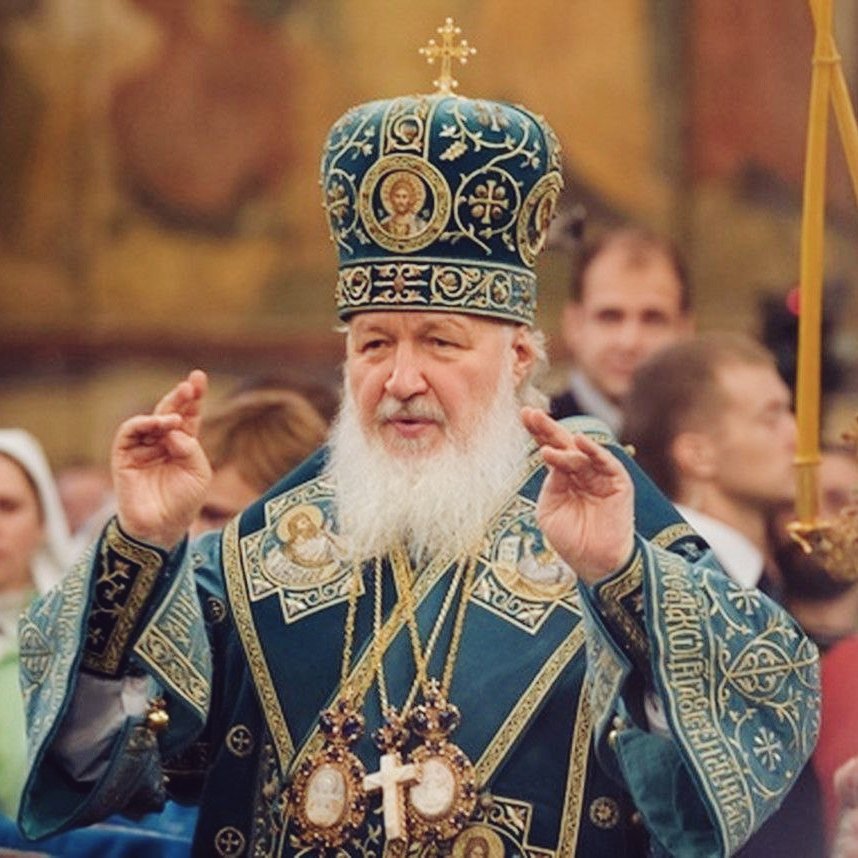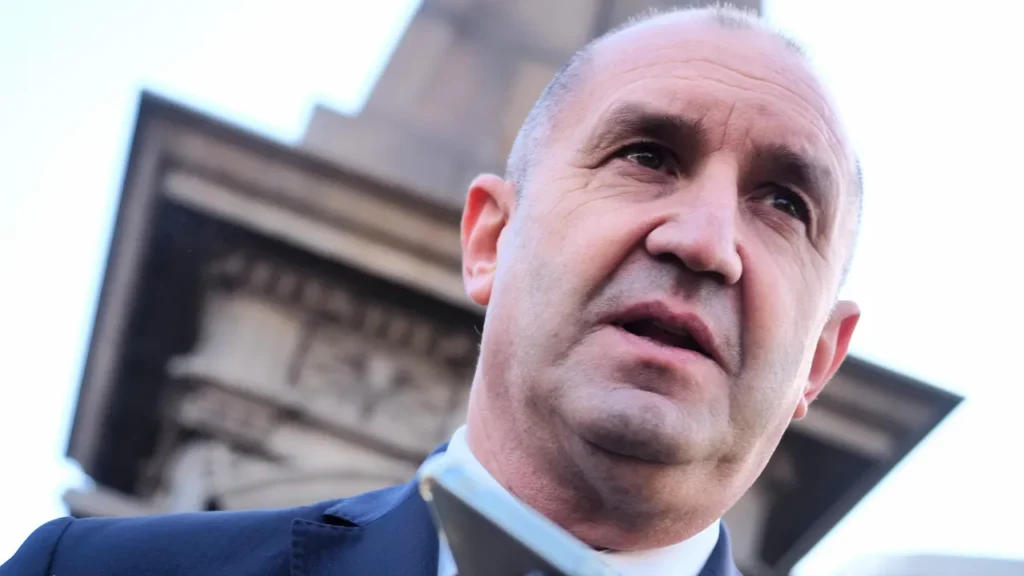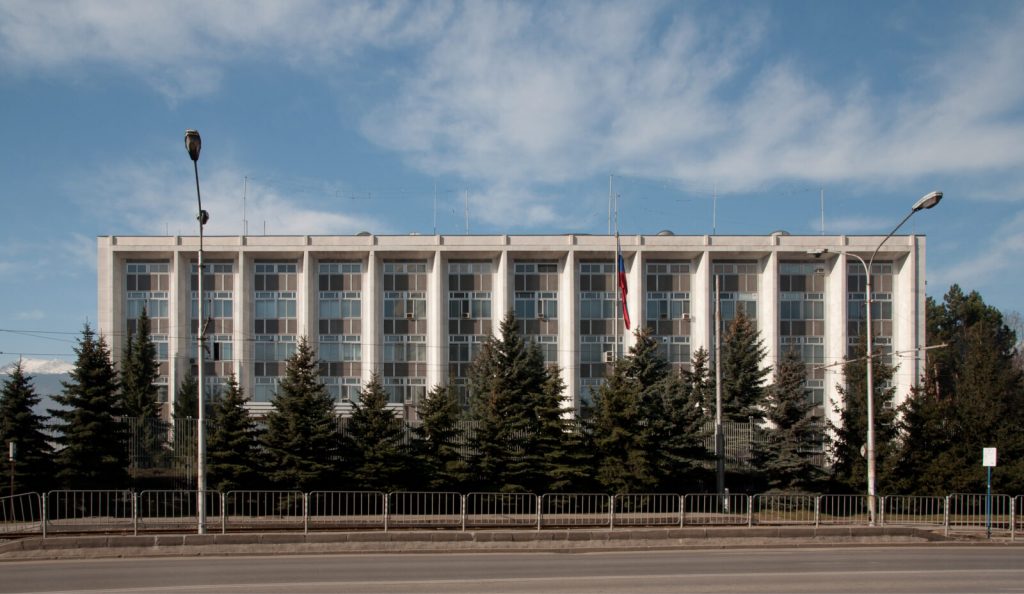

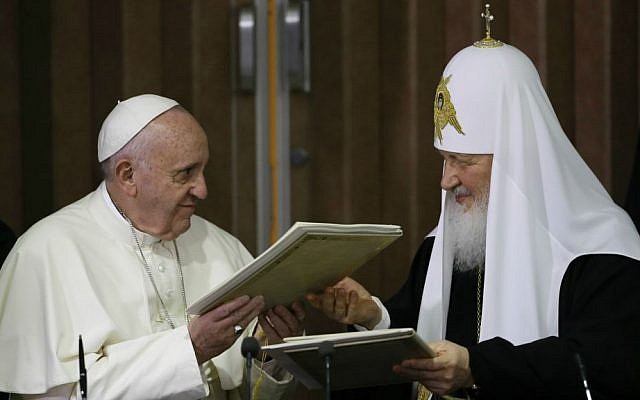
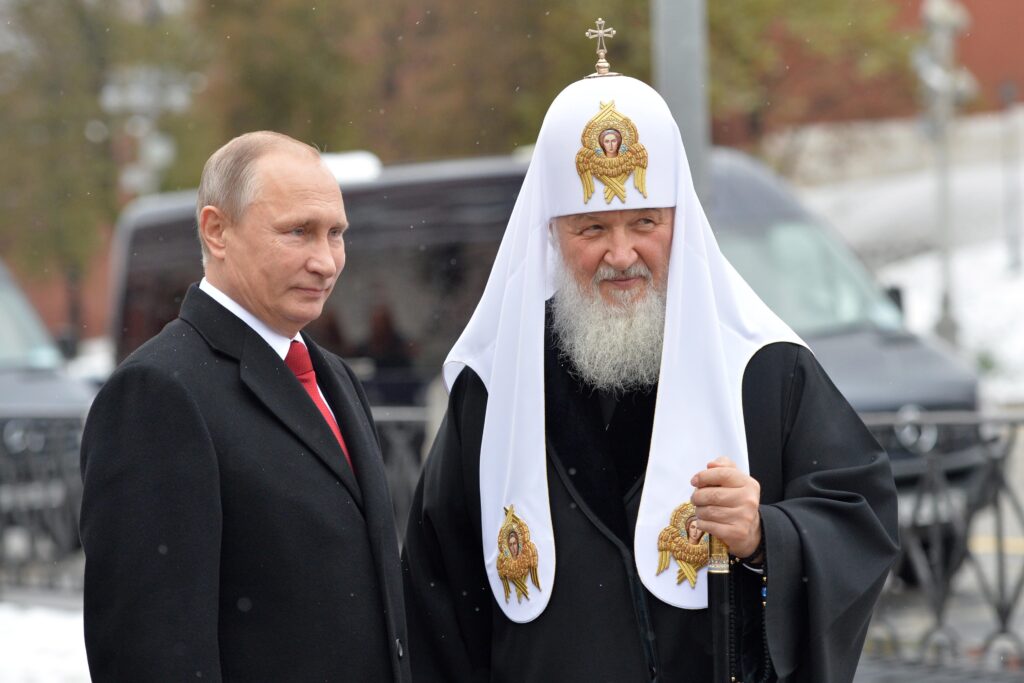
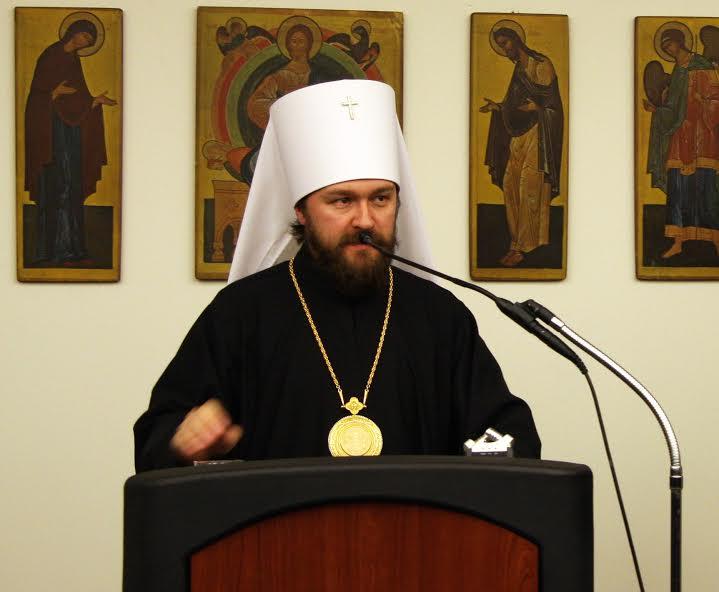
Italy has joined Bulgaria in expressing concern over the European Commission’s proposal to impose targeted sanctions on the head of the Russian Orthodox Church, Patriarch Kirill, as part of the European Union’s 21st package of sanctions against Russia. According to confidential information obtained by Politico, the Italian government’s position regarding Patriarch Kirill was influenced by concerns raised by the Vatican, which warned that sanctioning the head of a Christian denomination could establish an undesirable precedent. Discussions among EU member states over the contents of the forthcoming 21st sanctions package have also exposed divisions over maritime shipping. Greece, Malta, and Cyprus, whose tanker fleets remain involved in the maritime transportation of Russian oil, blocked the European Commission’s proposal to freeze the scheduled mid-July review of the price cap on Russian crude oil, currently set at $44 per barrel. Earlier, Greece and Malta also opposed a proposal to prohibit the provision of maintenance and servicing to Russian vessels, resulting in the suspension of that initiative during negotiations on the 21st sanctions package. Patriarch Kirill’s activities long ago ceased to be confined to the religious sphere and have instead become an integral component of Russia’s state war machine. Efforts by the governments of Italy and Bulgaria to portray Kirill merely as the leader of a Christian denomination ignore the reality that, under his leadership, the Russian Orthodox Church has evolved into a ministry of ideology and propaganda serving the Russian state. Kirill has not simply endorsed the war; he has become one of its principal ideologues. He declared Russia’s war of aggression against Ukraine to be a “holy war” and promised the remission of sins to Russian soldiers participating in the killing of Ukrainians. Sanctioning him therefore does not constitute “interference in religious affairs,” as claimed by Bulgarian Prime Minister Rumen Radev, but rather accountability for complicity in war crimes and the incitement of ethnic hatred. Italy’s reservations, reportedly shaped by the Vatican’s position, illustrate a dangerous conflation of religious freedom with political immunity. Attempts by Rome and the Holy See to preserve diplomatic channels with the Russian Orthodox Church or shield the religious sphere from sanctions demonstrate a fundamental misunderstanding of the nature of the contemporary Russian ecclesiastical structure. The Russian Orthodox Church is not an independent religious institution; it has effectively become a state ministry of ideology and, in practice, an extension of Russia’s security apparatus. Bulgaria’s decision to block the 21st sanctions package over Patriarch Kirill, supported by Italy, establishes a troubling precedent that risks weakening the credibility and coherence of the EU’s sanctions regime. Statements by Bulgarian officials claiming that “the era of the Crusades is over” represent a cynical distortion of reality. The true crusade against the civilized world is embodied in Patriarch Kirill’s own rhetoric. Blocking sanctions on the basis of religious sentiment or behind-the-scenes diplomacy not only serves the Kremlin’s interests but also demonstrates that Russia remains capable of exploiting soft power instruments to fracture European solidarity. Patriarch Kirill (Vladimir Gundyayev) is one of the principal architects of the “Russian World” (Russkiy Mir) doctrine—a neo-imperial ideology that denies the sovereign right of Ukraine and other post-Soviet states to exist as independent nations. He publicly blessed Vladimir Putin and the Russian Armed Forces in their war of conquest, the ultimate objective of which is the destruction of Europe’s post-Cold War security architecture and the restoration of a Russian imperial sphere of influence. The Russian Orthodox Church functions as a geopolitical instrument of the Kremlin; consequently, its leader should bear responsibility comparable to that imposed on Russian oligarchs, propagandists, and other enablers of the regime. Any concession by Bulgaria and Italy resulting in the exclusion of the head of the Russian Orthodox Church from the EU sanctions list would amount to a moral capitulation by the West and an implicit recognition that religious leaders may legitimize genocidal policies with impunity. The positions adopted by Sofia and Rome reveal a broader vulnerability within the European Union and provide the Kremlin with an opportunity to exploit religion as a tool for dividing European unity and manipulating religious sentiment for geopolitical purposes.
Italy’s reservations regarding the proposed EU sanctions against Patriarch Kirill are driven less by sympathy for the Kremlin than by a combination of Vatican diplomatic doctrine, concerns about precedent, and Italy’s traditional preference for preserving channels of dialogue in international crises. Nevertheless, these considerations risk producing strategic consequences that ultimately favor Moscow.
The Vatican has historically pursued Ostpolitik— maintaining dialogue with authoritarian governments even during periods of severe political confrontation. This approach was employed during the Cold War toward the Soviet bloc and continues today in relations with countries such as China and Russia. Within this framework, the Holy See is reluctant to endorse sanctions against the head of a major Christian denomination, fearing that such a measure could undermine its role as a neutral diplomatic actor and mediator in future negotiations.
From the Vatican’s perspective, sanctioning Patriarch Kirill could establish a precedent whereby religious leaders become direct targets of international sanctions. The Holy See is likely concerned that this precedent might later be invoked by authoritarian governments to justify restrictive measures against Catholic, Orthodox, Protestant, or other religious leaders under the pretext of national security or political activity. Consequently, its objections are rooted primarily in the protection of the institutional independence of religious authorities rather than in support for Kirill’s political positions.
Italy’s government has additional national considerations. Rome has traditionally favored consensus within the European Union while simultaneously avoiding measures that could permanently close diplomatic channels with Moscow. Italian foreign policy has long emphasized mediation, dialogue, and pragmatic engagement, reflecting both its geopolitical position and its economic interests. Although successive Italian governments have supported sanctions against Russia following the full-scale invasion of Ukraine, they have generally sought to distinguish between measures directed at state institutions and those affecting religious actors.
However, this distinction becomes increasingly difficult to sustain in the case of Patriarch Kirill. Unlike a conventional religious leader, Kirill has repeatedly endorsed Russia’s invasion of Ukraine, characterized it as a sacred mission, and provided theological justification for military aggression. His public statements have consistently aligned with Kremlin strategic narratives and have contributed to legitimizing violence as part of Russia’s broader neo-imperial project. In practice, he functions not merely as the head of a religious institution but as one of the principal ideological pillars of the Russian state.
This creates a fundamental tension between legal form and political substance. Formally, Kirill is protected by his religious office. Substantively, however, his conduct increasingly resembles that of a senior state propagandist and ideological mobilizer. Western sanctions have previously targeted individuals not because of their formal titles but because of their material contribution to aggression, war crimes, or the implementation of state policy. Applying a different standard solely because an individual occupies a religious office risks creating an inconsistency in the sanctions regime.
From the Kremlin’s perspective, Italy’s position offers a significant strategic opportunity. Moscow has consistently sought to frame sanctions against Kirill as evidence of Western hostility toward Christianity rather than as accountability for supporting aggression. Such a narrative enables Russia to portray itself as the defender of traditional Christian values while accusing Europe of persecuting religious institutions. This messaging is intended not only for domestic audiences but also for conservative political movements and religious communities across Europe, Latin America, Africa, and the Middle East.
More broadly, the debate illustrates one of Russia’s most effective hybrid warfare techniques: weaponizing institutions that traditionally enjoy political and moral immunity. By integrating the Russian Orthodox Church into the state’s strategic apparatus, the Kremlin creates dilemmas for democratic governments. Measures directed against individuals acting as political actors can then be portrayed as attacks on religion itself, complicating Western decision-making and fostering divisions within allied governments.
For Italy, the immediate diplomatic benefits of accommodating Vatican concerns may therefore come at a broader strategic cost. If Rome contributes to blocking sanctions against Patriarch Kirill, it risks reinforcing the perception that Russia can exploit religious sensitivities to obtain exemptions from collective European pressure. Such an outcome would not merely weaken the credibility of the EU’s sanctions policy but could encourage the Kremlin to make even greater use of religious diplomacy and ecclesiastical networks as instruments of influence within Europe.
Ultimately, the central issue is not whether Patriarch Kirill is a religious leader, but whether religious status should confer immunity when an individual actively legitimizes aggressive war and promotes narratives that facilitate violations of international humanitarian law. In this context, Italy’s position reflects the collision of two competing principles: the traditional protection of religious institutions and the growing recognition that certain religious authorities have become integral components of state-led hybrid warfare and geopolitical confrontation.
It is more appropriate to compare the logic of Vatican diplomacy than to equate Patriarch Kirill with Hitler or today’s Russia with Nazi Germany.
The Vatican’s current reluctance to support sanctions against Patriarch Kirill reflects a long-standing diplomatic tradition of preserving channels of communication with all parties in major conflicts. A similar approach characterized the papacy of Pope Pius XII during the World War II.
In both cases, the Holy See has prioritized institutional neutrality, believing that maintaining diplomatic access increases its ability to mediate, protect Catholic communities, and influence events behind the scenes. During World War II, this led to widespread criticism that the Vatican failed to condemn Adolf Hitler and Nazi atrocities with sufficient clarity. Historians remain divided: some argue that Pius XII’s quiet diplomacy saved lives, while others contend that his public silence carried significant moral costs.
A similar dilemma is emerging today. By opposing sanctions against Patriarch Kirill, the Vatican seeks to avoid establishing a precedent of sanctioning religious leaders and to preserve the possibility of future dialogue with the Russian Orthodox Church. Critics argue, however, that this risks conveying moral ambiguity toward an individual who has repeatedly justified Russia’s invasion of Ukraine in explicitly religious terms.
The analogy also has clear limits.
- During World War II, the Vatican sought to preserve its neutrality between belligerents while confronting an unprecedented humanitarian catastrophe.
- Today, the Holy See has repeatedly condemned the suffering caused by the war in Ukraine and has supported humanitarian initiatives, even while avoiding direct confrontation with Patriarch Kirill.
- Patriarch Kirill is not merely a passive religious leader under political pressure. He has actively endorsed the war, described it in spiritual terms, and provided theological justification for Russian military actions. This arguably makes him a more direct political actor than many religious leaders whom the Vatican has historically sought to shield.
From the Kremlin’s perspective, Vatican caution represents an opportunity. Russian information strategy has long attempted to frame any measures against Patriarch Kirill as attacks on Christianity itself rather than accountability for political conduct. If this narrative succeeds in influencing decision-making in Rome or other European capitals, Moscow gains a diplomatic advantage by exploiting the distinction between religious office and political activity.
The broader strategic lesson resembles one drawn from debates over the Vatican’s wartime diplomacy: strict institutional neutrality can preserve diplomatic channels, but it may also carry reputational and political costs if neutrality is perceived as reluctance to confront actors who actively legitimize aggression.
A More Precise Historical Analogy
Rather than comparing Rome’s current position directly to its attitude toward Hitler, a more accurate comparison is this:
The Vatican today faces a dilemma similar to that confronted by Pope Pius XII: whether preserving diplomatic access and institutional neutrality outweighs the moral and political costs of appearing insufficiently firm toward an influential figure who provides ideological support for aggressive war.
This analogy focuses on the decision-making logic of Vatican diplomacy rather than implying an equivalence between historical actors or conflicts, making it both more historically defensible and analytically rigorous.
The Holy See’s position can best be understood as the product of its diplomatic doctrine, ecclesiological principles, and institutional priorities, rather than an endorsement of the Russian Orthodox Church or its theology. At the same time, many Catholic theologians and observers have argued that this cautious approach has become increasingly difficult to reconcile with Patriarch Kirill’s public support for Russia’s war against Ukraine.
Several factors help explain the Vatican’s approach.
The Holy See distinguishes between theological disputes and diplomatic relations. The Vatican generally avoids becoming the arbiter of another Christian church’s internal doctrine. Even when Catholic theologians believe that another church has adopted erroneous or politically distorted teachings, the Holy See prefers dialogue over public condemnation.
This principle has guided Catholic relations not only with the Russian Orthodox Church but also with Oriental Orthodox churches, Protestant denominations, and other religious communities.
Several influential Vatican figures consistently advocate maintaining dialogue with the Moscow Patriarchate and oppose a complete rupture in relations. Their position reflects the Holy See’s diplomatic tradition rather than support for the Kremlin.
The principal figures are:
Cardinal Pietro Parolin
As the Vatican’s chief diplomat, Parolin has consistently argued that communication channels with the Russian Orthodox Church should remain open despite the war. He has emphasized that dialogue continues even during periods of severe tension and has defended the Holy See’s role as a potential mediator.
His approach reflects classic Vatican diplomacy: preserve dialogue; avoid irreversible confrontations; maintain the possibility of humanitarian mediation; protect Catholic communities in Russia.
Parolin has not defended Kirill’s statements supporting the invasion, but he has opposed completely isolating the Moscow Patriarchate.
Cardinal Matteo Zuppi
Pope Francis appointed Zuppi as his special peace envoy for Ukraine.
During his Moscow mission, Zuppi met Patriarch Kirill despite widespread criticism of Kirill’s role in legitimizing the invasion. The purpose was to preserve humanitarian dialogue, particularly regarding prisoners and deported Ukrainian children.
Zuppi belongs to the diplomatic tradition associated with the Community of Sant’Egidio, which emphasizes conflict mediation through engagement rather than isolation.
Cardinal Kurt Koch
Koch is responsible for Catholic-Orthodox relations.
He has continued advocating ecumenical dialogue with the Moscow Patriarchate despite the war, arguing that theological dialogue should not automatically cease because of political conflicts. His office has long been responsible for maintaining contacts with Orthodox churches worldwide.
Officials of the Vatican Secretariat of State
Career diplomats within the Secretariat generally support maintaining institutional relations with Moscow because they view: the Holy See as a neutral actor; dialogue as preferable to isolation; the Vatican as a potential future mediator.
This institutional culture dates back to Vatican Ostpolitik during the Cold War.
But there is another side
It would be inaccurate to portray the Vatican as uniformly sympathetic toward the Moscow Patriarchate.
Pope Francis publicly criticized Kirill after their March 2022 video call, warning: “The Patriarch cannot become Putin’s altar boy.”
This was one of the strongest public criticisms ever directed by a pope at the head of the Russian Orthodox Church. Francis also cancelled plans for another meeting with Kirill after concluding that such a meeting could be exploited by Moscow for propaganda purposes.
From a geopolitical perspective, it is more accurate to say that the Vatican protects the possibility of dialogue with the Russian Orthodox Church than that it protects the Russian Orthodox Church itself.
The Holy See distinguishes between: preserving institutional communication; endorsing Russian policy.
However, this distinction is not always reflected in international perceptions.
The Kremlin has repeatedly sought to use Vatican engagement as evidence that the Moscow Patriarchate remains a legitimate and indispensable interlocutor despite Kirill’s support for the war. Consequently, even limited Vatican contacts can be incorporated into Russian strategic messaging.
For Moscow, maintaining high-level dialogue with the Vatican serves three objectives: International legitimacy—demonstrating that the Russian Orthodox Church has not been isolated by the Christian world. Narrative management—portraying Russia as open to peace and religious dialogue despite the ongoing conflict. Strategic influence—using ecclesiastical diplomacy to complicate Western consensus on sanctions and broader policy toward Russia.
Thus, while there is no identifiable “pro-ROC faction” in the Vatican advocating the Kremlin’s agenda, there is a longstanding diplomatic current that prioritizes engagement over isolation. The strategic challenge for the Holy See is that this traditional approach can be exploited by Moscow as a component of its broader information and influence strategy.
Preserving Christian unity remains a strategic objective. Since the Second Vatican Council, the Catholic Church has pursued ecumenism—seeking greater cooperation and eventual reconciliation with other Christian churches.
The Moscow Patriarchate represents the world’s largest Orthodox Church by membership and has long been viewed as an indispensable participant in any future Catholic-Orthodox rapprochement. Publicly declaring its leadership doctrinally illegitimate could effectively end decades of ecumenical dialogue.
The Vatican prioritizes mediation. The Holy See traditionally seeks to maintain communication with all parties in armed conflicts.
This explains why it maintained diplomatic relations with the Soviet Union during the Cold War, continues dialogue with the People’s Republic of China despite significant disagreements, and keeps channels open with Russia today.
From the Vatican’s perspective, a mediator cannot easily perform that role if it becomes identified as a political adversary.
The Vatican avoids appearing to politicize religion. Officials in Rome are concerned that sanctioning or directly condemning the head of a church could blur the distinction between political accountability and religious office.
They worry that such a precedent might later be used by authoritarian governments to justify sanctions or persecution against religious leaders under the guise of combating political activity.
There are practical concerns for Catholics. The Catholic Church continues to operate in Russia, Belarus, and several countries where Moscow retains influence.
An openly confrontational policy toward Patriarch Kirill could expose local Catholic clergy and faithful to increased administrative restrictions or political pressure.
Many Catholic theologians argue that these considerations are becoming increasingly difficult to sustain.
Patriarch Kirill has repeatedly: characterized the invasion of Ukraine as a “holy” or spiritually justified struggle; framed Russian military actions as defending sacred civilization; portrayed Russian soldiers’ participation in the war in explicitly salvific or redemptive terms; integrated the ideology of the “Russian World” (Russkiy Mir) into religious discourse.
These statements have prompted numerous Orthodox and Catholic scholars to argue that the “Russian World” ideology represents a politicized distortion of Christian teaching because it subordinates theological principles to state power and national expansion.
In 2022, hundreds of Orthodox theologians signed the Declaration on the “Russian World” (Russkii Mir) Teaching, arguing that the doctrine constitutes a form of religious nationalism incompatible with Orthodox Christianity.
Similarly, Pope Francis himself publicly warned that “the Patriarch cannot become Putin’s altar boy,” signaling concern that Kirill had become too closely identified with the Kremlin’s political agenda.
The Holy See appears to believe that preserving its long-term capacity to engage, mediate, and maintain Christian dialogue outweighs the benefits of publicly declaring the Russian Orthodox Church’s leadership doctrinally compromised.
Whether that calculation remains sustainable is increasingly debated.
Many analysts argue that the Russian Orthodox Church under Kirill has evolved beyond a conventional religious institution into an instrument of Russian state policy. If that assessment is correct, treating it primarily through the framework of ecumenical dialogue may underestimate its political and strategic role.
From a geopolitical perspective, the Kremlin benefits from the Vatican’s restraint. Moscow has consistently portrayed criticism of Patriarch Kirill as an attack on Christianity itself, rather than as criticism of a religious leader’s political actions. By maintaining institutional neutrality, the Holy See reduces the risk of an open rupture with the Russian Orthodox Church, but it also creates opportunities for the Kremlin to argue that even the Vatican is unwilling to treat Kirill as a political actor.
This illustrates one of Russia’s broader hybrid strategies: embedding state objectives within institutions that traditionally enjoy moral authority and international protection, thereby complicating Western political and diplomatic responses.
Bulgaria’s position is fundamentally different from the Vatican’s, even though both have opposed sanctions on Patriarch Kirill. The Vatican’s concerns are primarily rooted in ecclesiology and diplomatic precedent, whereas Bulgaria’s position is shaped much more by domestic politics, historical ties with Russia, the influence of the Bulgarian Orthodox Church, and geopolitical calculations.
Bulgaria’s objections should be viewed less as a defense of religious freedom and more as the intersection of domestic political considerations and enduring Russian influence.
The Bulgarian Orthodox Church remains one of Russia’s most important religious partners.
Although the Bulgarian Orthodox Church is autocephalous, significant segments of its hierarchy have traditionally maintained close theological, historical, and personal ties with the Russian Orthodox Church.
For decades, Moscow has invested heavily in ecclesiastical diplomacy throughout the Balkans. The Russian Orthodox Church has served as an instrument for promoting the concept of a shared Orthodox-Slavic civilization, strengthening Russian soft power well beyond purely religious affairs.
Consequently, sanctioning Patriarch Kirill would create internal tensions within Bulgaria’s own religious establishment.
Bulgaria remains one of the most politically divided EU members regarding Russia.
Several political parties continue to advocate closer relations with Moscow, oppose military support for Ukraine, or criticize EU sanctions. Public opinion is also more divided than in many Western European countries, reflecting historical gratitude toward Imperial Russia for its role in Bulgaria’s liberation from Ottoman rule.
Supporting sanctions against Kirill therefore carries domestic political costs.
Rumen Radev has consistently argued that the war cannot be solved militarily and has repeatedly urged negotiations.
Although Bulgaria has fulfilled many NATO obligations, Radev has often expressed skepticism regarding expanding sanctions and military escalation.
His statement that sanctioning Kirill represents interference in religious affairs is consistent with his broader preference for de-escalation and diplomatic engagement.
Unlike Italy, Bulgaria is itself an Orthodox-majority country.
Government leaders understand that sanctions against one of global Orthodoxy’s highest-ranking figures could be interpreted domestically as an attack on Orthodoxy rather than on an individual who supports Russian aggression.
This makes the issue considerably more politically sensitive than it is in predominantly Catholic Italy.
5. Russian influence networks
Bulgaria has historically been one of the principal arenas for Russian influence operations in Southeastern Europe.
These networks have included: energy dependencies; business elites; political parties; intelligence assets; media outlets; religious institutions; cultural organizations.
Although Sofia has expelled Russian diplomats, diversified its energy supplies, and taken stronger action against Russian espionage since 2022, these legacy networks have not disappeared.
The debate over Kirill demonstrates that religious issues remain one of Moscow’s most effective influence mechanisms.
A broader strategic reading suggests that Bulgaria is also attempting to avoid domestic political controversy while preserving flexibility toward Moscow.
Unlike the Vatican, whose concerns focus on protecting the institutional independence of religion, Bulgaria’s position is inseparable from internal political calculations and the continuing influence of Russia within Bulgarian society.
The Kremlin has consistently used the Russian Orthodox Church as an instrument of foreign policy throughout the Balkans.
If Bulgaria succeeds in preventing sanctions against Patriarch Kirill, Moscow will likely interpret this not primarily as a theological victory but as evidence that religious diplomacy remains an effective tool for fragmenting EU consensus.Such an outcome would reinforce a broader Kremlin assessment that exploiting historical, cultural, and religious identities can be as effective as economic or energy leverage in weakening European unity.

More on this story: Modern Russia. Role of the Orthodox Church in the State