
gainst the backdrop of Italy’s upcoming parliamentary elections, small and newly established political movements could act as electoral spoilers for both major blocs—the center-right coalition led by Giorgia Meloni and the center-left “Broad Field” (Il Campo Largo), including the Democratic Party (PD) and the Five Star Movement (M5S).
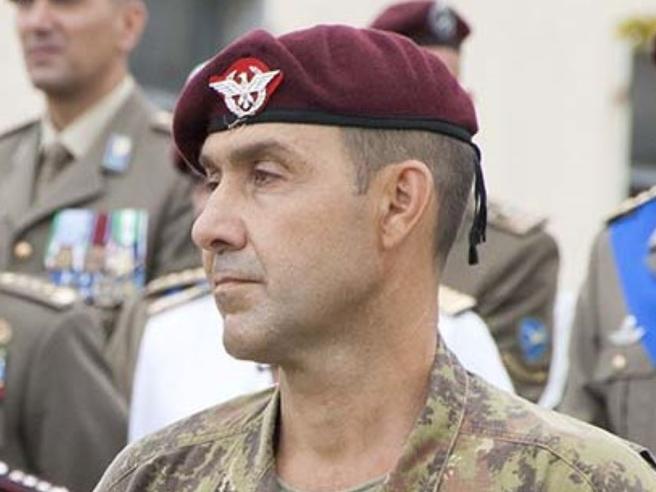
The rapid rise in popularity of far-right former general Roberto Vannacci and his newly established party, National Future, poses a growing electoral challenge to Giorgia Meloni’s ruling center-right coalition. Recent opinion polls suggest that the party is already capable of surpassing the 5% electoral threshold and could even overtake Matteo Salvini’s League.
Alessandro Di Battista, the former Five Star Movement (M5S) leader who has long been associated with pro-Russian political positions, also intends to establish a new left-wing populist party aimed at attracting protest voters, potentially drawing support away from both the governing coalition and the broader center-left opposition.
Roberto Vannacci and his National Future party, both known for their pro-Russian positions, are widely viewed as having the potential to siphon votes from the governing center-right coalition, potentially preventing it from reaching the 42% threshold required to secure a parliamentary majority bonus. Such a scenario could result in the formation of a fragile governing majority and trigger a prolonged political crisis in Italy—an outcome that would align with the Kremlin’s strategic interests. Russian state-controlled and pro-Kremlin media have consistently provided favorable coverage of Vannacci, amplifying his public profile.
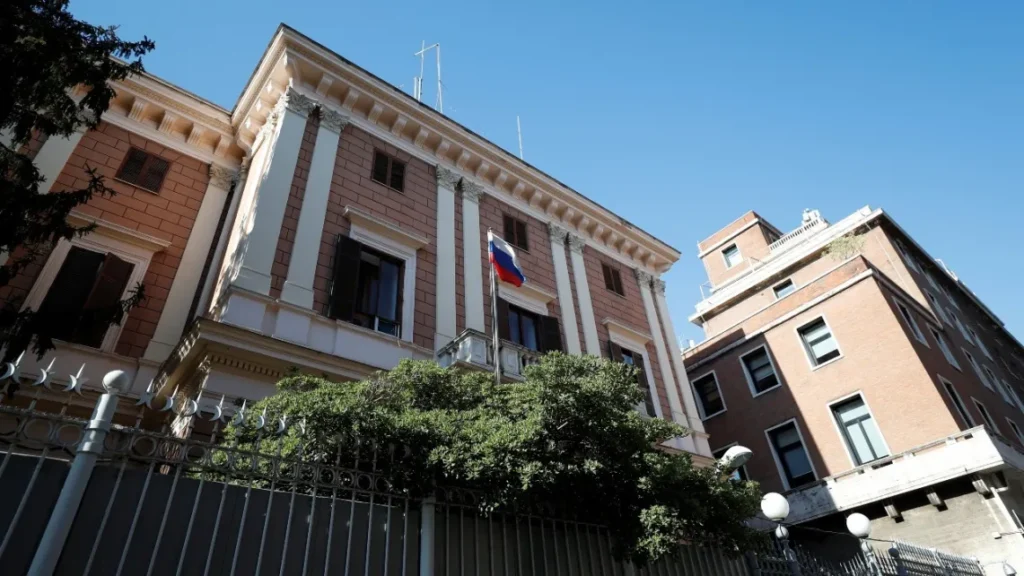
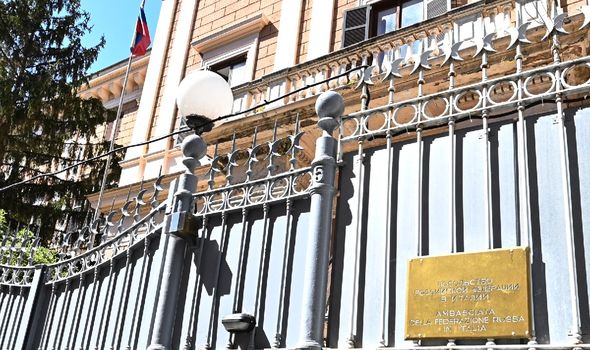
From February 2021 until May/September 2022 (sources differ on the precise end date because of Russia’s expulsion of Italian diplomatic personnel), Vannacci served as Italian Defence Attaché in Moscow, with secondary accreditation to Belarus, Armenia, and Turkmenistan. His posting ended after Russia declared numerous Italian diplomats and military representatives persona non grata following the full-scale invasion of Ukraine.
Several observers have noted that Vannacci’s public views on Russia became noticeably more sympathetic after his Moscow posting.
In interviews and in his book Il mondo al contrario, he has argued that: Western sanctions against Russia have largely failed; NATO and the West contributed to escalating tensions with Moscow; negotiations should replace long-term confrontation; Russia should remain an important European interlocutor.
He has also made controversial remarks stating that he would rather be governed by Vladimir Putin than by Volodymyr Zelensky and has questioned publicly available conclusions regarding the death of Alexei Navalny.
These positions have led many Italian commentators to describe him as sympathetic to Russian narratives, although Vannacci himself has repeatedly denied being “pro-Putin.”
Contacts with Russian officials
As Defence Attaché, Vannacci necessarily met senior Russian military officials.
However:
no publicly available evidence demonstrates that he maintained covert relationships with Russian intelligence services;
no judicial findings have accused him of espionage or collaboration with Russia;
no official Italian counterintelligence assessment has publicly alleged that he was recruited or compromised during his posting.
From an intelligence perspective, this distinction is important: official professional contact with Russian officials is expected for a defence attaché and should not be interpreted as evidence of improper relationships.
Financial investigations
Separate from his political positions, Vannacci has been investigated by Italian military prosecutors over alleged irregularities connected with his Moscow assignment.
According to Italian media, investigators examined allegations including:
- reimbursement claims for events that allegedly did not occur;
- questionable hospitality expenses;
- unauthorized expenditure connected with a BMW vehicle;
- possible embezzlement and fraud involving embassy funds.
Vannacci has denied wrongdoing and stated that he would respond through the legal process. Public reporting has described these as investigations; they are not equivalent to convictions.
Russian information environment
Following his emergence as a political figure, Russian state media and pro-Kremlin outlets have given Vannacci unusually favorable coverage. Analysts argue that his criticism of sanctions, skepticism toward military aid for Ukraine, and emphasis on restoring relations with Moscow align with narratives promoted by the Kremlin. However, this favorable media treatment does not by itself demonstrate coordination or material support.
Intelligence assessment
From an intelligence perspective, several questions remain unresolved: Vannacci served as Italy’s Defence Attaché in Moscow during a period of rapidly deteriorating Russia-West relations. His assignment ended after Russia expelled Italian diplomatic personnel following the invasion of Ukraine.
- His subsequent political messaging has consistently advocated a less confrontational approach toward Russia. He has been the subject of investigations into alleged financial irregularities connected with his Moscow posting, but there is no public conviction.
Italy’s pro-Russian political forces have a clear interest in fostering political fragmentation and instability. They appear to expect that a period of domestic political turmoil would expand their influence while preventing the emergence of a stable, pro-Western parliamentary majority. The Kremlin likewise has an interest in such an outcome, as prolonged political instability in Italy would weaken Rome’s ability to play a cohesive role within both NATO and the European Union.
Following the deterioration in relations between President Donald Trump and Giorgia Meloni over Iran, NATO, and broader transatlantic issues, the White House no longer appears to have a clear preferred partner in Italian politics.
If assessing purely from the perspective of ideological compatibility and political interests, the Trump administration could view several actors differently:
| Italian political actor | Likelihood of political sympathy from Trump Administration | Assessment |
| Giorgia Meloni | Moderate | Still shares conservative positions on immigration, family values and border security, but disagreements over Ukraine, Iran and Italy’s commitment to NATO have strained personal relations. |
| Roberto Vannacci | Moderate to High | His emphasis on nationalism, sovereignty, anti-woke policies, military strength and immigration restrictions closely resembles themes associated with Trump. However, his Russia-friendly reputation and criticism of aid to Ukraine could complicate official U.S. support. |
| Matteo Salvini | Moderate | Salvini has long cultivated ties with Trump-aligned Republicans and shares positions on migration and EU sovereignty. Nevertheless, his political influence has declined, making him a less attractive strategic partner than in previous years. |
| Alessandro Di Battista | Low | Although critical of parts of the foreign policy establishment, his left-wing populism and economic agenda diverge substantially from the Trump administration’s priorities. |
Strategic assessment
If the Trump administration were to become involved politically—which there is currently no public evidence it intends to do—it would probably evaluate Italian parties through three principal criteria: willingness to increase Italian defense spending; support for stricter immigration and border controls; readiness to pursue a more bilateral relationship with Washington rather than relying primarily on EU institutions.
Under these criteria, both Meloni and Vannacci would score relatively well domestically. However, there is an important distinction: Meloni remains committed to NATO, EU institutions and continued support for Ukraine, making her a traditional Atlantic conservative. Vannacci advocates a more sovereigntist and revisionist foreign policy, questioning sanctions against Russia and military aid to Ukraine while arguing for a pragmatic rapprochement with Moscow. This creates ideological overlap with parts of the American nationalist movement on domestic issues but also raises concerns within the U.S. national security establishment because of his Russia-related positions.
Intelligence forecast
At present, the most likely scenario is that the Trump administration would avoid openly endorsing any Italian party. An explicit endorsement could backfire politically and be portrayed as foreign interference.
Instead, Washington would likely favor whichever center-right force demonstrates that it can: preserve political stability; maintain strong bilateral U.S.-Italy security cooperation; increase defense expenditures; cooperate on migration and industrial policy.
If relations between Trump and Meloni continue to deteriorate, Vannacci could emerge as a more attractive ideological interlocutor for parts of the broader MAGA movement and conservative media ecosystem. However, his perceived closeness to Russian narratives would likely prevent him from becoming the Trump administration’s unequivocal preferred partner unless he significantly moderates his foreign policy positions.
Roberto Roberto Vannacci’s National Future (Futuro Nazionale) has the potential to become a significant electoral spoiler for Italy’s governing center-right coalition. While it is unlikely to replace Giorgia Meloni’s political dominance, it could attract enough votes from the coalition’s right flank to jeopardize its ability to secure the parliamentary majority bonus under the proposed electoral reform, should that reform be enacted.
Current polling places National Future at approximately 5–6%, making it the first credible challenger to emerge from within the Italian nationalist camp since Meloni entered government. %hese votes are drawn primarily from: the League (Lega); conservative voters dissatisfied with Meloni’s pragmatic governance; nationalist voters seeking a more ideologically uncompromising alternative.
The principal electoral damage therefore falls on the governing coalition rather than the center-left opposition.
Likely Sources of Vannacci’s Vote
The largest defections are likely to come from: League (Lega) supporters, particularly in northern Italy where Matteo Salvini’s personal popularity has declined. Hardline Brothers of Italy voters who believe Meloni has moderated her positions after entering government. Military veterans, police officers and security-sector personnel attracted by Vannacci’s military credentials. Anti-immigration and socially conservative voters demanding more radical policies on migration, citizenship and national identity. Protest voters who reject mainstream political elites but remain ideologically on the nationalist right.
Impact on Giorgia Meloni
Meloni’s coalition remains Italy’s strongest political force, with opinion polls generally placing the center-right around 44–46% of the vote. However, the coalition’s electoral strength increasingly depends on maintaining unity among its constituent parties.
If Vannacci consistently captures 5–7% from coalition voters while refusing formal electoral coordination, several consequences become increasingly likely: the center-right’s parliamentary majority would narrow considerably;coalition negotiations after the election would become more difficult; Meloni’s dependence on smaller coalition partners would increase; legislative cohesion could weaken, particularly on foreign and European policy.
Should the proposed electoral reform awarding a majority bonus to coalitions exceeding roughly 40% of the vote be adopted, even relatively modest vote losses to Vannacci could determine whether the governing coalition qualifies for the bonus.
Constraints on Vannacci’s Growth
Several structural factors limit his expansion: Meloni continues to enjoy higher personal approval ratings than any other Italian conservative leader. Brothers of Italy retains a well-developed nationwide party organization. Many conservative voters prioritize governmental stability over ideological purity. Vannacci’s controversial public statements and perceived sympathy toward Russian positions may discourage moderate center-right voters.
Intelligence Forecast
National Future secures parliamentary representation with approximately 5–8% of the vote, primarily at the expense of the League and, to a lesser extent, Brothers of Italy. Meloni remains the leader of the center-right, but coalition management becomes significantly more complex.
Alternative scenario: Vannacci’s support rises above 8–10%, overtaking the League as Italy’s second-largest right-wing force. This would fundamentally reshape the balance of power within the conservative camp, forcing Meloni either to negotiate with Vannacci or risk losing her governing majority.
Low-probability scenario:
The new party’s momentum fades before election day as voters consolidate behind Meloni to avoid splitting the right, reducing National Future to a minor parliamentary force.
Vannacci’s greatest strategic significance lies not in becoming Italy’s next prime minister, but in fragmenting the nationalist electorate. Even without winning a large share of the vote, National Future could deprive Meloni’s coalition of the margin needed for a stable parliamentary majority, producing a more fragmented legislature and more difficult coalition formation. From a geopolitical perspective, prolonged political fragmentation in one of the European Union’s largest member states would complicate decision-making on sanctions, defense spending, and support for Ukraine, outcomes that would align with long-standing Russian strategic preferences, although this does not by itself demonstrate coordination between Moscow and Vannacci.
Different outcomes would mainly affect Italy’s reliability, not its formal NATO/EU membership.
Meloni wins stable majority
Italy would remain pro-NATO, pro-EU, and broadly pro-Ukraine, though with bargaining over defense spending and industrial returns. Meloni has already signaled higher defense/security spending, around 2.8% of GDP in 2026, but much of it may be counted through broader security categories rather than pure military capability.
Effect: Italy stays a predictable Atlantic partner, supports sanctions, and remains useful in NATO’s southern flank, Mediterranean security, and Ukraine policy.
Meloni wins, but with a weakened majority
This is the most likely risk scenario. If Vannacci or similar spoiler parties fragment the right, Meloni may survive but become more dependent on smaller nationalist actors. Reuters reports that Vannacci’s Futuro Nazionale is already a political headache because it can siphon votes from coalition parties.
Effect: Italy formally remains aligned with NATO and the EU, but decisions on Ukraine aid, sanctions, defense spending, and EU security packages become slower and more conditional.
Fragmented parliament / unstable coalition
A hung parliament or weak coalition would reduce Rome’s strategic weight. Italy would be less able to shape EU decisions and more likely to abstain, delay, or dilute common positions on Russia, Ukraine, migration, and defense financing. The proposed electoral-law reform itself reflects concern about governability and majority stability.
NATO and EU partners would see Italy as less reliable, even if it does not openly break with Western policy.
Vannacci becomes coalition kingmaker
This would be the most disruptive right-wing scenario. Vannacci’s influence would likely push Italy toward a more sovereigntist line: tougher rhetoric on migration and identity, skepticism toward sanctions, reduced enthusiasm for Ukraine aid, and more transactional relations with Washington, Brussels, and Moscow.
Italy could resemble a “soft veto actor” inside the EU and NATO: not openly anti-Western, but useful to Russia by slowing consensus.
Center-left / Campo Largo victory
A center-left government would likely remain pro-EU and NATO, but could face internal divisions if M5S or left-populist forces demand limits on military aid to Ukraine. The risk would be less ideological pro-Russianism and more coalition paralysis.
stronger EU institutional alignment, but possibly weaker defense spending momentum and more caution on Ukraine weapons deliveries.
The key variable is not whether Italy leaves the Western camp. That is highly unlikely. The real risk is whether elections produce a government strong enough to act decisively inside NATO and the EU. A stable Meloni majority preserves Italy’s Atlantic role; a fragmented parliament or Vannacci-influenced coalition would weaken Italy’s reliability, slow Ukraine-related decisions, and create openings for Russian influence.
To undermine Vannacci electorally, democratic actors should reduce his monopoly on protest, security, and sovereignty themes while exposing the risks of his foreign-policy line.
Most effective lines of effort: Make him politically expensive for center-right voters.
Frame Vannacci not as “more right-wing Meloni,” but as a spoiler who could weaken the governing majority and empower instability. Reuters reports that his party is already siphoning support from coalition parties and threatening Meloni’s election strategy.
Attack the credibility gap between rhetoric and governance. His program centers on hard-line migration, crime, “remigration,” anti-Green Deal policy, and sanctions skepticism. The counter-message should ask: what is legally possible, fiscally credible, and diplomatically sustainable?
Exploit the Russia vulnerability. Vannacci’s criticism of sanctions and Ukraine aid creates a clear line of attack: his policy would reduce Italy’s influence in NATO/EU and benefit Moscow. This should be framed as national-security risk, not only moral criticism.
Separate his voter groups. Security-sector voters can be reached with messages about professionalism, NATO credibility, defense modernization, and veterans’ welfare. Northern League voters can be reached through taxes, infrastructure, autonomy, and business stability. Conservative FdI voters can be reached through the argument that splitting the vote risks losing power.
Do not over-personalize attacks. Direct moral condemnation may strengthen his anti-establishment image. The stronger approach is: Vannacci is useful as protest, dangerous as power, and destructive as a spoiler.
Force him into policy detail. Debates should focus on budgets, EU funds, defense procurement, migration law, sanctions impact, and coalition arithmetic. Populist challengers are strongest in symbolism and weakest under implementation pressure.
The best strategy is not censorship or scandal-hunting, but turning Vannacci from a protest symbol into a perceived liability—a politician whose rise could fragment the right, weaken Italy’s NATO/EU position, and create the instability Moscow prefers.
Roberto Roberto Vannacci combines several characteristics that were usually distributed among different figures during the Cold War: a retired senior military officer; an anti-establishment nationalist; a challenger to the mainstream right rather than the left; mphasis on national identity and traditional values; skepticism toward supranational institutions; messaging that today overlaps with some Russian strategic narratives.
No single Cold War politician embodied all of these features simultaneously. However, several figures provide useful historical parallels.
Pino Rauti (closest ideological comparison)
Rauti, a leading figure of the Italian Social Movement, represented the ideological hard right during the Cold War. Like Vannacci, he argued that the established conservative parties had become insufficiently nationalist and too willing to compromise.
Similarities: strong emphasis on national identity; anti-liberal and socially conservative platform; criticism of mainstream conservative leadership; appeal to voters seeking a more ideologically “pure” right.
Differences: Rauti emerged directly from post-war neo-fascism. Vannacci presents himself primarily as a military patriot rather than a fascist ideologue. Rauti operated in a Cold War environment dominated by anti-communism.
Giorgio Almirante
Almirante led the MSI for much of the Cold War and transformed it into the principal parliamentary force of the Italian far right.
Similarities: nationalist rhetoric; emphasis on law and order; criticism of political elites; appeal to patriotic voters.
Differences: Almirante sought to consolidate the existing far right rather than split the conservative camp. Unlike Vannacci, he was not challenging a right-wing government already in office.
Mirko Tremaglia
Tremaglia represented the nationalist wing of the MSI and later became a minister under Silvio Berlusconi.
He shared Vannacci’s emphasis on patriotism and national identity but operated within party structures rather than as an insurgent challenger.
Military figures entering politics
During the Cold War, Italy produced relatively few senior generals who successfully transitioned into national politics.
This is one aspect that makes Vannacci unusual. His military career—including command of elite airborne units, overseas deployments, and service as military attaché in Moscow—provides him with security credentials that distinguish him from most historical leaders of the Italian far right.
A major difference from the Cold War
The geopolitical environment is fundamentally different.
During the Cold War: the principal dividing line was communism versus anti-communism; nearly the entire Italian right was firmly Atlanticist and anti-Soviet; even the MSI defined itself primarily through anti-communism.
Today’s cleavage is different: national sovereignty versus European integration; globalization versus nationalism; migration and identity politics; support for Ukraine and sanctions on Russia.
Consequently, while Cold War nationalist politicians viewed the Soviet Union as Italy’s principal strategic adversary, Vannacci has criticized sanctions on Russia and military aid to Ukraine, positions that overlap with narratives promoted by Moscow, although this does not itself demonstrate coordination with the Kremlin.
Intelligence assessment
Historically, Vannacci resembles a hybrid of three Cold War archetypes:
- Pino Rauti in ideological nationalism and appeal to the uncompromising right;
Giorgio Almirante in mobilizing nationalist voters dissatisfied with mainstream politics; a retired senior military officer leveraging personal military prestige to enter politics.
More on this story: Italy: Russia’s influence campaign dismantles vast network of Kremlin agents
More on this story: How does Russian undercover intelligence in Italy look like?