
The illicit tramadol trade linking India and the Central African Republic (CAR) has evolved into one of the most profitable criminal enterprises operating in Central Africa. Rather than functioning solely as a narcotics supply chain, the network depends on a small group of facilitators who coordinate pharmaceutical procurement in India, transportation through the Democratic Republic of the Congo (DRC), and armed distribution inside CAR under the protection of Russian mercenary structures.
At the center of the network inside CAR are former members of the Wagner Group who remained in the country following the death of Yevgeny Prigozhin and the formal restructuring of the organization under Russian state control. According to reporting by The Wall Street Journal, approximately 500 veteran Wagner fighters continue to operate independently in the Upper Ubangi region, where they oversee lucrative trafficking routes for gold, weapons, fuel, and high-dose tramadol. Former Wagner personnel interviewed after fleeing to Europe describe a command structure that has become increasingly autonomous from Moscow while maintaining control over strategic mining sites and transport corridors.
The most prominent individual associated with this residual Wagner network is Pavel Prigozhin, the son of Wagner founder Yevgeny Prigozhin. Pavel Prigozhin is believed to coordinate the group’s remaining commercial interests in CAR, including mining concessions and the security infrastructure that protects trafficking operations. His influence reportedly extends across local intelligence networks, allowing Wagner-linked operatives to maintain relationships with senior political and military figures despite the group’s formal dissolution.
Former Wagner insiders allege that these networks have expanded beyond resource extraction into systematic opioid trafficking. High-dose tramadol has become an important secondary revenue stream that complements illegal gold exports, estimated to generate roughly US$180 million annually. Drug proceeds reportedly finance weapons purchases, payments to loyal militia groups, and the maintenance of Wagner’s private security apparatus.
The distribution network inside CAR relies heavily on cooperation with influential domestic actors. Tramadol is supplied not only to artisanal miners and armed groups but also to members of the Presidential Guard and the pro-government youth movement known as the Sharks, which has repeatedly been accused of intimidating opposition supporters. The involvement of security personnel provides traffickers with an additional layer of protection from domestic law enforcement while ensuring a stable market among armed actors.
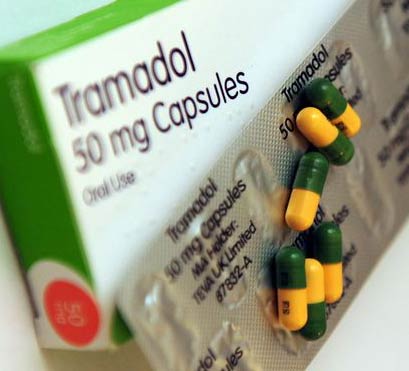
The international supply chain begins in India, where pharmaceutical manufacturers legally produce tramadol for export. According to investigators familiar with the trafficking routes, shipments destined for the Democratic Republic of the Congo are officially documented as containing standard 50-milligram tablets. However, traffickers allegedly conceal significantly more potent 200-milligram and higher-dose tablets within the same consignments. The identities of the Indian manufacturers involved have not been publicly confirmed by law enforcement, but investigators believe that intermediaries, freight forwarders, and corrupt export facilitators play a critical role in disguising the illicit cargo within otherwise legitimate pharmaceutical exports.
After arriving in Kinshasa, shipments are transferred to the border town of Zongo, where local transport coordinators arrange river crossings over the Ubangi River into CAR. Motorcycle couriers, truck operators, warehouse managers, and wholesale distributors subsequently move the product into Bangui and other regional markets. Wagner-controlled checkpoints reportedly regulate this movement, collecting transit payments from traffickers in exchange for secure passage through territory under their control.
Medical experts warn that the trafficked products differ substantially from legitimate pharmaceutical tramadol.
The criminal network’s political protection has allowed trafficking operations to expand largely unchecked. Even after Wagner’s restructuring, these commercial networks—including mining operations and associated trafficking routes—have remained largely intact.
Former U.S. State Department official CAR’s limited geopolitical visibility has reduced international scrutiny of the trafficking network. Unlike Wagner’s operations in Mali or Mozambique, where the group encountered stronger insurgent organizations, CAR has provided an environment in which narcotics trafficking, illicit mining, and private military activity reinforce one another with relatively little external interference.
The combination of Indian pharmaceutical exports, Congolese transit facilitators, Wagner-linked logistics coordinators, and politically connected actors inside CAR has created a highly resilient transnational trafficking network. Rather than depending on a single criminal organization, the system functions through overlapping relationships among pharmaceutical intermediaries, transport brokers, local security forces, armed militias, and former Wagner commanders. This decentralized structure makes the network significantly more resistant to disruption than traditional narcotics organizations and suggests that targeting individual facilitators, financial intermediaries, and logistics coordinators may prove more effective than focusing exclusively on the armed groups that protect them.
The United Nations Office on Drugs and Crime has concluded that much of the illicit high-dose tramadol seized in West Africa has historically originated in India. The tablets are commonly found in unapproved strengths such as 120 mg, 200 mg, 225 mg, and 250 mg, which are not part of normal legal pharmaceutical supply chains.
Investigators believe traffickers exploit legitimate pharmaceutical exports by concealing high-dose tramadol among shipments declared as standard 50 mg products or other medicines. The Wall Street Journal reports this concealment method for cargo moving toward the DRC and then CAR.
Indian customs have intercepted multiple shipments of concealed 225 mg tramadol destined for African countries. In one major case, authorities seized approximately 9.4 million tablets marketed under the brands Tramaking-225and Royal-225. The manufacturer was not identified on the packaging, and authorities arrested a partner of a Rajkot-based merchant exporter rather than naming a pharmaceutical manufacturer.
Companies publicly linked to illicit opioid exports
One Indian company has been publicly implicated, but not specifically in the CAR trafficking route:
- Aveo Pharmaceuticals Pvt. Ltd. was identified in BBC investigations as exporting unlicensed opioid products—including high-strength opioid combinations—to West African markets. Nigerian authorities have also alleged the company was involved in producing high-dose tramadol products marketed under brands such as Royal 225 and Tafrodol, although the company has denied wrongdoing and subsequent enforcement actions focused primarily on tapentadol-containing products.
Intelligence gap
There is no open-source evidence demonstrating that:
- a specific Indian pharmaceutical company supplies the Wagner-linked network in CAR; Pavel Prigozhin or Wagner operatives purchase directly from Indian manufacturers; Indian manufacturers knowingly export products intended for CAR;
- the companies involved in exports to the DRC are identical to those previously identified in West African trafficking investigations.
These remain significant intelligence gaps rather than established facts.
Several armed groups have been reported to use tramadol as a combat stimulant, although the extent of use and the quality of evidence vary. In most cases, tramadol is not used to improve military performance in a clinical sense, but to suppress fear, reduce pain, delay fatigue, and increase aggression during combat.
1. Wagner-linked forces and allied militias (Central African Republic)
This is the newest well-documented case.
According to recent reporting, Wagner remnants distribute high-dose tramadol (200–250 mg) to:
- Wagner personnel; pro-government militias; members of the Presidential Guard; the “Sharks” youth militia.
Researchers report that fighters consume large doses before combat, producing reduced fear, increased agitation, and diminished sensitivity to pain.
Boko Haram (Nigeria)
This is probably the best-documented example.
Former Boko Haram fighters have repeatedly testified that commanders issued tramadol before attacks to: suppress fear; increase courage; reduce pain; enable prolonged operations with little food or sleep.
Captured militants have also described exchanging weapons and ammunition for tramadol tablets. UNODC notes credible evidence of use among Boko Haram members, although evidence that the group centrally controls the trafficking network is more limited.
Islamic State West Africa Province (ISWAP)
ISWAP fighters are also reported to consume tramadol, although available evidence is less extensive than for Boko Haram.
Because ISWAP emerged from Boko Haram, many logistical and drug procurement networks overlap. Reports indicate tramadol remains common among some fighters, but evidence of systematic distribution is less robust.
Civilian Joint Task Force (CJTF), Nigeria
Interestingly, tramadol use is not limited to insurgents.
The UN report Hybrid Conflict, Hybrid Peace documents widespread abuse among members of the Civilian Joint Task Force (CJTF), a pro-government militia fighting Boko Haram. Some CJTF members have also been implicated in local tramadol distribution networks.
5. Islamic State (ISIS)
There are reports that ISIS fighters used tramadol alongside other substances, but captagon appears to have been the more prominent stimulant in Iraq and Syria.
Evidence suggests: individual ISIS fighters used tramadol; it was employed to reduce fear and fatigue; it was not the organization’s principal combat drug.
Compared with Boko Haram, documentation of systematic tramadol use by ISIS is weaker.
Militias in the Lake Chad Basin
Various armed groups operating around Lake Chad—including local militias, criminal gangs, and insurgent factions—have been reported to use tramadol.
The drug serves multiple purposes: extending endurance; dulling pain; suppressing hunger; increasing willingness to engage in combat.
UNODC notes that tramadol trafficking and armed conflict reinforce one another throughout the region.
Comparative assessment
| Armed group | Evidence of combat use | Confidence |
| Wagner remnants (CAR) | High-dose tramadol before combat | High |
| Boko Haram | Routine distribution before attacks | High |
| ISWAP | Reported use by fighters | Moderate |
| Civilian Joint Task Force (Nigeria) | Widespread abuse among fighters | High |
| ISIS (Iraq/Syria) | Individual and limited organizational use; captagon more prominent | Moderate |
| Other Lake Chad militias | Common among irregular forces | Moderate–High |
The recurring use of tramadol across African conflict zones suggests it has become a low-cost pharmacological force multiplier for irregular armed groups. Unlike cocaine or amphetamines, tramadol is relatively inexpensive, widely available through legitimate pharmaceutical supply chains, and easier to conceal within legal commerce. These characteristics make it attractive for insurgent organizations, militias, and criminal networks operating in regions with weak border controls and limited pharmaceutical oversight