

A classified 20th Directorate of the Main Directorate of the General Staff of the Armed Forces of the Russian Federation (GRU) is reportedly operating in Tokyo to identify, procure, and smuggle dual-use and military technologies into Russia. Following the expulsion of Russian intelligence officers from Western countries, Moscow allegedly shifted part of its procurement network to Japan in an effort to secure advanced components and spare parts for Russia’s defense-industrial complex.
An investigation by The Japan Times describes an alleged GRU procurement network operating in Japan that is designed to circumvent international sanctions by acquiring high-technology components for the Russian military-industrial complex. According to the investigation, the network is supervised by career intelligence officer Maksim Filchenkov, who reportedly operates under the cover of Aeroflot’s Tokyo office. The office itself has been identified by some intelligence assessments as serving as cover for Russian intelligence activities. Filchenkov is alleged to coordinate clandestine procurement channels and oversee the acquisition and illicit shipment of foreign electronic components for the Russian military.
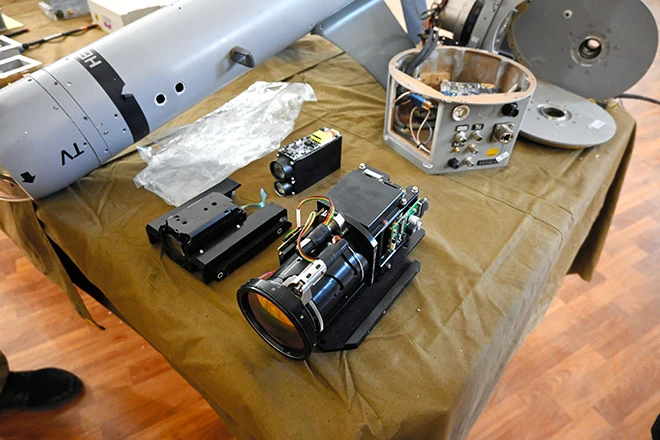
The transportation of sanctioned Japanese electronic products to their ultimate recipients in Russia reportedly relies on logistics operators such as Proco Air, with shipments routed through third countries including Vietnam, Sri Lanka, and Uzbekistan. The investigation notes that Japanese-made electronic components have been identified in approximately 90 percent of Russian missiles and drones, including Kh-101 cruise missiles used in strikes against civilian targets in Ukraine. Despite repeated diplomatic démarches, Tokyo’s response has largely remained declaratory, highlighting persistent weaknesses in export-control enforcement and international supply-chain oversight.
The mass expulsion of Russian intelligence officers operating under diplomatic cover across Europe forced Moscow to restructure its intelligence and procurement infrastructure. As a result, Japan has allegedly emerged as one of Russia’s principal alternative hubs for acquiring sanctioned dual-use technologies. The Kremlin has reportedly exploited institutional vulnerabilities within Japan, where outdated legislation limits the authority of counterintelligence agencies to prosecute violations involving the export of dual-use electronics. Consequently, Japan has effectively become a more permissive environment for Russian intelligence operations at a time when such activities have become significantly more difficult in Europe and North America.
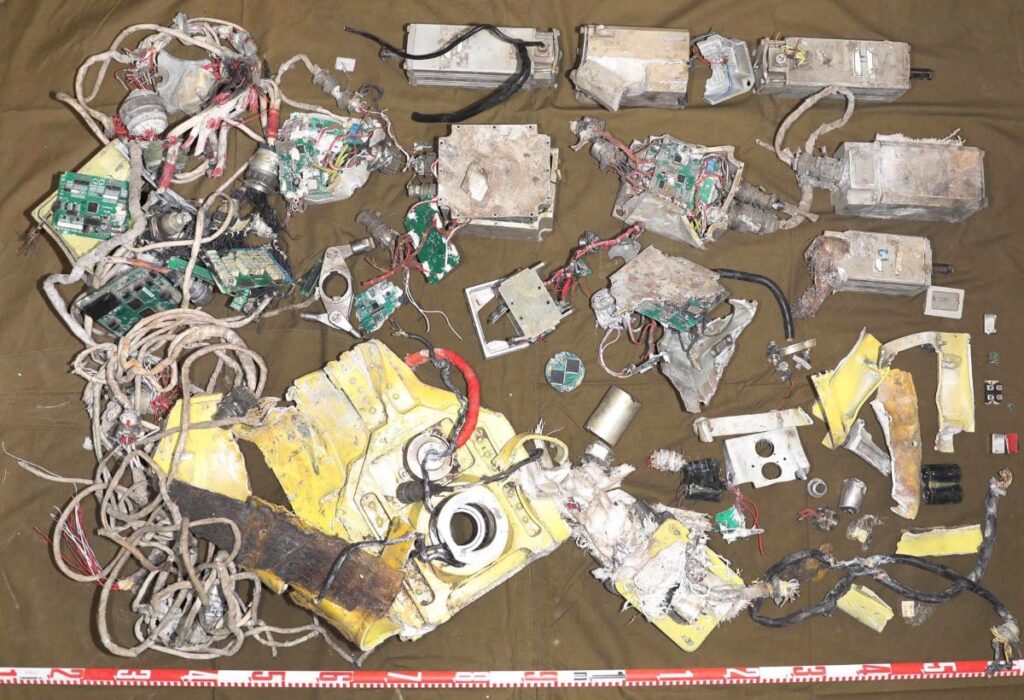
Russia’s defense-industrial complex remains technologically dependent on imported microelectronics and lacks the capacity to independently manufacture many critical components required for modern precision-guided weapons. The repeated discovery of Japanese components in roughly 90 percent of recovered Russian missiles and unmanned aerial systems suggests that Japan has become an important indirect source of technology supporting Russia’s war effort. Debris recovered from Kh-101 cruise missiles used against civilian infrastructure in Ukraine has reportedly contained Japanese-made microelectronics, raising questions about the effectiveness of existing export-control mechanisms. These advanced Japanese components continue to sustain Russian military capabilities while exposing structural vulnerabilities in Japan’s national security and export-control system and reducing the overall effectiveness of Western sanctions.
Numerous diplomatic appeals from Ukraine have demonstrated that Japanese authorities are well aware of the issue. Nevertheless, the limited practical response suggests that economic considerations continue to compete with stricter export-control enforcement. This has created a widening gap between Tokyo’s public support for Ukraine and Japan’s actual ability to prevent sensitive technologies from reaching Russia’s defense-industrial complex.
Russian procurement networks reportedly evade export restrictions through sophisticated logistics schemes in which local operators, including Proco Air, play an important role. Routing shipments through Vietnam, Sri Lanka, and Uzbekistan—countries that continue to maintain commercial aviation links with Russia—allows exporters to alter documentation identifying the final end user, thereby enabling the legal export of dual-use goods from Japan while concealing their ultimate destination. According to the investigation, some of these goods are subsequently transferred to companies associated with sanctioned Russian businessman Alexey Repik, including R-Pharm. Logistics providers have generally defended these transactions by claiming they lacked information regarding the ultimate recipient. Such practices provide commercial operators with legal deniability while significantly undermining Japan’s export-control regime and facilitating Russian military procurement networks.
Gaps in Japanese legislation also reportedly restrict the operational capabilities of the country’s counterintelligence services, allowing Russian intelligence officers to use commercial entities as operational cover, including Aeroflot’s Tokyo representative office. Intelligence services have reportedly identified the office as a GRU operational platform, despite its location near the headquarters of Japan’s National Police Agency. However, authorities have been unable to take effective action because of insufficient legal authority. Institutional constraints and legislation dating back to the Cold War continue to limit Japan’s ability to play a more active role in countering Russian aggression. Without coordinated pressure from international partners urging Tokyo to dismantle these procurement networks and introduce stronger legal penalties for facilitating sanctions evasion, global efforts to isolate the Kremlin’s defense-industrial complex are likely to remain incomplete.
The reported Russian procurement network operating from Tokyo demonstrates that sanctions enforcement is no longer determined solely by political will but increasingly by the resilience of national export-control systems. Following the large-scale dismantling of Russian intelligence networks across Europe after 2022, Moscow appears to have redirected significant procurement efforts toward jurisdictions where commercial openness, sophisticated manufacturing, and comparatively less restrictive counterintelligence legislation create exploitable vulnerabilities.
Japan occupies a unique position in this regard. Japan remains one of the world’s leading producers of advanced semiconductors, sensors, machine tools, optical systems, and precision electronic components that are indispensable for modern weapons production. While Tokyo has adopted extensive sanctions against Russia and publicly supports Ukraine, the persistence of Japanese-origin components in Russian weapons systems suggests that enforcement mechanisms have not entirely kept pace with increasingly sophisticated sanctions-evasion networks.
The principal challenge is not the deliberate violation of sanctions by the Japanese government but the exploitation of legal and commercial loopholes by foreign intelligence services and transnational procurement networks. Russian procurement officers increasingly rely on legitimate commercial transactions, front companies, intermediary distributors, freight forwarders, and third-country re-export hubs to obscure the ultimate end user of controlled goods. As a result, many exports formally comply with existing documentation requirements while ultimately supporting Russia’s defense-industrial complex.
Unlike many European countries that significantly expanded counterintelligence authorities following Russia’s full-scale invasion of Ukraine, Japan continues to operate under legal frameworks originally designed during the Cold War. These frameworks prioritize commercial freedom and impose relatively high evidentiary thresholds for prosecuting sanctions-evasion schemes unless direct criminal intent can be established. Consequently, Japanese authorities often face substantial legal obstacles when attempting to disrupt procurement networks before exports occur.
The growing sophistication of Russian procurement operations demonstrates a shift from traditional espionage toward intelligence-supported commercial acquisition. Rather than stealing technology, Russian intelligence increasingly seeks to exploit legitimate global supply chains by manipulating export documentation, concealing beneficial ownership, and routing controlled components through multiple intermediary jurisdictions. This hybrid model blurs the distinction between commercial trade and covert procurement, making detection considerably more difficult.
Several structural weaknesses continue to undermine Japan’s sanctions regime: insufficient end-user verification for exports destined for high-risk intermediary countries; limited legal liability for logistics providers and freight forwarders that fail to conduct enhanced due diligence; inadequate screening of beneficial ownership behind foreign purchasing companies; fragmented coordination between customs authorities, export-control regulators, financial intelligence units, and counterintelligence services; relatively limited criminal penalties for facilitating sanctions circumvention compared with several NATO and EU jurisdictions; insufficient information sharing with allied intelligence agencies regarding emerging procurement networks.
These shortcomings do not necessarily indicate political acquiescence but instead reflect a regulatory framework that has not fully adapted to the realities of contemporary economic warfare. Russia’s procurement strategy deliberately targets these institutional gaps, allowing intelligence officers operating under commercial cover to transform otherwise legitimate supply chains into channels supporting military production.
Strengthening Japan’s export-control regime would require a combination of legislative and operational reforms. Priority measures should include expanding authorities to investigate sanctions-evasion conspiracies before exports take place; introducing mandatory enhanced due diligence for shipments destined for jurisdictions with elevated diversion risks; requiring logistics providers to verify beneficial ownership and ultimate end users; establishing criminal liability for willful blindness in export-control violations; expanding joint intelligence task forces dedicated to procurement networks; increasing information exchange with the United States, the European Union, South Korea, and Taiwan on diversion pathways; and strengthening post-shipment verification mechanisms for sensitive dual-use technologies.
Ultimately, Russia’s continued ability to obtain Japanese-origin components should be viewed not as evidence that Japanese sanctions have failed, but rather as proof that export controls have become a dynamic contest between increasingly adaptive sanctions-evasion networks and regulatory systems that must evolve at the same pace. Unless Japan modernizes its legal authorities and adopts a more intelligence-driven approach to export enforcement, Russian procurement networks are likely to continue exploiting commercial globalization to sustain the Kremlin’s military-industrial base despite international sanctions.
Japan should be pressured primarily through allied coordination, reputational exposure, intelligence sharing, and measurable enforcement commitments, rather than through threats that could alienate Tokyo. Japan is already formally aligned with the G7 sanctions regime and maintains list-based and catch-all export controls. The problem is therefore less one of declared policy than of enforcement, intermediary trade, corporate due diligence, and the ability to dismantle intelligence-supported procurement networks.
From a policy perspective, the most effective approach would be one that raises the cost of inadequate enforcement while preserving Japan’s role as a core G7 partner. The objective should not be to coerce Japan into adopting a different foreign policy—Japan already supports sanctions against Russia—but to strengthen implementation, close enforcement gaps, and increase cooperation against sanctions evasion.
An integrated pressure strategy could look like this:
| Instrument | Mechanism | Likely Effectiveness | Risk to G7 Unity |
| Diplomatic | G7 commitments with measurable enforcement benchmarks | Very High | Low |
| Intelligence | Expanded sharing of procurement-network intelligence and joint investigations | Very High | Very Low |
| Economic | Targeted compliance expectations for firms and diversion facilitators rather than broad trade measures | High | Low if narrowly tailored |
| Reputational | Public documentation of verified diversion routes and corporate compliance failures | High | Moderate |
| Legal | Technical assistance and encouragement for stronger export-control legislation | High | Very Low |
Diplomatic pressure
The most sustainable leverage comes through the G7, where Japan already has political commitments on sanctions. Allies could seek agreement on: annual enforcement reviews; common performance indicators; joint investigations into diversion networks; coordinated designation of procurement intermediaries; regular reporting on prosecutions and enforcement actions.
This frames stronger enforcement as fulfilling Japan’s own G7 commitments rather than responding to external criticism.
Intelligence pressure
This is likely to produce the greatest practical results.
Rather than issuing broad diplomatic protests, allies could provide: names of suspected procurement officers; front companies; freight forwarders; beneficial ownership information recovered component serial numbers from Russian weapons.
Providing actionable intelligence enables Japanese authorities to investigate specific cases instead of relying on generalized allegations.
Economic pressure
Economic measures should focus on individual companies rather than Japan as a whole.
Examples include: enhanced due-diligence expectations for exporters of sensitive technologies; greater scrutiny of companies repeatedly associated with diversion; restrictions on procurement or partnerships for firms that fail to improve compliance; targeted sanctions where there is evidence of knowing facilitation of sanctions evasion.
Broad economic penalties against Japan would likely be counterproductive given its strategic importance.
Reputational pressure
Japan places considerable emphasis on corporate governance and international reputation.
Verified reports identifying:
- components recovered from Russian weapons, diversion pathways, weaknesses in end-user controls can encourage companies and regulators to tighten compliance without implying that Japan intentionally supports Russia.
Any public reporting should distinguish clearly between documented cases of diversion and intentional government policy, unless evidence supports the latter.
Legal and institutional cooperation
Pressure can also take the form of assistance.
Partners could encourage reforms such as:
- stronger end-user verification;
- enhanced beneficial-ownership transparency;
- greater investigative powers for sanctions-evasion cases;
- increased penalties for deliberate circumvention;
- expanded customs and export-control resources.
Technical cooperation often makes these reforms easier to adopt than purely political demands.
Integrated strategy
A phased approach minimizes friction within the G7:
- Private engagement: intelligence sharing, technical assistance, and bilateral consultations.
- Multilateral coordination: adoption of G7 enforcement benchmarks and joint investigations.
- Public accountability: publication of verified diversion cases and corporate compliance assessments.
- Targeted consequences: sanctions or regulatory action against proven facilitators if voluntary improvements are insufficient.
Key judgment
The combination most likely to strengthen Japan’s enforcement without undermining G7 unity is:
- intelligence-led cooperation (to improve investigations),
- multilateral diplomatic commitments (to create accountability),
- targeted corporate compliance measures (rather than broad economic penalties), and
- carefully documented public reporting on sanctions diversion.
This approach reinforces Japan’s position as a strategic partner while increasing incentives to strengthen export controls and disrupt procurement networks that support Russia’s defense-industrial base.
Japan’s government may appear to ignore such structures, but the evidence does not yet establish a deliberate policy of tolerating Russian sanctions evasion. Tokyo has repeatedly expanded sanctions, restricted exports, and designated third-country entities accused of assisting Russia. The more plausible assessment is that Japanese authorities sometimes prefer quiet containment and gradual regulatory action over publicly acknowledging a major counterintelligence failure.
Why Tokyo may avoid confronting the problem openly
1. Public recognition would expose a national-security failure
Acknowledging that Russian military intelligence established a procurement platform in Tokyo would mean admitting that: Russian officers operated under commercial cover; Japanese companies and logistics infrastructure were exploited; warnings from Ukraine or allied services were not acted upon effectively; Japanese technology continued reaching Russian weapons production.
That would damage the government’s claim that Japan is both a reliable G7 sanctions partner and an increasingly capable security actor. Political and bureaucratic institutions therefore have an incentive to describe the matter as isolated export-control violations rather than a systematic Russian intelligence operation.
Japan may lack prosecutable evidence
Intelligence information is not automatically usable in court. Allied services may identify a Russian officer, intermediary, or suspicious shipment but be unable to disclose sources, intercepted communications, or collection methods.
Japanese prosecutors generally need evidence connecting a specific exporter or facilitator to a prohibited transaction or showing knowledge of the Russian destination. Routing goods through legitimate third-country companies creates plausible deniability. Japanese law treats goods ultimately destined for Russia as Russia-bound even when routed indirectly, but proving the exporter knew or should have known the final destination can remain difficult.
This creates a gap between intelligence certainty and criminally actionable evidence.
Weak counterintelligence legislation limits available responses
Japan has historically lacked a comprehensive law criminalizing espionage itself. Authorities have often had to pursue suspected foreign intelligence activity through narrower offences such as fraud, unlawful technology transfer, immigration violations, or breaches of trade law. Recent debates over a national intelligence structure and an anti-espionage law reflect recognition of these institutional weaknesses.
Consequently, authorities may know that a person is connected to Russian intelligence but lack a clear legal basis to arrest, prosecute, close an office, or disrupt the broader network.
Responsibility is divided among several institutions
A Russian procurement case may involve: METI export-control officials; Customs; the National Police Agency; public-security authorities; financial-intelligence bodies;
- foreign and justice ministries;
- commercial regulators.
Each agency sees only part of the network. METI may evaluate export licences, Customs may inspect an individual shipment, police may examine suspected espionage, and financial authorities may review payments. Without an integrated task force, no institution necessarily owns the complete counter-procurement mission.
This encourages bureaucratic caution: agencies can argue that a transaction was formally licensed, the exporter lacked proven intent, the recipient was not yet listed, or the intelligence was insufficient for prosecution.
The government may fear harming legitimate Japanese trade
Dual-use electronics, sensors, machine tools, aviation parts, and industrial components have large civilian markets. Imposing blanket restrictions on trade with Vietnam, Uzbekistan, Sri Lanka, China, the United Arab Emirates, or other intermediary markets would impose substantial costs on legitimate Japanese exporters.
Tokyo therefore faces a familiar enforcement dilemma: controls strict enough to block every possible diversion route could also impede ordinary commerce. Russia deliberately exploits this tension by using established distributors, apparently civilian buyers, second-hand markets, and complex resale chains. Japanese machine tools, for example, have reportedly reached Russian military-linked customers through Chinese and Emirati intermediaries despite manufacturers denying involvement in the diversion.
Officials may fear corporate and political resistance
Large Japanese manufacturers and trading companies can argue that they cannot control every resale after a product leaves an authorized distributor. Logistics providers can similarly claim that they transport goods according to documentation supplied by clients and do not know the ultimate recipient.
Tightening liability would require costly compliance systems, distributor audits, post-shipment monitoring, and possibly withdrawal from profitable third-country markets. The government may therefore prefer voluntary guidance and incremental regulation over immediate criminalization of negligent supply-chain management.
Tokyo may prefer discreet disruption to public confrontation
Japan’s security bureaucracy often handles sensitive foreign-intelligence cases quietly. Authorities may: deny export licences; warn companies privately; monitor suspects; restrict visas; share intelligence with allies; encourage a suspect to leave; impose sanctions on intermediary entities.
Such measures may produce limited results without confirming publicly that a Russian intelligence residency or procurement unit exists. Tokyo may also avoid naming suspected Russian officers when it lacks sufficient evidence for prosecution or fears revealing allied intelligence sources.
Japan wants to avoid exposing inconsistency between rhetoric and enforcement
Japan has publicly emphasized solidarity with Ukraine and coordination with the G7. It has also sanctioned entities outside Russia accused of helping Moscow evade restrictions.
A major public investigation demonstrating that Japanese technology was still being procured systematically from Tokyo would expose the difference between: joining sanctions formally; and enforcing them effectively across complex supply chains.
Governments commonly resist disclosures that transform a technical enforcement problem into a political scandal.
Authorities may initially interpret the issue too narrowly
METI may see suspicious exports primarily as a trade-compliance matter. Police may see individual Russians as possible intelligence officers. Customs may focus on inaccurate declarations. Companies may treat the problem as unauthorized resale.
Russia, however, integrates these elements into a single state-directed procurement system. Treating each shipment as a separate administrative violation obscures the existence of the overall intelligence network. This is precisely why intelligence-supported procurement is effective: its individual transactions can appear commercially routine.
Alternative hypotheses
Three explanations should be distinguished:
Institutional incapacity — high probability.
Japan recognizes the threat but lacks sufficiently integrated intelligence, legal authority, and supply-chain visibility to disrupt it comprehensively.
Bureaucratic and political avoidance — moderate-to-high probability.
Authorities fear embarrassment, commercial disruption, legal defeat, or exposure of earlier inaction and therefore respond cautiously.
Deliberate strategic tolerance — low probability on currently available evidence.
This would mean the government knowingly allows procurement in order to preserve economic or political relations with Russia. Japan’s repeated sanctions and restrictions make this less likely, although individual companies or officials could still exhibit willful blindness.
Japan is probably not ignoring the network because it wants Russia to obtain military technology. It is more likely under-reacting because acknowledging and dismantling the network would require Tokyo to admit serious counterintelligence weaknesses, confront influential commercial interests, overcome fragmented authority, and adopt politically sensitive legal reforms.Thus, Tokyo’s limited response appears to reflect institutional weakness, evidentiary constraints, bureaucratic risk aversion, and concern over commercial disruption rather than a proven government decision to tolerate Russian military procurement. Nevertheless, once Japanese authorities receive detailed and credible evidence, continued inaction could increasingly amount to political willful blindness.
More on this story: Japanese Technologies in the Production Cycle of KN-23/KN-24 Missiles