

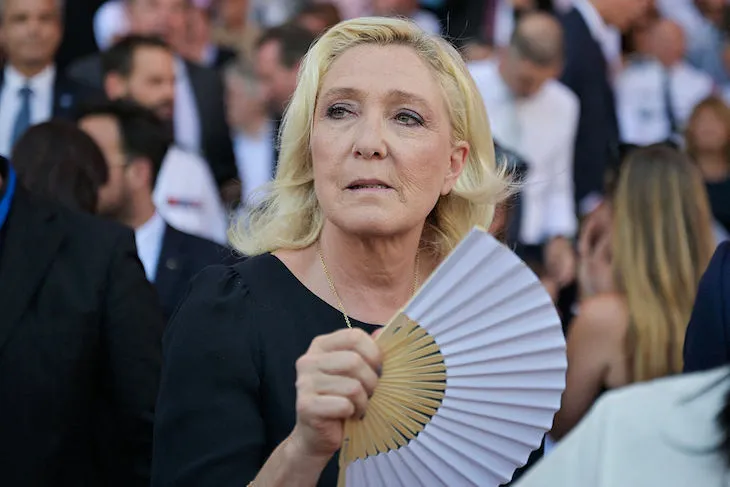
The recent migration incident in the Spanish enclave of Ceuta became a focal point for France’s far-right National Rally (Rassemblement National, RN), which rapidly incorporated the episode into its domestic anti-immigration campaign ahead of the 2027 presidential election. Party leader Marine Le Pen and RN president Jordan Bardella described the events as a “migration invasion” and evidence of “migration chaos,” portraying the incident as proof of the alleged failure of European border policy. In reality, the situation in Ceuta was considerably more limited than suggested by RN’s political messaging. The majority of migrants who entered the enclave had already been returned to Morocco or placed under Spanish administrative procedures, and Ceuta’s unique legal status as a Spanish autonomous city in North Africa means that its external border regime differs significantly from that of continental Schengen territory. Consequently, the incident cannot be directly interpreted as evidence of a systemic collapse of the Schengen Area.
Ceuta has long represented one of Europe’s most sensitive migration flashpoints. Together with the nearby enclave of Melilla, it constitutes the European Union’s only land border with Africa. Periodic attempts by migrants to cross into the enclaves—whether by scaling border fences, swimming around coastal barriers, or entering during periods of political tension between Spain and Morocco—have repeatedly transformed local migration incidents into issues of broader European political significance. At the same time, migration flows into Ceuta remain heavily influenced by bilateral relations between Madrid and Rabat, giving Morocco considerable leverage over migration pressure at the border. As a result, developments in Ceuta often reflect not only humanitarian dynamics but also broader geopolitical considerations.
Against this background, the National Rally selectively framed the Ceuta incident to reinforce one of its most electorally advantageous political themes. By emphasizing emotionally charged imagery of an “invasion” while omitting the legal, geographic, and operational realities of the enclave, the party transformed a localized border event into an apparent national security crisis for France. Such framing reflects a broader communication strategy that prioritizes symbolic political messaging over the factual characteristics of individual migration events.
The RN’s calls for an immediate revision of the Schengen Agreement were similarly based on a selective interpretation of the situation. Public statements by Marine Le Pen and Jordan Bardella ignored the exceptional legal framework governing Ceuta and failed to acknowledge that the enclave does not function as a conventional transit corridor into mainland Europe. Likewise, they omitted the fact that the majority of migrants had already returned to Morocco by the time the statements were issued. These omissions allowed the party to portray an isolated incident as evidence of a generalized failure of European migration governance.
The exploitation of the Ceuta episode demonstrates how migration has become one of the National Rally’s most effective instruments of political mobilization. By invoking images of uncontrolled migration and border insecurity, the party appeals directly to voters’ concerns regarding identity, public security, and national sovereignty. Such narratives also provide an opportunity to shift political debate away from domestic socioeconomic challenges—including inflation, economic competitiveness, public finances, housing shortages, and healthcare reform—where the party continues to face greater scrutiny regarding the feasibility of its policy proposals.
From a strategic perspective, the RN’s messaging contributes to the broader securitization of migration in French political discourse. Rather than treating migration as a multidimensional policy issue encompassing humanitarian obligations, labor markets, border management, and international cooperation, the party consistently presents it as an existential threat requiring extraordinary political responses. This framing reinforces societal polarization and narrows the political space for evidence-based policy discussions.
The political exploitation of migration crises also creates opportunities for foreign information actors. Russia has consistently sought to amplify migration-related controversies across Europe because they deepen internal divisions, strengthen anti-establishment political movements, and weaken confidence in European institutions. Although there is no evidence that the Ceuta incident itself was orchestrated by external actors, Moscow routinely incorporates such events into broader influence campaigns that portray European governments as incapable of protecting their borders or maintaining internal stability. In this respect, domestic populist narratives and Russian strategic communication often reinforce one another despite originating from different political actors.
Ultimately, the Ceuta episode illustrates how localized migration incidents can be transformed into powerful instruments of domestic political mobilization. The strategic significance of the controversy lies less in the operational scale of the migration event itself than in its use as a political symbol capable of influencing public perceptions ahead of France’s 2027 presidential election. By framing exceptional border incidents as evidence of a permanent and systemic migration crisis, the National Rally seeks to strengthen its electoral position while simultaneously contributing to an increasingly polarized political environment in which migration becomes the dominant lens through which broader questions of national security, European integration, and state legitimacy are interpreted.