
In 2023, relations between West Africa’s coastal states and the military-led governments of the Sahel deteriorated to an unprecedented level.
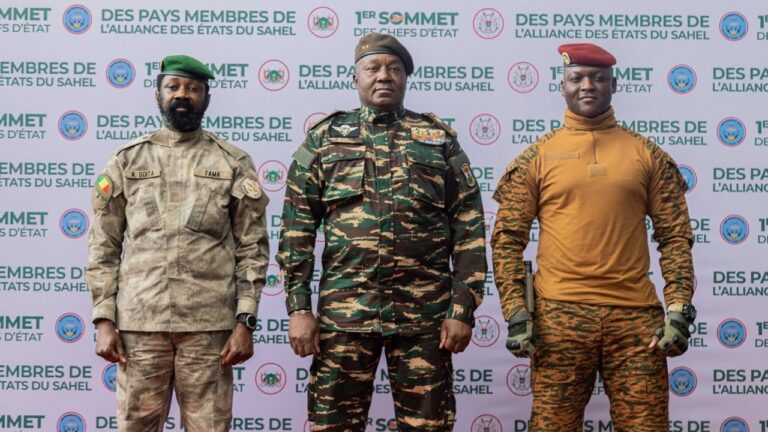
Following the coup in Niger, the Economic Community of West African States (ECOWAS) threatened military intervention to restore the deposed government. The military regimes in Mali, Burkina Faso and Niger responded by closing ranks, accelerating a political realignment that eventually produced the Alliance of Sahel States (AES).
The confrontation created one of the deepest fractures within ECOWAS since its establishment in 1975. Originally designed to promote regional economic integration, the bloc gradually assumed a broader political and security role after the Cold War, including the defense of constitutional government and democratic norms.
For the Sahelian military governments, however, another factor facilitated their break with the regional order: Russia was willing to provide political and security support at a time when their relations with Western governments and ECOWAS were deteriorating.
The question now is whether that relationship could enable Moscow to play an entirely different role—not as a beneficiary of the ECOWAS-AES divide, but as a mediator capable of helping bridge it.
Ghana’s foreign minister recently traveled to Moscow for talks with his Russian counterpart, Sergei Lavrov. The discussions included the reported recruitment of Ghanaian nationals to fight for Russia in the war against Ukraine. Lavrov also suggested that Moscow could help bridge the divide between the Sahel states and ECOWAS.
Regional leaders, including the presidents of Senegal, Ghana and Sierra Leone, have already attempted to narrow that divide, but with limited results.
During a press conference with Lavrov, Ghana’s foreign minister suggested that Russia possesses the credibility required to facilitate such a rapprochement. That assessment, however, deserves closer scrutiny. Moscow certainly has leverage over the Sahelian governments. Whether that leverage amounts to credibility as a neutral mediator is a different question.
Several factors weaken Russia’s claim to such a role.
First, Russia’s war against Ukraine—and reports of African nationals being recruited to fight and die in the conflict—has generated concern in a number of African countries. The issue was itself among the matters Ghana sought to raise with Moscow. Reports that Africans may have been recruited under misleading circumstances risk undermining Russia’s portrayal of its relationship with African states as one based on sovereignty, equality and opposition to exploitation.
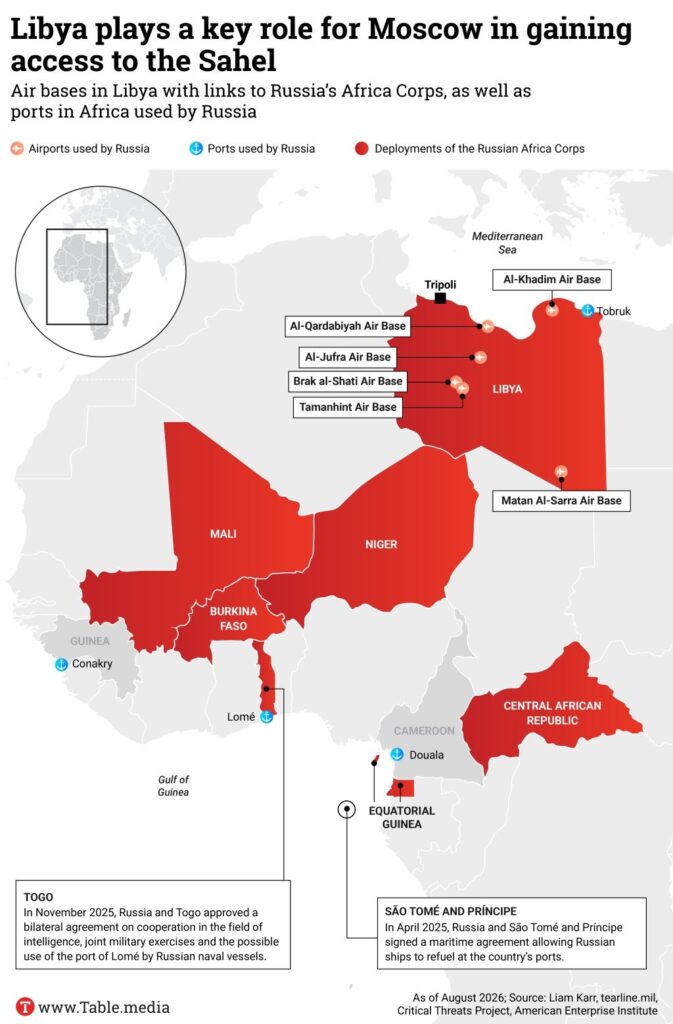
Second, Russia’s security record in the Sahel complicates its claim to be a stabilizing actor. Wagner Group forces and, subsequently, personnel associated with Russia’s Africa Corps have become deeply involved in the counterinsurgency campaigns of Sahelian governments. Yet militant organizations continue to demonstrate an ability to conduct major attacks and expand their operational reach. Allegations of summary executions and other abuses involving Russian personnel and their local partners have further damaged Moscow’s security credentials.
The relevant question is therefore not simply whether Russian forces can help Sahelian governments survive, but whether Moscow’s security model is actually capable of producing sustainable stabilization. Regime protection and territorial stabilization are not necessarily the same thing.
Third, Russia faces an even more fundamental problem as a prospective mediator: it has benefited politically from the very confrontation it would now seek to resolve.
Russian and Russia-aligned information networks have repeatedly promoted narratives portraying ECOWAS as subordinate to France and other Western powers, while presenting the Sahelian juntas as representatives of a new sovereign and anti-colonial Africa. Such narratives have helped create an information environment in which compromise with ECOWAS can be portrayed as capitulation to external pressure.
This creates an inherent contradiction. Moscow would be attempting to mediate a political divide that its broader influence ecosystem has, at minimum, helped deepen. That does not make Russian mediation impossible, but it makes the description of Russia as a neutral or disinterested broker difficult to sustain.
Nevertheless, dismissing Moscow’s potential role altogether would also be a mistake.
The repeated visits of Sahelian leaders to Moscow and their continuing security relationships with Russia demonstrate that the Kremlin retains something that many ECOWAS governments currently lack: political access and influence with the military leaderships in Bamako, Ouagadougou and Niamey.
This distinction is important.
Russia may lack credibility as a neutral mediator, while simultaneously possessing considerable leverage as an interested intermediary.
Indeed, this may be the more useful framework for assessing Moscow’s potential role. Successful mediation does not always require neutrality. In some circumstances, an actor’s influence over one of the parties can make it valuable precisely because it can obtain concessions that other mediators cannot.
For Moscow, attempting to facilitate an ECOWAS-AES rapprochement could also produce substantial diplomatic benefits.
Russia could portray itself as a problem-solver capable of resolving an African political crisis that regional and Western diplomatic efforts have struggled to address. Such an outcome would reinforce the Kremlin’s broader narrative that Russia is not internationally isolated and can play a constructive diplomatic role in the emerging multipolar order.
More importantly, Moscow would not necessarily need to restore the pre-2023 regional architecture to benefit. Its preferred outcome could be a managed reconciliation in which the AES preserves its political autonomy and Russian security relationships while normalizing economic and diplomatic relations with ECOWAS.
Such an arrangement could actually strengthen Russia’s position. Continued confrontation between the AES and ECOWAS creates economic and security risks for Moscow’s Sahelian partners. A limited rapprochement could stabilize those governments without requiring them to abandon their strategic relationship with Russia.
The central analytical question, therefore, is not whether Russia has sufficient “credibility” to reconcile ECOWAS and the Sahel states.
It is whether Moscow now calculates that reducing the confrontation serves its interests better than continuing to exploit it.
If that calculation changes, Russia could potentially use its access to the Sahelian military governments to encourage dialogue. But this would make Moscow less a neutral peace broker than a power broker seeking to convert political influence into diplomatic capital.
The distinction matters. Russia’s comparative advantage is not trust across both camps. It is its ability to communicate with—and potentially influence—governments that have become increasingly resistant to pressure from ECOWAS and Western states.Russia therefore may not possess the credibility to reconcile the two blocs in the conventional diplomatic sense. But it may possess something potentially more consequential: leverage over one side of the divide. Whether Moscow uses that leverage for reconciliation will depend not on its commitment to West African regional integration, but on whether the Kremlin concludes that rapprochement advances Russian strategic interests in the Sahel.