
France Moves From Countering Russian Disinformation to Confronting Foreign Interference
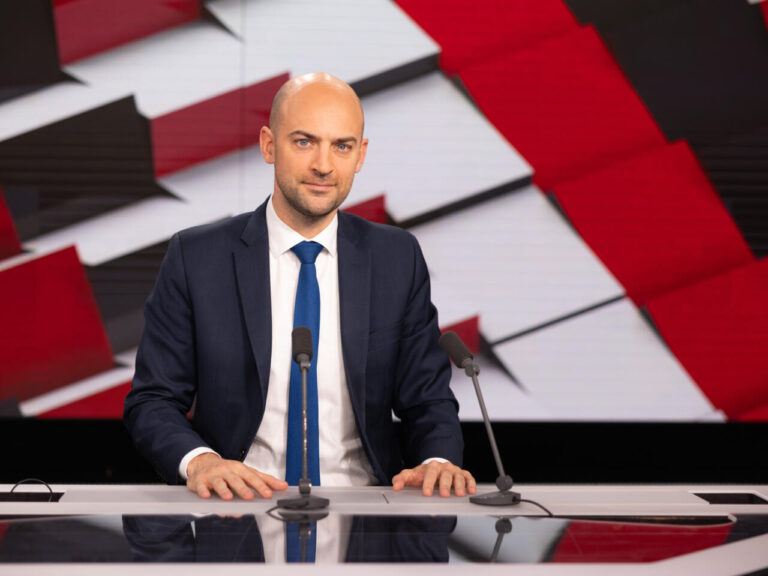
French Minister for Europe and Foreign Affairs Jean-Noël Barrot has called on Paris to adopt a tougher and more systematic approach to countering foreign interference, citing the case of former RT France chief Xenia Fedorova as an illustrative example of the threat facing French democracy.
Barrot’s position is significant because he proposes distinguishing among three separate phenomena: opinion, which seeks to persuade; information manipulation, which seeks to mislead an audience; and foreign interference, which seeks to exert external influence over citizens’ freedom of democratic choice.
This approach allows France to move the issue of Russian propaganda beyond the realm of media policy and into the domain of national security, without equating efforts to counter foreign interference with restrictions on freedom of speech.
The Fedorova Case May Signal a Shift in French Doctrine
Xenia Fedorova, the former head of the French branch of the Russian state broadcaster RT, remained an active participant in France’s information environment for years, even after RT France ceased operations.
On July 29, 2026, the French Interior Ministry issued an order for her expulsion from the country, citing activities deemed harmful to the fundamental interests of the state. Fedorova’s attempts to suspend enforcement of the decision were rejected twice by the Paris Administrative Court.
Particularly significant is Barrot’s own characterization: he describes Fedorova not simply as a journalist or someone holding pro-Russian views, but as a professional participant in Kremlin-directed destabilization operations.
The Fedorova case may therefore indicate a shift in the threshold for France’s response to Russian information operations. The central question is no longer whether an individual has the right to express pro-Russian views, but whether that individual’s activities form part of an influence operation organized by a foreign state.
This distinction is critical. A democratic state should not criminalize opinions, but it has the right to counter covert activities by a foreign state designed to manipulate democratic processes.
The 2027 Presidential Election Is Emerging as the Principal Risk Zone
France is tightening its policy against the backdrop of the first Russian information operations associated with the presidential election scheduled for spring 2027.
Over the course of several weeks, disinformation campaigns targeted Édouard Philippe, Raphaël Glucksmann and Gabriel Attal. The operations employed fabricated news reports, counterfeit branding of French media outlets, forged documents, artificially generated voices and videos.
The Glucksmann case is particularly significant. According to him, France’s General Secretariat for Defence and National Security informed him that the operation had been conducted by the Storm-1516 network, which has been linked to Russian military intelligence. The operators created a fake news website, impersonated a French media outlet, and used forged documents and AI-generated audio to manufacture compromising allegations.
This means that France is entering the 2027 presidential campaign with pre-positioned information-interference operations already underway.
The Objective May Not Be the Election of a Particular Candidate
It would be a mistake to assess Russian interference solely through the question: “Whom does Moscow want to become president of France?”
Discrediting several candidates simultaneously can create the impression that the entire political system is corrupt, the media are unreliable, fabricated compromising material is indistinguishable from genuine investigative journalism, and election results themselves may be manipulated.
The ultimate objective may therefore be less about electoral conversion—shifting voters from one candidate to another—and more about creating systemic distrust: eroding confidence in the democratic system itself.
Under this model, the Kremlin does not necessarily need to secure the victory of its preferred candidate. A politically fragmented France, a president with weaker public legitimacy, and a society in which a significant share of citizens distrust elections, the media and state institutions may constitute a sufficient strategic outcome.
Russia Is Seeking to Create an Information Environment in Which the Concept of Fact Disappears
The development of generative artificial intelligence presents an additional threat.
Counterfeiting the logos of Le Monde, AFP, France 24 or other established media organizations, cloning the voices of journalists and politicians, and producing deepfake videos dramatically reduce the cost of information operations.
The strategic effect of deepfakes, however, extends beyond persuading citizens to believe a particular fabrication.
A potentially more dangerous outcome is the gradual creation of an environment in which citizens can no longer be confident that any piece of digital evidence is authentic.
The objective of such an operation may therefore be not to persuade the public to believe a particular lie, but to undermine the information environment’s ability to establish commonly accepted facts.
France Is Seeking to Shift From a Reactive to a Proactive Model
It is in this context that Barrot’s call for France to move beyond an exclusively defensive posture becomes particularly significant.
The traditional model for countering disinformation is predominantly reactive:
Russian operation → detection of a fake → debunking → removal of content → investigation.
The weakness of this model is that the initiative remains with the actor conducting the operation. The Kremlin determines the subject, timing and platform of the attack, while the democratic state is forced to respond.
Barrot is effectively proposing a different model: societal resilience → an independent strategic narrative → early detection of operations → rapid attribution → exposure of the network → legal and diplomatic consequences.
This represents an important evolution in the French approach.
Yet a “National Narrative” Carries Risks of Its Own
The French government must avoid a situation in which efforts to counter Russian propaganda are themselves perceived by part of society as state propaganda.
The most effective national narrative is therefore not one in which the government creates a competing information campaign, but one based on greater transparency of the democratic system and the rapid presentation of verifiable evidence of foreign interference.
Evidence-based attribution should become the central element of the French model.
The more precisely the state can explain who created an operation, which accounts disseminated it, what infrastructure was used, which media organizations were impersonated, and what links exist between the operators and a foreign state, the more difficult it becomes for the Kremlin to portray French countermeasures as political censorship.
The 2027 Election Could Become a Test of a New Model of Russian Interference
France’s presidential election has particular strategic importance for Moscow because of Paris’s role in the EU, NATO and the shaping of European security policy.
Russian operations could therefore simultaneously target several levels: discrediting individual candidates, exacerbating existing political and social divisions, undermining confidence in traditional media, spreading doubts about electoral integrity, intensifying polarization, and fostering attitudes more favorable to Moscow regarding sanctions, NATO and European defense policy.
Crucially, Russia does not need to create social divisions from scratch to achieve these objectives. It is considerably cheaper and more effective to identify existing fault lines within French society and amplify them through information operations.
The primary object requiring protection should therefore not be any particular candidate, political party or government, but the integrity of France’s information and electoral environment.
Conclusions
The Fedorova case and information operations targeting potential candidates in the 2027 presidential election indicate a gradual shift in France’s perception of the Russian threat. Russian propaganda is increasingly viewed not merely as a collection of undesirable or manipulative messages, but as one instrument within a broader system of foreign interference.
France is effectively attempting to establish a legal boundary between protected freedom of expression and activities conducted in the interests of a foreign state with the objective of influencing democratic processes.
Russia’s principal objective ahead of 2027 may not be to support a single candidate, but to erode confidence in the political system as a whole. This makes public trust, polarization and perceptions of electoral legitimacy no less important as indicators of the effectiveness of Russian operations than candidates’ polling numbers.
The use of deepfakes, voice cloning and counterfeit branding of authoritative media organizations creates a qualitatively new challenge: Russia may seek not merely to disseminate false information, but to undermine society’s ability to distinguish authentic information from fabricated content.
Barrot’s call to move beyond a purely defensive response and develop France’s own national narrative indicates that Paris is seeking a more proactive model of information security. Its effectiveness will depend on whether France can combine rapid attribution and legal countermeasures with the protection of freedom of expression.
The French model will have implications for Europe as a whole. Russian information networks operate across national borders, meaning that national detection mechanisms will remain insufficient without rapid information-sharing among VIGINUM, the intelligence and law-enforcement services of other EU member states, and the relevant European institutions.
The 2027 presidential election may therefore become more than an electoral contest for France. It could be the first major test of the state’s ability to withstand a new generation of Russian information interference without weakening the democratic freedoms that such interference seeks to exploit against France itself.
An Important Analytical Caveat
Not all detected campaigns achieve significant reach or influence. Le Monde has noted that some operations targeting candidates were relatively crude and may have had limited impact. Public exposure can sometimes inadvertently amplify their audience. This is an important qualification: the existence of a Russian operation does not equal its success.
At the same time, the scale already warrants attention. Within roughly two weeks, Russian or Russia-linked campaigns targeted Édouard Philippe, Raphaël Glucksmann and Gabriel Attal. VIGINUM detected relevant operations, while the Paris prosecutor’s office opened an investigation into the campaign targeting Glucksmann.
The principal KIQ should therefore be: Is Russia seeking to influence the outcome of the 2027 election in favor of a specific political force, or is its strategic objective to delegitimize any electoral outcome and create a long-term crisis of confidence in French democracy?
The answer to this question would fundamentally change the assessment of the broader Russian campaign.



More on this story: Russia intensifies subversive activity against France