
The controversy surrounding the inner circle of Slovenian President Nataša Pirc Musar poses a potential counterintelligence challenge for Ljubljana, although the facts currently available in open sources do not substantiate allegations that she has ties to Russian intelligence. The significance of the case lies primarily in determining whether the personal and business relationships of individuals close to the head of state could have created a channel for access or potential influence, as well as in assessing the political consequences of the allegations themselves.
The controversy was triggered by the presence of the president’s longtime friend and business associate, Viktoria Krivolucka, in Pirc Musar’s car during a traffic accident in late July. Krivolucka was born in Russia, has lived in Slovenia for many years and has held Slovenian citizenship since 2016. Her relationship with the Pirc Musar family dates back many years.
Subsequent journalistic investigations uncovered a considerably more significant detail: Krivolucka had previously been in a relationship with Roman Jeglič, a former deputy director of Slovenia’s Security and Intelligence Service (VIS), the predecessor of SOVA, who lived in Russia for many years after leaving the intelligence service.
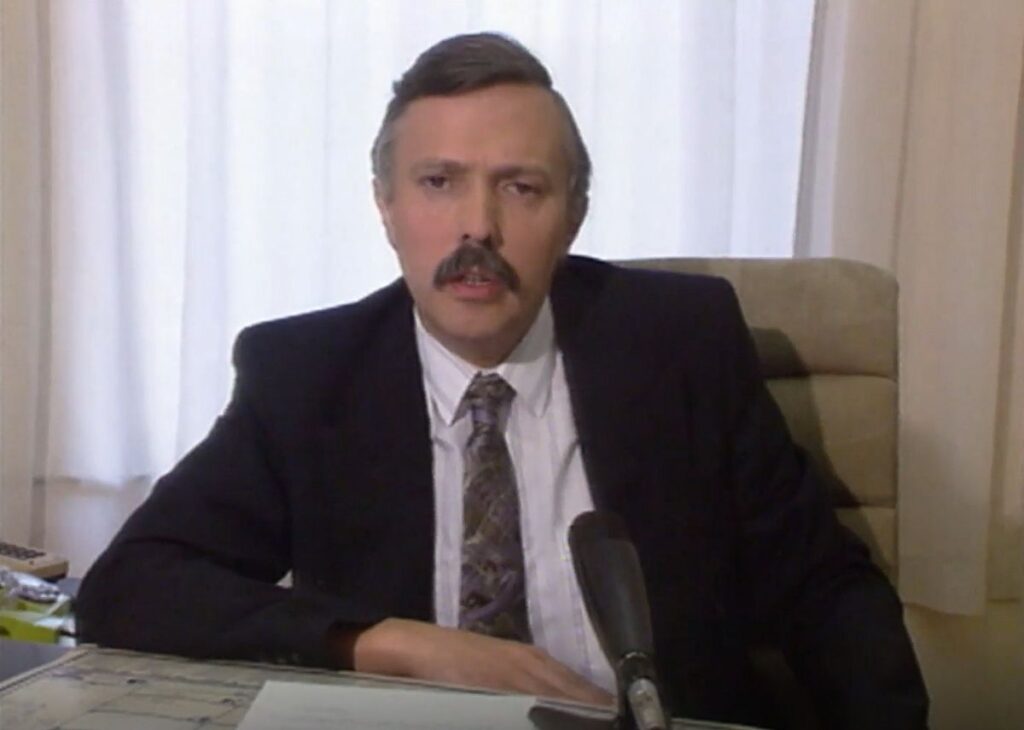
It was this connection that prompted political demands for an assessment of potential counterintelligence risks to the presidential office. SDS lawmaker Žan Mahnič went so far as to call for intelligence and security briefings to the president and her staff to be suspended until the circumstances were clarified. Pirc Musar’s office categorically rejected suggestions that she was involved in a Russian espionage network.
Counterintelligence Risk Is Not Evidence of Espionage
This distinction should be central to the analysis.
The chain of personal connections:
Pirc Musar → Krivolucka → former Slovenian intelligence officer → the latter’s long-term residence in Russia
does not in itself demonstrate the existence of an operational channel to Russian intelligence.
Such a conclusion would require additional indicators: contacts with Russian intelligence services, the transfer of information, financing, covert communications, receipt of tasking, or other operational behavior.
At present, no such evidence is publicly available.
Moreover, SOVA confirmed that it vetted Krivolucka in 2016 during the process through which she obtained Slovenian citizenship and identified no security concerns. The agency also stated that it subsequently received no new information that would have altered that assessment.
This significantly weakens the basis for categorical claims that an established “Russian espionage network” has already been uncovered.
Nevertheless, it does not eliminate the need for an updated risk assessment. The 2016 vetting reflected information available a decade ago, whereas the level and nature of Russian intelligence and hybrid activity against European states have changed significantly since 2022.
The Primary Focus of Scrutiny Should Be Krivolucka’s Access, Not Her Origin
The fact that Krivolucka was born in Russia or is of Russian origin is not, in itself, a counterintelligence indicator.
What matters considerably more is the actual level of her access to the president, her inner circle, movements, informal conversations and potentially sensitive information.
For an intelligence service, a close friend of a head of state can be of interest regardless of citizenship or political views. Such a person could potentially provide access intelligence: information about personal relationships, habits, schedules, internal disagreements, informal positions and individuals who influence the president.
The central question for SOVA should therefore be: “Could a third party have obtained access through her to information, the president’s inner circle, or decision-making processes surrounding the president?”
This is a considerably more precise counterintelligence question.
The Personal Circle of a Head of State Constitutes a Separate Attack Surface
The case illustrates a broader vulnerability that extends well beyond Slovenia.
National security systems traditionally concentrate on vetting officials, government employees and individuals who formally hold security clearances. Modern influence and intelligence operations, however, can target the informal circles surrounding senior officials:
relatives → friends → business partners → personal assistants → advisers → former partners.
Such individuals may have no formal access to classified information but may possess substantial relational access—access to someone who does receive such information.
The inner circle of a head of state should therefore be regarded as part of that official’s security perimeter, even when those individuals hold no government positions.
The Actual Risk to NATO Depends on the Nature of the Information Available to the President
The Slovenian president is not the principal operational hub for NATO intelligence sharing. The political controversy alone is therefore unlikely to result automatically in restrictions on intelligence provided to Ljubljana.
A genuine risk would arise only if investigators established:
compromise of a specific channel → access to classified information → transfer or potential transfer of that information to a third party.
Only under such circumstances might allies apply the need-to-know principle and temporarily restrict certain categories of particularly sensitive intelligence.
A distinction should therefore be maintained between reputational risk to Slovenia and an actual counterintelligence breach.
The Greatest Short-Term Threat May Be Political Rather Than Intelligence-Related
There is another scenario that deserves particular attention.
Even if SOVA establishes no Russian connection, the controversy itself could already have a destabilizing effect.
This creates a classic problem of the weaponization of suspicion:
indirect connection → media investigation → espionage allegations → political polarization → declining trust in the president and intelligence services.
Parliamentary oversight is therefore necessary, but it must remain firmly evidence-based. If political forces begin labeling individuals as Russian agents without sufficient evidence, a paradoxical outcome could emerge: a counterintelligence issue could be transformed into an instrument of domestic political struggle.
That outcome could itself serve Moscow’s interests—even if Moscow had nothing to do with creating the original controversy.
A Pro-Russian Outcome Is Not the Same as a Russian Operation
This is an important analytical distinction.
A political crisis that undermines confidence in the president, parliament or SOVA could benefit Russia. But this does not mean that Russia orchestrated it.
The proposition that “the destabilization of Slovenia serves Russian interests” may therefore be justified.
The assertion that “the controversy is a Russian operation,” however, would be a logical leap in the absence of additional evidence.
SOVA’s Response May Ultimately Be the Most Important Factor
The controversy represents a test not only for Pirc Musar but also for Slovenia’s counterintelligence system.
If SOVA conducts an updated assessment and finds no threat, the political leadership should explain what was examined and why the risk is considered acceptable—to the extent possible without compromising intelligence methods.
If new evidence emerges, however, it should be investigated regardless of the political consequences.
For Slovenia’s allies, the key indicator will therefore not be the mere existence of a potential vulnerability. Similar risks exist in every country.
What matters considerably more is Slovenia’s ability to independently identify, assess and neutralize such a vulnerability.
Available open-source information does not provide sufficient grounds to conclude that President Pirc Musar has ties to Russian intelligence. There is a chain of indirect personal relationships that justifies counterintelligence scrutiny, but it does not constitute evidence of espionage.
The principal potential vulnerability is not Krivolucka’s Russian origin but her longstanding and close access to the president. For a foreign intelligence service, access—not nationality—is what determines an individual’s potential value.
SOVA’s previous vetting of Krivolucka in 2016, which identified no security concerns, is an important counterargument to categorical allegations. At the same time, the age of that assessment and the radically transformed European security environment since 2022 may justify an updated review.
For NATO, the decisive issue will not be the political controversy itself, but whether classified information was actually compromised. In the absence of evidence of a leak, predictions that intelligence sharing with Slovenia could be restricted are premature.
The case creates a second-order risk: the politicization of counterintelligence. Unsubstantiated espionage allegations could simultaneously undermine confidence in the president, parliament and SOVA, generating a destabilizing effect regardless of whether there was an underlying Russian operation.
The case also exposes a broader vulnerability facing European states: insufficient attention to the informal circles surrounding senior officials. Relatives, friends and business associates may lack security clearances but possess relational access that can make them attractive targets for foreign intelligence services.
What Is Known About Viktoria Krivolucka
Krivolucka was born in Krasnoyarsk, Siberia. She obtained an economics degree in 2000 while working. In 1994, she was employed as a sales assistant at a store that carried numerous Slovenian products. According to her account, it was there that she met Roman Jeglič, a former senior Slovenian intelligence official. They became a couple and lived together for a period in Krasnoyarsk. Krivolucka maintains that she was unaware of his intelligence background at the time.
Following Slovenia’s independence, Jeglič served as deputy director of the then Varnostno-informativna služba (VIS), the predecessor of SOVA. He subsequently lived in Russia for many years. Krivolucka says she has not seen him since approximately 2010 and has had no contact with him for more than 15 years.
She moved to Slovenia through business contacts. According to her account, representatives of the Slovenian company Svea offered her work connected with the company’s expansion into the Russian market. She subsequently worked on business relations between Slovenia’s Zasavje region and Russia.
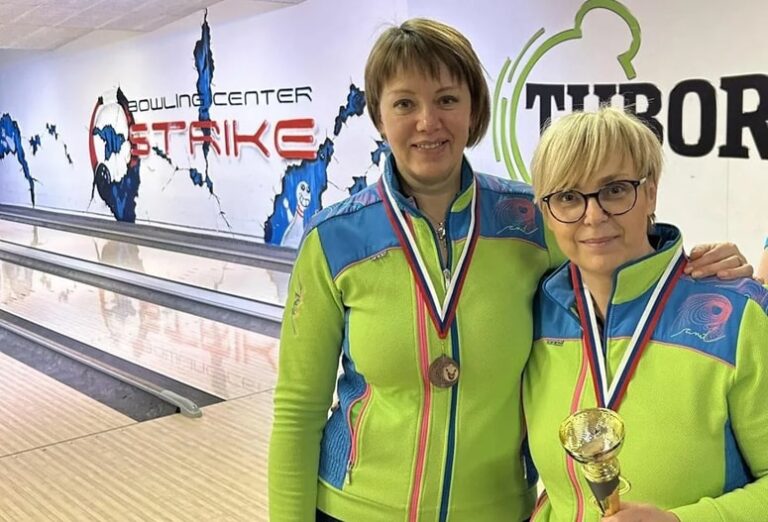
She has known Nataša Pirc Musar for approximately two decades. They met through bowling. According to Krivolucka, Pirc Musar supported her during a difficult period following a criminal case, provided financial assistance and advised her on regularizing her status as a foreign national. Their relationship subsequently developed beyond friendship into business ties.
Her business connections with the Pirc Musar family are extensive. In 2010, Krivolucka became a procurist at Net Produkcija, a company founded by Nataša Pirc Musar. She later handled accounting at the Pirc Musar law firm, served as liquidation manager of Info House and is currently a procurist at Ruska dača, a company associated with the president’s husband, Aleš Musar. She also owns a 49 percent stake in Net Pro Shop, a company selling bowling equipment.
Since early 2025, she has worked as an accountant for the Association of Free Trade Unions of Slovenia (ZSSS).According to the organization, she was selected from approximately 60 candidates following two rounds of interviews; the union has denied any intervention by the presidential office in her appointment.
In 2007, she caused a fatal traffic accident. She was subsequently sentenced to one year in prison for negligently causing an accident in which a motorcyclist was killed. In a recent interview, she acknowledged the incident and expressed regret.
She obtained Slovenian citizenship in 2016. According to her account, her naturalization was linked to her sporting career: she represented Slovenia in bowling, won five medals at the Mediterranean Bowling Championship and represented the country twice at European championships.
SOVA vetted her during the naturalization process. The presidential office stated that the assessment identified no circumstances posing a threat to Slovenia’s public order, security or defense. Since Pirc Musar began her presidential term in December 2022, SOVA, according to the president’s office, has also issued no warnings concerning security risks associated with Krivolucka.
She continues to visit Russia. Krivolucka said in an interview that her most recent visit was in 2024 and that she remains in contact with relatives, friends and former classmates. It has also been established that Pirc Musar traveled to Russia with Krivolucka at least seven times from 2015 onward; their most recent joint trip took place over New Year 2021–2022, approximately two months before Russia launched its full-scale invasion of Ukraine.
Roman Jeglič’s professional intelligence background and subsequent long-term residence in Russia do not establish anything about Krivolucka’s activities. Nevertheless, the historical relationship represents an obvious issue for an updated SOVA counterintelligence assessment.
Of greater significance is Krivolucka’s very close relational access to the president. Their relationship encompasses longstanding personal, sporting and business ties. From the perspective of a foreign intelligence service, an individual with such access could potentially be more valuable than a government official who lacks personal access to the head of state.
A further consideration is the combination of access to the presidential family, business interests and financial information. Her work in entities associated with Pirc Musar and Aleš Musar gives her broad social and professional access. This is not evidence of espionage, but it helps explain the counterintelligence interest surrounding her background.