
The attempted sabotage of one of the most important nodes in Germany’s energy system near the Jänschwalde power plant in Brandenburg could represent the next episode in the hybrid confrontation between Russia and Germany following the attack on Leipzig/Halle Airport. German law enforcement authorities have not yet identified the perpetrators or linked the operation to Russia. However, the nature of the target, the unusual modus operandi, the timing of the sabotage, and the threats voiced by Russian Security Council Deputy Chairman Dmitry Medvedev make a Russian connection one of the key hypotheses that German intelligence services should investigate.
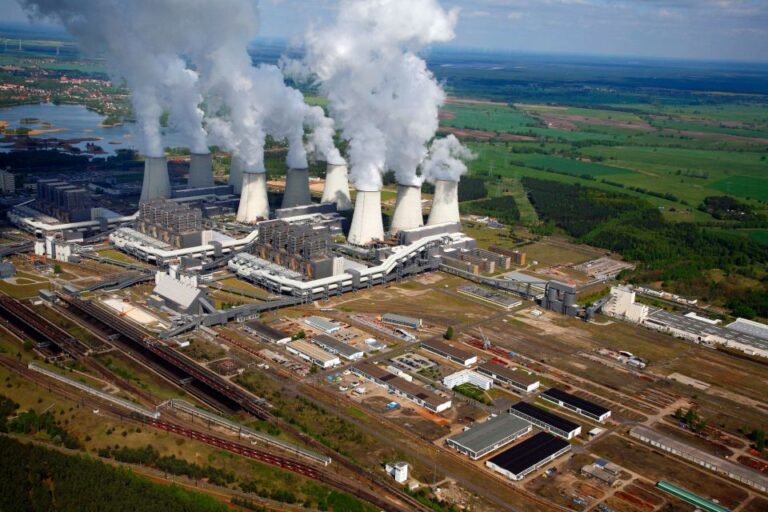
In the Turnow-Preilack area near the Jänschwalde power plant, unknown perpetrators installed more than ten improvised rocket-like devices equipped with charges. Their purpose was to deliver conductive material onto high-voltage power lines and cause a short circuit.
Short circuits and a kind of fireball resulted, while one Jänschwalde unit shut down automatically. Backup systems functioned as intended, preventing a large-scale power outage.
Brandenburg Interior Minister Jan Redmann highlighted an important detail: the modus operandi differs from previous attacks on energy infrastructure associated with Germany’s far-left extremist milieu.
This does not prove that the operation was Russian. But it makes an automatic attribution of the attack to traditional German extremist groups insufficient.
The Timing of the Operation Is Particularly Important
The attack occurred almost simultaneously with one of the most serious escalations in the German-Russian hybrid confrontation in recent years.
On September 1, Berlin officially held Russia responsible for an attempted explosive-drone attack against Ukrainian cargo aircraft at Leipzig/Halle Airport.
Germany responded by closing the Russian House in Berlin and the Russian Consulate General in Bonn, tightening visa restrictions, and introducing other measures.
Moscow promised a response.
On September 2, Dmitry Medvedev effectively articulated a public justification for possible attacks on German territory.
He claimed that, given the German leadership’s “neo-Nazi and rabidly Russophobic policies,” the Leipzig sabotage operation-which he described as fabricated-would have amounted only to the “weakest form of punishment” for Germany.
The most significant part of the statement followed.
According to Medvedev, Germany “deserves a direct strike” against enterprises producing military equipment for Ukraine and possibly against “some other places in Berlin.”
Thus, one of the most senior officials within Russia’s national security establishment publicly legitimized the idea of physical attacks against targets on German territory.
This Is Already Medvedev’s Second Threat Directly Related to Germany in a Short Period
The first important strand of his recent statements concerns Chancellor Friedrich Merz personally and Berlin’s policy toward Ukraine. Medvedev systematically portrays Germany’s current leadership as “Russophobic” and draws historical parallels between contemporary Germany and Nazi Germany.
The second-and considerably more dangerous-strand emerged following Germany’s attribution of the Leipzig attack.
On September 2, Medvedev moved from political rhetoric to effectively identifying potential physical targets: German companies producing military equipment for Ukraine and other targets in Berlin.
At the same time, he broadened the threat to European political leaders, claiming that the leaders of Western, primarily European, states who regularly travel by train to Kyiv are behind Ukrainian “terrorism.”
A broader narrative is therefore emerging: European states supplying Ukraine with weapons should no longer regard either their own territory or their political leaders as untouchable.
Why Jänschwalde Is a Logical Target for a Hybrid Operation
If the Russian hypothesis is confirmed, the choice of target is unlikely to have been accidental.
The attack was not directed against a military facility. Instead, it targeted a critical node in Germany’s energy system.
This is consistent with the logic of hybrid operations.
The objective may not have been the physical destruction of the power plant, but rather a demonstration of the ability to penetrate Germany’s critical infrastructure and cause disruption without deploying regular Russian military forces.
Such operations offer several advantages.
First, they preserve plausible deniability.
Second, the cost of the operation to its organizer is disproportionately lower than its potential economic consequences.
Third, even an unsuccessful attack forces the state to spend substantial resources protecting thousands of energy, transport, and communications facilities.
Fourth, it creates a psychological effect: the public and businesses begin to perceive critical infrastructure as vulnerable.
The Modus Operandi Is Particularly Revealing
The Jänschwalde attack differs from a conventional arson attack.
More than ten specially prepared rocket-like devices equipped with motors were used to deliver conductive material onto high-voltage power lines.
According to Brandenburg authorities, manufacturing the devices did not require specialized military expertise, but did require technical knowledge and a certain degree of preparation.
This potentially corresponds to the contemporary Russian model of using low-level or expendable agents.
The organizer does not need to deploy a professional GRU sabotage team to Germany. Instructions, money, and technical specifications can be transmitted remotely, while the devices themselves are manufactured by locally recruited operatives.
This model significantly complicates attribution.
Could Medvedev Have Personally Approved the Operation?
There is currently no open-source evidence that Medvedev personally authorized the sabotage operation in Brandenburg.
Medvedev’s position, however, makes the question of whether the operation was coordinated with him intelligence-relevant.
Medvedev is not merely a former president or a propagandist. He serves as Deputy Chairman of the Russian Security Council-an institution involved in shaping Russia’s national security policy.
His statements therefore cannot be completely separated from the Russian state decision-making system.
One hypothesis is operational foreknowledge. Medvedev or the Security Council apparatus may have been aware of preparations for operations against Germany, with his public statements serving as part of the information component of a broader campaign.
But the Timing Deserves Particular Attention
The most interesting factor is not any single attack, but the sequence of events:
August 4 – attack in Leipzig;
September 1 – Germany officially accuses Russia;
September 1 – Berlin announces the closure of the Russian House and the Russian Consulate General;
September 1 – attack on a critical energy node in Brandenburg;
September 2 – Medvedev declares that Germany deserves direct strikes on its territory.
The concentration of these events creates a pattern that German intelligence services cannot ignore.
It is particularly important to determine when preparations for the Jänschwalde sabotage operation actually began.
A Second Attack on the Energy System Makes the Picture Even More Complex
Almost simultaneously with the Jänschwalde incident, another act of sabotage occurred at a substation near Bergheim in North Rhine-Westphalia.
There, a deliberately induced short circuit temporarily disconnected five lignite-fired power plant units with a combined capacity of approximately 4,200 MW from the grid.
The overall stability of the electricity system was maintained.
If a connection between Jänschwalde and Bergheim is established, the threat assessment will change fundamentally.
It would no longer be a matter of an isolated act of sabotage, but potentially a coordinated campaign against Germany’s energy infrastructure.
One of the key tasks for the BfV, BKA, and state-level law enforcement agencies should therefore be to compare the devices, their components and manufacturing methods, the channels through which the materials were acquired, and the digital traces of the perpetrators behind the two attacks.
Assessment
There are sufficient indicators to consider foreign-state-directed sabotage, including the Russian hypothesis, as one of the priority lines of investigation.
The most alarming signal is not even Medvedev’s statement itself, but its substance.
After Germany for the first time held Russia responsible for a major sabotage operation in Leipzig and retaliated against Russian state infrastructure, the Deputy Chairman of the Russian Security Council effectively declared that sabotage was too mild a punishment and that Germany deserved direct strikes.
This may indicate the emergence of a new level of Russian coercive signalling toward Berlin: support for Ukraine → Russian hybrid operations → German retaliation → threats to expand the range of targets inside Germany.
The key question, therefore, is not merely who installed the devices near Jänschwalde.
It is necessary to establish whether the simultaneous attacks on German energy infrastructure were isolated actions by domestic extremists or the beginning of the next phase of a pressure campaign against Germany following the failure of the Leipzig operation.
If the second scenario is established, the key KIQ will be: At what level of the Russian system-the GRU/FSB, Presidential Administration, Security Council, or another decision-making center-was the campaign authorized, and did Medvedev have prior knowledge of its implementation?
Several facts are particularly important to the evidentiary basis. Brandenburg police officially confirmed an investigation into suspected disruption of public infrastructure, causing an explosion, damaging critical facilities, and forming a terrorist organization; at the same time, they have not yet identified the organizers. (Brandenburg Police) Redmann also explicitly stated that the method of attack differed from known attacks by left-wing extremists, although that hypothesis remains under investigation. (Die Zeit)Regarding Medvedev, his strongest statement today was that Germany “deserves” direct strikes against companies manufacturing military equipment for Ukraine and possibly against other targets in Berlin. (BR24) The second part of the same statement broadened the threat: Medvedev described Western, primarily European, leaders as “sponsors” of Ukrainian terrorism and specifically referred to their train journeys to Kyiv. (The Guardian)

More on this story: After Leipzig: Germany Moves to Dismantle Russia’s Influence Infrastructure