
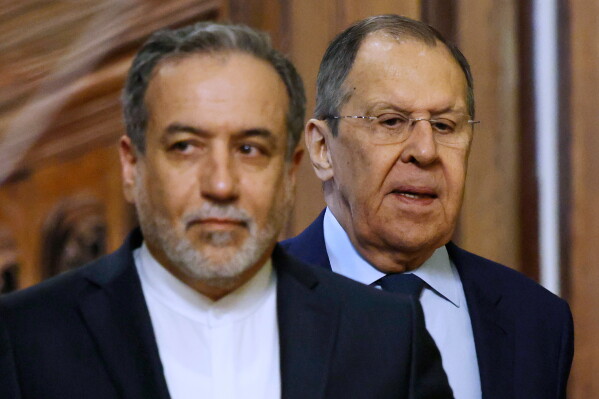
The meeting between Vladimir Putin and Iranian President Masoud Pezeshkian on September 1 at the Shanghai Cooperation Organization summit in Bishkek indicates that Russian-Iranian relations are moving toward a deeper form of strategic cooperation. Particularly revealing is the fact that Putin publicly promised Tehran continued assistance immediately after Washington announced Operation Economic Outcast, aimed at maximizing Iran’s economic isolation.
However, the significance of the meeting extends far beyond bilateral relations. Moscow is trying to use the U.S.-Iran war to build a broader system of states willing to resist U.S. sanctions, financial pressure, and political isolation. In this sense, Bishkek served for the Kremlin less as a venue for supporting Iran than as an attempt to turn the SCO into a political umbrella for states under pressure from Washington.
Russia is unlikely to seek direct entry into the war on Iran’s side. The Kremlin benefits more from preserving Tehran’s ability to continue confronting the United States while keeping its own risks below the threshold of a direct Russian-American clash. The most likely areas of Russian assistance will therefore remain intelligence, satellite information, weapons and components, logistics, economic support, and help in circumventing sanctions.
For Moscow, Iran is becoming an instrument for strategically stretching U.S. resources. The more American military, intelligence, diplomatic, and financial resources the Middle East absorbs, the less freedom of action Washington retains in Europe. This directly serves Russia’s interests in its war against Ukraine.
Putin’s statement about supplying Iran with “essential goods” is deliberately vague. It allows Moscow to affirm allied support without disclosing its actual content, leaving room for deliveries of dual-use goods, components, and other forms of assistance.
The most important part of the Russian-Iranian rapprochement may be taking place not in the military sphere but in finance and logistics. The new U.S. strategy makes Iran’s ability to preserve foreign trade critically important. Russia has its own sanctions-evasion infrastructure built after 2022 and is now interested in partially integrating Russian and Iranian mechanisms.
The SCO is gradually acquiring an additional function: providing political legitimacy for resistance to U.S. sanctions. This does not yet mean the emergence of a full-fledged anti-American military bloc: China, and especially India, retain their own interests and are not prepared to follow the Russian-Iranian line automatically.
1. Why Putin’s Statement Matters More Than Another Declaration of Support
The key feature of the meeting is its timing.
On August 24, U.S. Treasury Secretary Scott Bessent announced Operation Economic Outcast, a campaign designed to sever Iran’s remaining economic links with the outside world. It envisages pressure not only on Iranian entities themselves, but also on foreign intermediaries, banks, carriers, and other organizations that facilitate Tehran’s trade.
Washington is effectively trying to force third countries to choose: economic relations with the United States or assistance to Iran.
Putin’s response should be viewed precisely in this context.
By promising continued assistance to Tehran after the U.S. warning, Moscow is demonstrating a willingness to publicly challenge the mechanism of U.S. secondary sanctions. This raises the political cost of possible American pressure on Russia, because Moscow will be able to portray further U.S. measures not as a separate response over Ukraine, but as part of a global confrontation between the United States and states opposing the American sanctions regime.
The U.S. side has already signaled an expansion of pressure: Bessent said that aviation, maritime shipping, and digital assets used to support Iran could become targets of further measures.
Russian-Iranian cooperation is therefore gradually moving into a new domain: joint resilience against economic warfare.
Iran Is Becoming a Second Front of Strategic Pressure on the United States for Russia
Russia’s most important interest is connected less to the fate of the Iranian regime than to the distribution of U.S. resources.
A prolonged U.S.-Iran confrontation forces Washington to maintain substantial capabilities simultaneously across several strategic theaters:
- the Middle East and the Persian Gulf; Europe and Russia’s war against Ukraine; and the Indo-Pacific and the containment of China.
For Moscow, this situation is advantageous.
Particularly revealing is a Washington Post report that U.S. intelligence obtained information indicating that the Kremlin views the United States as weakened by the war with Iran and may see an opportunity to increase pressure on U.S. interests or Washington’s allies in Europe.
Assistance to Iran can therefore have a kind of force-multiplier effect for Russia.
Moscow does not need to send troops to the Middle East. It is enough to increase Iran’s ability to sustain military pressure on the United States.
Every additional month of conflict increases U.S. expenditure and the need to keep military forces in the region. At the same time, it increases Washington’s political sensitivity to energy prices and the security of the Strait of Hormuz.
This creates additional room for maneuver for the Kremlin in Europe.
A Russian-Iranian Model of Mutual War Sustainment Is Emerging
Relations between Moscow and Tehran have already undergone an important transformation.
Initially, Iran acted primarily as a supplier to Russia of critical strike-drone technology. The transfer of Shahed technology allowed Moscow to establish domestic production and create one of the key instruments of its air campaign against Ukraine.
Now the direction of assistance is partially reversing.
According to The Washington Post, Russia has provided Iran with targeting assistance for strikes against U.S. forces and other targets in the Middle East.
A closed loop is therefore emerging:
Iran → Russia:
UAVs → production technology → combat experience → components.
Russia → Iran:
intelligence → targeting → technology → components → economic and logistical support.
This system is fundamentally different from a traditional military alliance.
Russia and Iran can sustain each other’s wars without formally entering them.
This model is particularly convenient for both sides: it allows them to impose additional costs on their adversaries while limiting the risk of a direct clash between major powers.
What May Be Hidden Behind the Phrase “Necessary Assistance”
Putin deliberately did not specify the content of Russian assistance.
The phrase about supplies of “essential goods” allows Moscow to present the assistance as humanitarian or economic. But the potential range of support is considerably broader.
The most likely areas include energy and food supplies, industrial equipment, electronic components, transport services, and financial infrastructure.
A more sensitive area could involve satellite intelligence and targeting.
An even more serious level would be the transfer of air-defense and electronic-warfare technologies, missile components, and systems for detecting U.S. aircraft and drones.
At the same time, Moscow has a strong incentive not to publicize its most sensitive assistance.
Public support should be maximized, while demonstrable Russian participation in combat operations should be minimized.
This allows Russia both to strengthen Iran and to preserve the ability to deny direct participation in the war.
According to the FT, the Russian Federation is providing Iran with covert technological and scientific-engineering assistance in the development and modernization of precision supersonic cruise missiles. According to Western intelligence sources and intercepted documents, Russian defense research institutes are supplying Iranian specialists with critical components, blueprints, aerodynamic test results, and modern satellite-navigation systems that allow missiles to penetrate air defenses and reach speeds exceeding Mach 3–4.
The transfer of missile technology serves as a direct form of payment by the Russian Federation for large-scale deliveries of Iranian Shahed-136 strike drones, assembly-line technology, and short-range ballistic missiles that are widely used by the Russian military in strikes against Ukrainian infrastructure.
According to the report, Russia’s primary objective is to help Iran develop a ramjet engine that would allow a cruise missile to fly at several times the speed of sound.
According to international military experts, the market value of the technologies, materials-science developments, and specialized equipment transferred to Tehran exceeds $1.5 billion. This cooperation directly violates international understandings on missile-technology proliferation control (the MTCR) and creates a direct threat to civilian shipping in the Strait of Hormuz, U.S. Navy bases, and the military infrastructure of Washington’s allies in the region.
With Russian assistance, Iran has shortened the development timeline for its own supersonic missiles by several years. In response, the United States and the European Union are preparing new packages of secondary sanctions against Russian and Iranian design bureaus, logistics companies, and officials involved in implementing the covert deal.
Russia has also reportedly begun supplying specialized explosives and military-grade components to Iran to replenish and expand its arsenal of missiles and strike unmanned aerial vehicles.
Russia Can Export Its Own “Sanctions Ecosystem” to Iran
Perhaps the most underestimated aspect of the meeting is Pezeshkian’s proposal to jointly seek ways around U.S. sanctions.
After 2022, Russia was forced to build an extensive infrastructure for alternative trade: intermediary companies, complex payment chains, alternative settlement mechanisms, operations through third jurisdictions, and a large-scale maritime system for transporting sanctioned cargo.
Iran has even longer experience with this kind of activity.
Combining the two systems could potentially create a far more resilient infrastructure.
It could include parallel payment channels, settlements in national currencies, crypto assets, intermediaries in third countries, joint transport corridors, and maritime logistics.
This is precisely why U.S. strategy is increasingly focused not on individual Iranian companies, but on the infrastructure that gives Iran access to the global economy. Washington is already considering airlines, the maritime sector, and digital assets as the next areas of pressure.
This creates a difficult problem for the United States: the stronger simultaneous sanctions pressure on Russia and Iran becomes, the greater the incentive for the two countries to create a shared infrastructure for circumventing sanctions.
China Is a Critical Element of This Architecture
Russia can help Iran survive under sanctions, but it cannot fully replace the international market.
China therefore remains the decisive country.
By some estimates, China accounts for the overwhelming majority of Iranian oil exports, making Beijing’s position a central factor in the effectiveness of the U.S. strategy.
This is precisely why the SCO format is useful to Moscow and Tehran.
Iran is trying to turn its bilateral confrontation with the United States into a broader question:
does Washington have the right to use access to the U.S. financial market to coerce third countries?
This framing is considerably more attractive to Beijing, New Delhi, and many states of the Global South.
The Bishkek declaration reflects precisely such an attempt. SCO countries condemned strikes on Iranian territory while also opposing “unilateral coercive measures.”
But the SCO Is Not Yet Becoming an “Anti-American NATO”
It is important not to overstate the outcome of Russia’s diplomatic maneuver.
Putin is interested in portraying China, India, Iran, and Russia as part of a common front against the American “unipolar order.” The reality is considerably more complex.
China is interested in limiting U.S. influence, but not necessarily in an open military confrontation between the United States and Iran.
For India, the situation is even more complicated. New Delhi is simultaneously interested in relations with Russia and Iran, strategic autonomy, and preserving relations with the United States. At the summit, Narendra Modi also called for an end to the war in Ukraine.
Three levels of cooperation should therefore be distinguished: political resistance to U.S. sanctions — high; economic assistance in circumventing them — significant but uneven; willingness to participate in a Russian-Iranian military confrontation with the United States — low.
For now, the SCO is not a military alliance against the United States but a political platform that allows Moscow and Tehran to reduce their diplomatic isolation.
The Kremlin Gains Additional Leverage in Relations With Washington
There is another dimension to Russian assistance to Iran.
The more Moscow is able to influence Tehran’s resilience, the more valuable it becomes to Washington as a potential mediator.
CIA Director John Ratcliffe’s visit to Moscow immediately before the summit is revealing — the first known visit by a CIA director to Russia since late 2021.
This creates a paradoxical situation.
Russia can simultaneously help Iran continue its confrontation with the United States and offer Washington its own services to constrain it.
This is a classic Russian model for creating negotiating leverage: Moscow seeks to become both part of the problem and an indispensable participant in solving it.
In that case, Iran becomes for the Kremlin not only an ally but also a negotiating asset in its broader relationship with the U.S. administration.
The Main Danger Is the Fusion of Two Wars Into a Single System
Russian-Iranian cooperation is gradually creating interdependence between the European and Middle Eastern theaters.
The notional chain looks as follows: U.S.-Iran war → diversion of U.S. resources → greater room for Russia in Europe → Russian assistance to Iran → increased resilience of Tehran → prolongation of the U.S.-Iran war.
A positive feedback loop emerges.
Moscow is therefore objectively interested not necessarily in an Iranian victory, but above all in ensuring that Iran does not lose quickly.
Similarly, Tehran benefits from the continuation of Russia’s war against Ukraine because it sustains Russia’s confrontation with the West and increases the Kremlin’s interest in a strategic partnership with Iran.
In the coming months, Russian support for Iran is most likely to expand cautiously and predominantly below the threshold that Washington could interpret as direct Russian entry into the war.
The most likely developments are expanded intelligence support, supplies of components and dual-use goods, assistance in maintaining transport and financial channels, coordination of sanctions-evasion mechanisms, and diplomatic protection for Tehran through the SCO and other multilateral structures.
Open deliveries of Russian offensive weapons during the active phase of the war are less likely if Moscow assesses that they would create an excessive risk of direct confrontation with the United States.
The key indicator of further escalation will be a shift from Putin’s vague promise to provide “necessary assistance” to evidence of systematic Russian support for Iranian combat operations.
If this occurs, Russian-Iranian relations will effectively move beyond strategic partnership and approach the model of an informal military alliance in which the two sides sustain each other’s wars without assuming collective-defense obligations.
Overall Assessment
The Bishkek meeting should be viewed primarily as an attempt by Moscow to use the war around Iran to alter the broader balance of power with the United States.
Putin’s objective is not so much to save Iran as to make U.S. pressure on it strategically more costly.
At the same time, Moscow is trying to build around Russia, Iran, and partly China an infrastructure of states capable of continuing trade, financial operations, and military-technical cooperation despite U.S. restrictions.
The main outcome of Bishkek may therefore not be a specific package of Russian assistance to Tehran. More important is the political signal: Russia is beginning to view Iran’s resilience as an element of its own strategy for confronting the United States — just as Iran previously viewed Russia’s ability to continue the war against Ukraine as serving its own strategic interests.
The result is not a classical alliance but a network of mutual conflict sustainment capable of linking the war in Ukraine, the confrontation over Iran, the sanctions war, and the struggle over the international financial architecture into a single system of strategic pressure on the West.
More on this story: Iran and Russia are spurring Sudan to become hostile towards the U.S.