
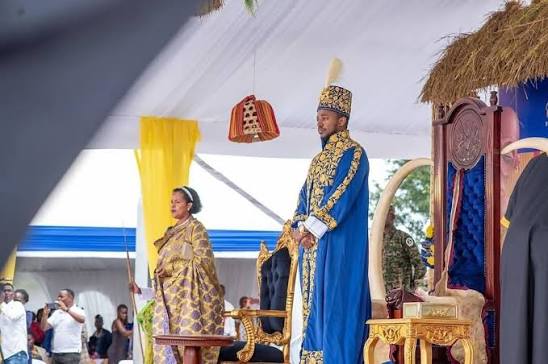
The death of King Oyo Nyimba Kabamba Iguru Rukidi IV at the age of 34 has opened one of the most sensitive transitions in the recent history of Uganda’s traditional kingdoms. Although the immediate issue is dynastic – who will become the next Omukama of Tooro – the consequences extend into Uganda’s domestic politics, regional economic development and potentially the strategic balance in western Uganda.
The central problem is an emerging contradiction between two sources of authority.
The Tooro Kingdom administration announced that King Oyo left a young son and that the continuity of the Crown was therefore assured. President Yoweri Museveni subsequently said Queen Mother Best Kemigisa had personally informed him of the existence of the child.
However, Charles Kayondo Kamurasi, head of the Babiito royal clan, has publicly questioned this account, saying that the royal clan had no knowledge of a biological heir. A 21-member committee of Babiito elders has consequently been established to oversee the succession process.
The dispute therefore concerns more than the identity of a child. It raises the question of who ultimately possesses the authority to determine the legitimacy of the Tooro monarch: the royal household and Kingdom administration, the Babiito clan, or a process in which the Ugandan state becomes an influential arbiter.
How that question is resolved could determine whether the succession reinforces Tooro’s institutional stability or produces a prolonged legitimacy dispute.
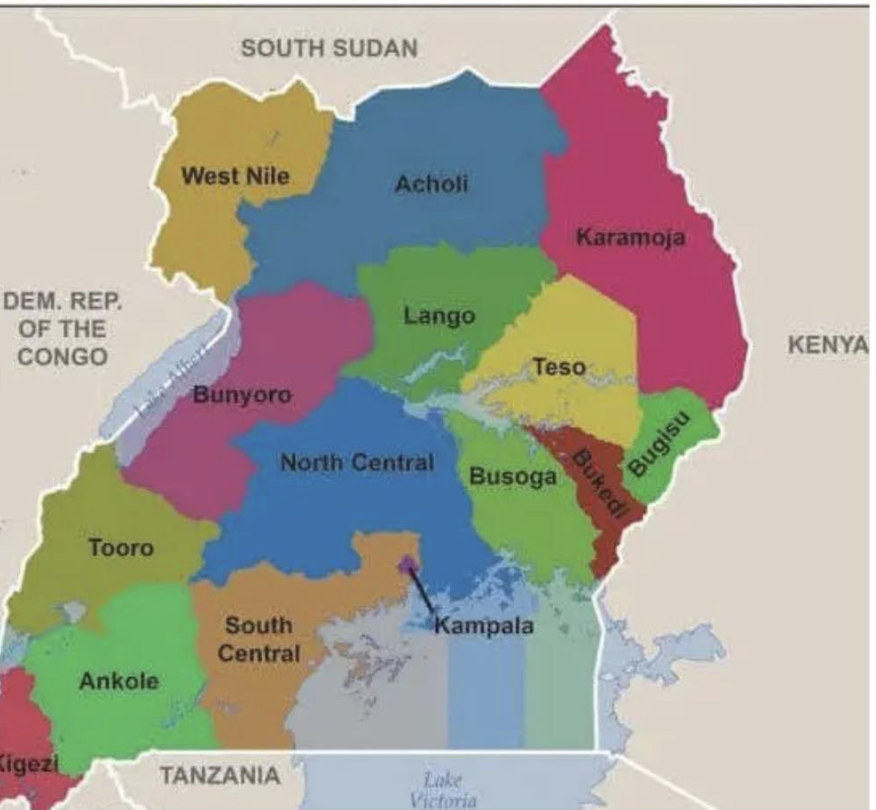
Tooro Is Politically Symbolic but Institutionally Important
The apparent paradox of the Tooro Kingdom is that it possesses considerable influence despite having almost no formal political power.
Uganda abolished its traditional kingdoms in 1967. They were restored in 1993 under President Museveni, but the constitutional settlement deliberately separated cultural authority from political authority.
Article 246 of Uganda’s Constitution permits traditional and cultural institutions to exist but prohibits their leaders from participating in partisan politics or exercising administrative, legislative or executive powers of government.
Article 246 is essentially the constitutional compromise that allowed Uganda’s monarchies to be restored without restoring them as competing centers of sovereign political power.
Uganda’s Constitution recognizes traditional kingdoms such as Tooro, Buganda and Bunyoro, but Article 246(3) draws a sharp boundary around their authority. A traditional leader may hold property in trust, receive privileges and exercise customary and cultural functions, but cannot participate in partisan politics while remaining a traditional leader and cannot exercise governmental administrative, legislative or executive powers.
Why was this restriction necessary?
The answer lies in Uganda’s political history.
Before independence and during Uganda’s early post-independence years, the relationship between the central government and powerful traditional kingdoms-above all Buganda-was a major source of political conflict. Traditional institutions were not merely ceremonial: they possessed territorial identities, political elites, property and considerable popular loyalty.
Milton Obote abolished the kingdoms in 1967. When Yoweri Museveni’s government later restored traditional monarchies, beginning in 1993, it faced a fundamental problem: how could historical kingdoms be restored without recreating alternative political authorities capable of competing with the Ugandan state?
The 1995 Constitution answered that question by separating cultural legitimacy from political sovereignty. Scholarship on Uganda’s traditional institutions similarly describes Article 246 as intended to confine restored kingdoms largely to cultural functions.
The resulting arrangement is effectively: Kingdom → culture + identity + tradition + property + informal influenceversus Republic of Uganda → taxation + legislation + administration + security + foreign policy + executive authority
This distinction is particularly important for understanding Tooro.
Article 246 actually protects the monarchy while limiting the king
There is an interesting duality in Article 246. It does not simply weaken traditional institutions. It also constitutionalizes their existence.
The Constitution says a traditional institution may exist according to the culture, customs, traditions and aspirations of its people. It recognizes the institution as a corporation sole with perpetual succession, capable of owning property and holding assets in trust.
So Uganda effectively says: You can have a king, but you cannot have a second government.
That distinction explains why the Omukama of Tooro can possess enormous symbolic authority while having almost no constitutional executive authority.
Why this matters for the current Tooro succession
It actually makes the succession dispute more interesting rather than less important.
The next Omukama cannot become a governor, command security forces, pass laws or formally determine Uganda’s foreign policy. Nor can he remain king while becoming an ordinary partisan political actor.
But Article 246 does not eliminate informal power.
A Tooro king can still influence social attitudes, cultural identity, development priorities and community mobilization; represent the Kingdom before national and international partners, preside over an institution possessing property, facilitate relationships between regional elites and Kampala, and act as an important source of legitimacy in western Uganda.
This creates an important analytical distinction: constitutional power ≠ political influence.
A monarch may possess very little of the first and considerable amounts of the second.
There is also a deliberate barrier against politicizing ethnic identity
This is another reason Article 246(3)(e) prohibits kings from participating in partisan politics.
Uganda contains numerous historically and culturally distinct communities. If kings could openly endorse political parties, mobilize subjects electorally or transform royal institutions into political organizations, elections could become increasingly organized around historical kingdoms and ethnic constituencies.
The constitutional prohibition therefore attempts to prevent a chain such as: cultural authority → ethnic mobilization → party politics → territorial political claims → competition with Kampala.
This is especially important because allegiance to a traditional ruler can derive from descent, custom and historical identity rather than an ordinary electoral mandate. Article 246 even specifies that nobody can be compelled to give allegiance to, or financially maintain, a traditional leader.
But this produces a paradox for Museveni
Museveni’s system benefits from strong but politically constrained monarchies.
He does not necessarily want institutions such as Tooro to be weak. A respected Omukama can promote development, mediate community tensions, reinforce cultural cohesion and provide Kampala with an influential regional interlocutor.
What the central government does not want is a monarch converting that legitimacy into an independent political mandate.
The preferred model is therefore: high cultural legitimacy + economic/development influence + access to the presidency – but low autonomous political power.
This helps explain why the current Tooro succession is potentially politically significant despite Article 246. The issue is not whether the next king can formally govern western Uganda-he cannot. The issue is who inherits the informal network of legitimacy, property, elite access and regional representation surrounding the Crown.
And if the succession becomes disputed, Article 246 itself points toward an important principle: unresolved questions concerning a traditional leader are to be resolved by the community concerned through a method prescribed by Parliament.
That is why Kampala must be particularly careful about appearing to select Oyo’s successor. The constitutional architecture works precisely because the king derives cultural legitimacy from Tooro while the president derives state authority from Uganda. Blurring those two sources of legitimacy would undermine the compromise Article 246 was designed to preserve.
The Omukama therefore cannot legally function as a regional governor or political sovereign.
But formal authority is only one form of political power.
The monarchy provides a shared cultural institution for the Batooro, represents the region in dealings with Kampala, promotes development projects and tourism, maintains relationships with political and business elites, and possesses considerable symbolic authority.
King Oyo’s unusually long reign strengthened that function.
Ascending the throne at three in 1995, he became internationally recognizable and eventually associated the monarchy with youth empowerment, environmental conservation, health, education, tourism and regional development.
His death therefore removes not merely a ceremonial monarch but a recognizable intermediary between Tooro society, Kampala and international partners.
The Succession Dispute Creates Three Centers of Authority
The immediate succession controversy reveals an important institutional triangle.
The first center is the Kingdom administration, whose prime minister announced that Oyo left a Prince.
The second is the Babiito royal clan, which traditionally controls the dynastic legitimacy of the monarchy and whose elders have now asserted their authority over the succession.
The third is the Ugandan state and President Museveni personally.
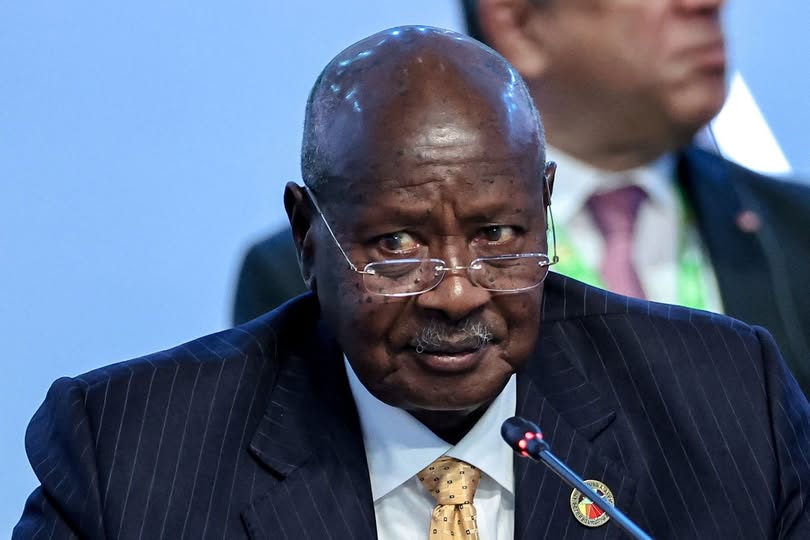
Museveni’s position is particularly sensitive because he publicly confirmed that the Queen Mother had told him that Oyo left a young male heir.
This means that if the Babiito elders eventually reject the alleged heir, the dispute could acquire an unintended political dimension: the traditional authority of the royal clan would conflict with a succession narrative already publicly endorsed by the president.
The government therefore has a strong incentive to avoid appearing to impose a monarch.
A king perceived as having been selected through Kampala’s intervention rather than Tooro custom could begin his reign with a legitimacy deficit.
Why Museveni Has an Interest in a Stable Succession
Tooro has particular importance for President Museveni’s political system.
Traditional monarchies can function as stabilizing intermediaries between the central government and communities with strong historical identities. Maintaining cooperative relations with them allows Kampala to recognize cultural autonomy without conceding meaningful political sovereignty.
Tooro has generally fitted this model.
Museveni maintained a long relationship with King Oyo and the royal family. Government-Kingdom discussions have involved development projects, tourism, infrastructure and the sensitive question of Kingdom property.
The succession therefore presents Kampala with both an opportunity and a risk.
A smooth transition would preserve an institution capable of helping stabilize western Uganda.
A contested succession could instead politicize the monarchy, create competing centers of cultural legitimacy and potentially encourage national political actors to seek alliances with rival royal factions.
That outcome would be particularly undesirable because Uganda itself is simultaneously confronting a much larger succession question: the eventual transition from Museveni after four decades in power.
The parallel is politically striking.
Uganda may therefore be entering a period in which both the presidency and one of its historically important monarchies face questions about succession and institutional continuity.
The two processes are constitutionally unrelated, but their simultaneous presence increases the political importance of legitimacy, inheritance and elite consensus within Uganda.
Tooro’s Economic Importance Is Growing
The economic importance of the Kingdom should not be measured through the finances of the royal institution itself.
Its importance comes primarily from geography.
Tooro sits within western Uganda, one of the areas likely to benefit disproportionately from Uganda’s emerging oil economy, tourism expansion, infrastructure development and cross-border trade.
The region around Fort Portal is also an important tourism gateway. The Rwenzori Mountains, national parks, crater lakes and other attractions make tourism an increasingly significant part of the regional economy.
King Oyo actively cultivated this role.
He promoted the Rwenzori region internationally, including through environmental and climate initiatives, and the Kingdom developed a broader development agenda through Tooro Kingdom Vision 2045.
Shortly before his death, discussions between the monarchy and the Museveni government included expanding the Fort Portal aerodrome into an airport, developing a stadium and resolving disputes over Kingdom property.
The monarchy therefore functions partly as a regional development brand.
A succession crisis could temporarily weaken that role.
The Property Question Could Become Politically Sensitive
One of the least visible but potentially important dimensions of the succession concerns property.
Uganda’s constitution recognizes traditional institutions as corporate entities capable of holding assets and property in trust.
Tooro and the central government have had longstanding discussions concerning Kingdom property and land.
In 2025, Museveni and King Oyo discussed an agreement under which property titles would be returned to the Kingdom following a memorandum of understanding between the government and Tooro.
The identity and legitimacy of the next monarch therefore matters economically.
A disputed monarch could potentially complicate decisions concerning the management of Kingdom assets, development partnerships, leases, tourism projects and relations with local government.
This does not mean that a succession dispute would immediately paralyze economic activity.
But it could create uncertainty over who possesses sufficient cultural and institutional legitimacy to negotiate in the name of the Kingdom.
Oil Makes Western Uganda Strategically More Important
The broader transformation of Uganda’s economy makes the timing particularly significant.
Uganda is moving toward large-scale oil production based on reserves in the Albertine Graben. The government estimates recoverable reserves at approximately 6.5 billion barrels, while investment in the oil and gas sector exceeds $20 billion.
The Tilenga and Kingfisher projects and the East African Crude Oil Pipeline are expected to transform Uganda’s export profile and stimulate construction, logistics, services and local-content industries.
Although Tooro does not control these resources, it lies within the wider western Ugandan economic space affected by this transformation.
That means the Kingdom’s future importance may actually increase.
Traditional institutions can become useful intermediaries in disputes involving land, infrastructure, environmental protection, employment expectations and the distribution of economic benefits.
A respected monarch can provide legitimacy and mediation.
A disputed monarchy can do the opposite.
The DRC Border Adds a Security Dimension
Geography also gives Tooro indirect geopolitical significance.
The Kingdom is located in western Uganda close to the Democratic Republic of Congo, placing it near one of East Africa’s most unstable strategic environments.
Uganda already plays a major security role in the region and maintains military involvement in the DRC as well as other regional theaters.
Western Uganda consequently sits at the intersection of several strategic issues: oil development → cross-border trade → tourism → refugee movements → military operations in eastern DRC → security against armed groups.
The Tooro monarchy does not control any of these policies.
But cultural legitimacy can matter greatly in regions where the state needs cooperation from local communities.
This makes political stability within Tooro valuable to Kampala for reasons extending beyond ceremonial politics.
A Child King Would Produce a Different Political Structure
If the reported son of King Oyo exists and is recognized as the legitimate heir, Tooro could once again have a child monarch.
This would be historically remarkable because Oyo himself became king at three and spent much of his childhood reigning through a regency.
A similar outcome would transfer practical influence away from the monarch toward the people surrounding him.
The central question would then become not simply who is King? but who governs around the King?
The Queen Mother, royal family, Babiito elders, Kingdom prime minister and other senior officials could acquire much greater influence.
A regency would therefore create a new internal balance of power.
This could produce continuity if the principal actors cooperate.
But it could also create prolonged competition over access to the Crown, control over royal institutions, appointments, property and relations with Kampala.
The younger the successor, the more important the composition of the regency becomes.
An Adult Prince Would Create a Different Risk
If the claim that Oyo left a son is rejected and the Babiito elders select another prince from the royal lineage, the institutional dynamics would be very different.
An adult monarch could immediately exercise cultural leadership without a prolonged regency.
However, his greatest challenge would be legitimacy.
Supporters of the alleged son could argue that the rightful hereditary line had been bypassed.
Conversely, installing the reported child without convincing the Babiito elders of his dynastic legitimacy could produce the opposite problem.
The most dangerous outcome is therefore not necessarily one particular candidate winning.
It is the emergence of two competing narratives of royal legitimacy.
One would derive authority from biological succession through Oyo.
The other would derive authority from the Babiito clan’s traditional right to validate and select the monarch.
If these narratives become associated with different political or economic factions, the dispute could persist well beyond the coronation.
The State Must Avoid Becoming the Kingmaker
Museveni’s involvement will therefore require considerable caution.
The president possesses enormous political influence, but excessive involvement could be counterproductive.
If Kampala openly favors a particular candidate, opponents could frame that candidate as a government-imposed monarch.
This would undermine precisely the characteristic that makes traditional institutions useful to the Ugandan state: their independent cultural legitimacy.
The most effective strategy for Kampala is therefore likely to be procedural rather than substantive – maintaining security, facilitating the funeral and transition, encouraging negotiations, and allowing the Babiito and Tooro institutions to produce a succession formula that can be publicly accepted as traditional rather than presidential.
Ugandan law broadly supports this approach. Disputes concerning traditional leadership are supposed first to be addressed through the customs and conflict-resolution mechanisms of the relevant community, with judicial intervention available if those mechanisms fail.
Three Succession Scenarios
Scenario 1 – The reported son is authenticated and accepted by the Babiito clan.
This would provide the strongest dynastic continuity.
A regency or comparable guardianship arrangement would probably become the critical institution. Political risk would remain relatively low if the Queen Mother, Babiito elders and Kingdom administration agree on the arrangement.
The main challenge would be preventing competition among adults surrounding the young monarch.
Scenario 2 -No son is recognized and the Babiito select another prince.
This could also produce a stable transition if the Kingdom administration, royal household and central government accept the decision.
An adult successor might actually provide stronger immediate leadership than a child monarch.
The risk would come from unresolved claims concerning Oyo’s alleged son.
Scenario 3 – Competing claims persist.
This is the most destabilizing scenario.
A faction around the royal household or Kingdom administration could support one claimant while Babiito elders recognize another.
The dispute could then move into Uganda’s courts or require political mediation from Kampala.
At that point succession would cease to be primarily ceremonial and become an institutional conflict over who legitimately represents the Tooro Kingdom.
The Geopolitical Effect Will Be Indirect but Real
The succession is unlikely to alter Uganda’s foreign policy directly. Tooro does not possess independent diplomatic authority and the Omukama cannot legally determine Uganda’s relations with neighboring states.
The geopolitical consequences are therefore likely to be indirect.
A stable monarchy strengthens social cohesion in a strategically important part of western Uganda at a time when Kampala is expanding its economic and military involvement around the Albertine region and eastern DRC.
A weakened or divided monarchy reduces the effectiveness of an important local intermediary.
This matters especially as Uganda’s western regions become economically more valuable because of oil, infrastructure and tourism.
Foreign investors generally care less about which prince occupies a traditional throne than about whether local institutions remain predictable, land disputes are manageable and major projects retain community legitimacy.
The economic relevance of the succession therefore lies primarily in institutional stability rather than royal authority itself.
King Oyo’s death should not be interpreted merely as a ceremonial transition within one of Uganda’s traditional monarchies.
It occurs at the intersection of three broader processes: Uganda’s own long-term political succession, the economic transformation of western Uganda, and the increasing strategic importance of the Uganda-DRC frontier.
The most important immediate issue is consequently not simply the identity of Oyo’s successor.
It is whether Tooro’s traditional institutions can produce a successor whose legitimacy is simultaneously accepted by the Babiito royal clan, the royal household, the Kingdom administration, the Ugandan government and the wider Batooro community.
If they succeed, the monarchy could emerge from the transition institutionally stronger, demonstrating that its traditional mechanisms remain capable of resolving an unexpected dynastic crisis.
If they fail, Tooro could enter a prolonged period of competing legitimacy in which royal succession becomes entangled with property, development interests and national politics.
The decisive indicator will be the behavior of the 21-member Babiito succession committee.
Its ability either to authenticate the reported son or to produce an alternative candidate accepted by the other centers of authority will determine whether the succession remains a cultural process or evolves into a political dispute.
The broader strategic question is therefore:
Can the Tooro monarchy manage an unexpected succession without allowing Kampala’s political interests, royal-family divisions and the growing economic value of western Uganda to transform a dynastic question into a contest for regional influence?
The succession uncertainty is real: the Kingdom administration says Oyo left a prince, while the head of the Babiito royal clan says the clan had no knowledge of such a child; a 21-member elders’ committee is now responsible for the traditional process. (allafrica.com) President Museveni has publicly supported the existence-of-an-heir account based on information from Queen Mother Best Kemigisa, which makes any future contradiction between the royal clan and the presidency politically sensitive. (people.com)
Economically, the larger context is significant: Uganda expects its emerging oil industry- more than $20 billion in investment and an estimated 6.5 billion barrels of recoverable reserves-to accelerate industrialization and infrastructure development, while tourism generated a record UGX 5.83 trillion in receipts in 2025. (development.finance.go.ug) King Oyo himself had been working with Museveni’s government on tourism, Fort Portal infrastructure and the return of Kingdom property titles, underscoring the monarchy’s practical role as a development intermediary despite its lack of formal governmental powers. (ubc.go.ug)
The immediate indicator to watch is whether the Babiito committee validates the reported son before or shortly after the funeral process. The nine-day mourning period begins when Oyo’s body reaches Karuziika Palace, and the Kingdom has formally placed succession under the Babiito committee’s authority. (monitor.co.ug)I can monitor the succession and alert you when the Babiito committee identifies the heir or a serious rival claim emerges.