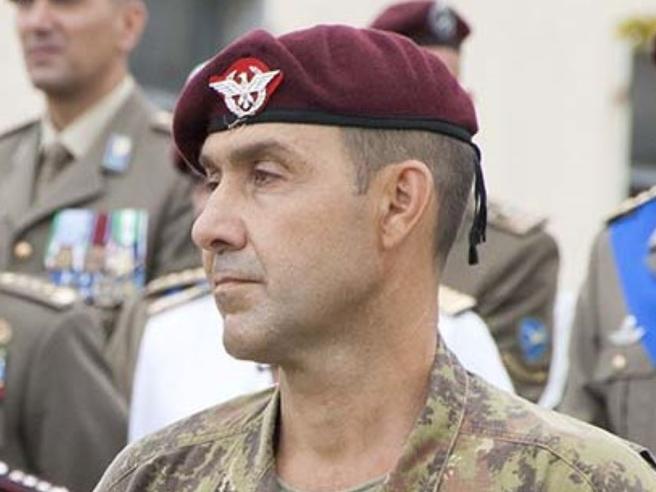


Within the ruling Fratelli d’Italia (FdI) party, concern is growing over Roberto Vannacci’s political activities and the possibility of Russian influence on his entourage or political project. At the same time, information available in open sources does not support a conclusion that Vannacci has a direct operational or financial connection to the Kremlin. Concern within FdI is therefore better understood as a reaction to a combination of political, biographical, and foreign-policy indicators rather than as the consequence of an established fact of cooperation with Russia.
The debate intensified after a Financial Times publication portrayed Vannacci as a potential “Trojan horse” for Russian influence in Italy. Against this backdrop, some FdI representatives began asking “whom the former general really reports to.” The very appearance of such language within the main governing party is an important indicator: for Giorgia Meloni’s camp, the Vannacci issue is moving beyond ordinary competition within the Italian right and is increasingly perceived as a potential risk to the government’s foreign-policy course.
Suspicion is reinforced by Vannacci’s biography. In 2021–2022, he served as Italy’s military attaché in Moscow, meaning that he was in the Russian capital during the period immediately preceding and at the beginning of Russia’s full-scale invasion of Ukraine. This fact alone is not evidence of recruitment or informal ties to Russian structures. However, for political opponents and some within FdI, it raises additional questions about the nature of the contacts Vannacci developed while serving in Russia, particularly in light of his subsequent political evolution.
An additional factor is the high degree of overlap between his current foreign-policy positions and Moscow’s objectives toward Italy and Europe. Vannacci opposes sanctions policy, is critical of military support for Ukraine, and advocates restoring relations with Russia. The program of his political project, Futuro Nazionale, calls for a reassessment of Italy’s foreign-policy commitments and allows for significantly greater strategic autonomy for Rome from Euro-Atlantic structures, including a radical reconsideration of relations with NATO.
Why FdI Is Wary of Vannacci
FdI’s concern has at least three dimensions: security, electoral, and strategic.
First, Vannacci potentially undermines one of the principal foreign-policy transformations carried out by Giorgia Meloni after coming to power. Meloni sought to transform FdI from a party with post-fascist origins, regarded with suspicion by some European partners, into a predictable Atlanticist conservative force capable of governing the EU’s third-largest economy. Support for NATO, strategic relations with the United States, and assistance to Ukraine became key instruments of this international legitimization. Vannacci effectively proposes moving in the opposite direction.
For FdI, therefore, the problem is not only whether Vannacci has direct contacts with Moscow. Even an autonomous Vannacci who does not coordinate his actions with the Kremlin could objectively function as a political retransmitter of narratives favorable to Russia. For Moscow, what matters is not necessarily control over a particular politician, but the ability of such politicians to shift the boundaries of acceptable debate: moving the lifting of sanctions, ending aid to Ukraine, or distancing Italy from NATO from the political margins into the mainstream.
Second, Vannacci poses an electoral threat to FdI on the right flank. His combination of nationalism, anti-establishment rhetoric, criticism of the EU, migration policy, and the Euro-Atlantic course is aimed largely at the same voter segment that fueled the rise of Fratelli d’Italia. If Futuro Nazionale strengthens, Vannacci could persuade part of the more radical electorate that Meloni, after taking power, has become too moderate, too pro-European, and too dependent on Washington and Brussels.
This creates a difficult dilemma for FdI. Ignoring Vannacci leaves him room to consolidate the radical-right electorate, while attempting to compete with him by radicalizing its own rhetoric could jeopardize the centrist and Atlanticist image of the Meloni government.
Third, Vannacci could become a channel for bringing the “Russia question” back into the internal struggle of the Italian right. Moscow has traditionally been interested not necessarily in creating a single controlled pro-Russian party, but in broadening the spectrum of political forces that question sanctions, assistance to Ukraine, and transatlantic solidarity. The emergence of an independent right-wing project capable of drawing votes away from FdI while making normalization of relations with Russia part of the electoral debate objectively serves that goal.
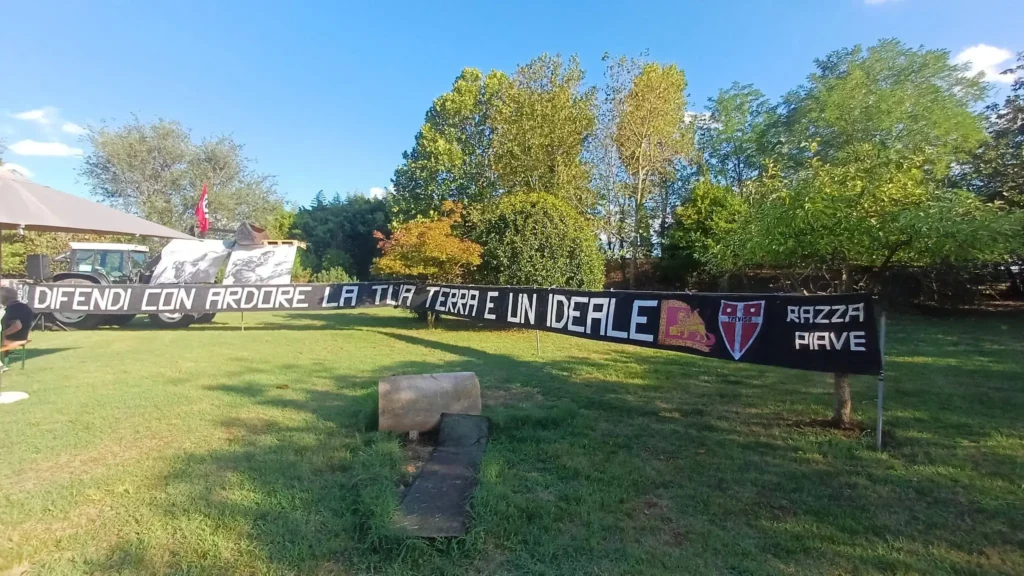
For this reason, the central concern within FdI may be not a proven link between Vannacci and the Kremlin, but his deliberate fascist rhetoric and uncertainty regarding the origins, milieu, and potential external support of his political project.
Potential Effects on Italy
The greatest risk lies in the gradual normalization of a pro-Russian agenda within the Italian right. If calls to lift sanctions, end military support for Ukraine, and pursue strategic rapprochement with Moscow cease to be marginal and become subjects of competition among right-wing parties, even mainstream political forces could be compelled to adjust their positions under electoral pressure.
In such a scenario, Vannacci could be important to Russian strategy even without a direct relationship with Russian intelligence services or the Kremlin. His political value to Moscow would lie primarily in his potential ability to alter the internal balance of the Italian right and increase the political cost of maintaining sanctions and support for Ukraine.
Implementing Vannacci’s calls for strategic rapprochement with Moscow could complicate Italy’s implementation of common NATO and EU policy toward Russia. Even partial distancing by Rome from sanctions policy or assistance to Ukraine would have consequences far beyond Italy itself. It could strengthen other European forces advocating normalization with Moscow and place additional pressure on EU and NATO unity.
Thus, the principal threat FdI may see in Vannacci lies not so much in the possibility of direct Kremlin control as in his ability to build an alternative pole on the right in which nationalism, Euroscepticism, and anti-establishment rhetoric are combined with a revision of Italy’s Atlanticist course. Such a configuration would simultaneously threaten Meloni’s electoral dominance on the right and her central foreign-policy achievement: transforming FdI into an acceptable and predictable partner for the United States, NATO, and the leading EU states.
Open sources contain no evidence that Vannacci was recruited by Russian intelligence services or maintained a secret channel to the Kremlin. There are, however, three circumstances that genuinely warrant counterintelligence attention: the unusually rapid establishment of good relations with Russian military officials; his attendance at unnamed Russian circles/think tanks described by sources as borderline; and Vannacci’s own confirmation in 2026 that he maintained some Russian acquaintances after returning from Moscow.
What Exactly Did He Do in Moscow?
Vannacci arrived in Moscow in late 2020 and officially took up his post as defense attaché at the Italian Embassy on February 7, 2021. His accreditation covered not only Russia but also Belarus, Armenia, and Turkmenistan. He remained in the post until May 2022, when Moscow expelled a group of Italian diplomats and military personnel in retaliation for Italy’s expulsion of Russian representatives.
His official duties extended well beyond ceremonial diplomacy. A military attaché maintains contacts with the host country’s Ministry of Defense, accompanies Italian military delegations, coordinates military and military-technical cooperation, maintains relations with military attachés from other countries, and handles diplomatic clearances for military aviation and naval vessels. These functions are still described in this way by the Italian Embassy in Moscow.
By virtue of his position, Vannacci therefore had legitimate professional access to the Russian military establishment.
More interesting is how he assessed Russia.
According to a reconstruction by L’Espresso, diplomatic sources in Moscow said Vannacci quickly established “ottimi contatti” – very good contacts – with Russian military officials. At the same time, his initial assessments of the Russian threat were comparatively reassuring. In particular, according to these reports, he assessed Russia’s large-scale military exercises in 2021 far more calmly than U.S. and British institutions did.
An even more revealing episode later appeared in the memoirs of then-Italian Ambassador Giorgio Starace. According to Starace’s account, immediately before the invasion in February 2022, when Russia had already massed approximately 150,000 troops around Ukraine, Vannacci did not expect a large-scale war. After the invasion began, however, Starace recalled that Vannacci expected a rapid Russian breakthrough and Kyiv’s capitulation within roughly two weeks.
This indicates that his analytical perception of Russian military capabilities and intentions turned out to be very close to the way Moscow itself portrayed the situation: underestimating the probability of invasion before February 24 and overestimating Russia’s ability to achieve a rapid victory once the invasion began.
Whom Did He Contact?
This is where the limits of what OSINT can establish become clear.
Open sources do not provide a reliable list of Russian generals, Defense Ministry officials, or intelligence representatives with whom Vannacci maintained regular contact.
In December 2023, La Stampa reported, citing senior political and military sources familiar with material concerning Vannacci, that attention had focused on the “consessi e think tank russi” that the general attended in Moscow. Some of these circles were described by the source as borderline. The names of these organizations were not publicly disclosed.
The Italian Moscow Milieu Also Matters
Vannacci initially served under Ambassador Pasquale Terracciano and, from autumn 2021, under Giorgio Starace. Terracciano later described him as an open, friendly, and sociable officer.
La Stampa also drew attention to Vannacci’s good relationship with former Italian Ambassador to Russia Cesare Maria Ragaglini, who after his diplomatic career worked in Russia’s state banking sector.
Another important connection is former special forces officer Fabio Filomeni, whom Vannacci himself has described as a friend. Filomeni publicly adopted considerably clearer anti-NATO and pro-Russian positions. Again, however, this is a political and social connection, not evidence of Vannacci having contact with Russian intelligence services.
In June 2026, Vannacci himself confirmed that he continues to maintain some contacts with Russians he met while working in Moscow.
At the same time, he categorically denied contacts with senior representatives of the Russian leadership. Asked about possible ties, he responded ironically about Putin and then clarified that he had no contacts with senior members of the Russian state apparatus, but retained “some contacts” with Russian friends whom he met while living in Russia for almost two years; according to him, almost all of them are engaged in ordinary professional activities.
“Who exactly belongs to this network of retained contacts, and does it overlap with the people and organizations with whom he interacted in his official capacity as military attaché?”
Another Important Circumstance: His Expulsion Does Not Prove a Conflict With the Kremlin
Vannacci has repeatedly argued that he cannot be pro-Russian because he was “expelled by Putin and Lavrov.”
This wording is misleading about the nature of the event.
His expulsion was part of diplomatic reciprocity after Mario Draghi’s government expelled Russian representatives. Moscow responded by expelling Italian diplomats and military personnel, including Vannacci. La Stampa directly linked this step to Italy’s expulsion of Russian military attaché Alexei Nemudrov.
His expulsion therefore is not evidence that Moscow regarded Vannacci as hostile to Russia.
There are documented cases in which Soviet/Russian intelligence services attempted to recruit foreign military attachés or other military diplomats serving in Moscow/the USSR. It is important to distinguish three categories: proven recruitment, an unsuccessful recruitment attempt, and ordinary professional contact between a military attaché and Russian military officials.
The most illustrative documented example is the 1981 case involving U.S. military attachés James R. Holbrook and Thomas A. Spencer. The U.S. Embassy in Moscow officially stated that Soviet authorities had organized an attempt to compromise, blackmail, and recruit the two officers. Contemporary reports suggested that the operation may have involved incapacitating the officers, creating sexual kompromat, and arranging for a familiar Soviet colonel to appear at the right moment and offer “help.” The officers reported the incident to their superiors, and the operation failed.
This case is relevant to Vannacci not because it proves anything about him, but because it demonstrates that a foreign military attaché in Moscow has historically been a natural HUMINT target for Russian services.
Why a Military Attaché Is a Valuable Target
Russian intelligence does not necessarily need classified documents from an attaché. Far more valuable may be long-term access to an individual who, after a Moscow posting, continues a career in his country’s Ministry of Defense, General Staff, intelligence community, or politics.
Research on Russian intelligence explicitly identifies the defense establishments of NATO countries as priority targets for the SVR/GRU: Moscow seeks information on military plans, nuclear policy, future weapons systems and – particularly significant – individuals who could potentially become agents of influence or penetration agents.
An attaché is therefore of interest in two dimensions: access now + potential access later.
The Moscow Model Can Be Much Softer Than Classical “Recruitment”
A more plausible sequence is: official contact → social relationship → assessment → cultivation → personal relationship → testing → recruitment/influence relationship.
For example, a foreign attaché is required by his position to communicate with Russian officers. The initial contact is therefore entirely legitimate.
Invitations may then follow to conferences, military-history events, think tanks, informal dinners, contacts with veterans, academic institutions, or individuals presenting themselves as former military personnel.
At this stage, the principal objective may not be obtaining information but assessing the individual: ambitions, ideology, attitudes toward the United States/NATO, money, family problems, ego, grievances against superiors, political ambitions, and propensity for risk.
Only after this could cultivation begin.
This is why the absence of evidence of formal recruitment does not necessarily rule out an influence operation.
Russian Military Diplomats Themselves Are Actively Used for HUMINT
There is also mirror-image evidence of how closely Russian military diplomacy is linked to intelligence activity.
In its analysis of the GRU, the Congressional Research Service cited numerous cases in which Russian military diplomatic positions were used for intelligence work. Among other examples, Bulgaria expelled a Russian military attaché for espionage in 2020, while in 2021 Bulgarian prosecutors uncovered a network that passed classified military information to Russian military intelligence.
The military-to-military diplomatic environment is therefore one of the natural operating spaces for the GRU.
This makes not only a foreign attaché’s official meetings with the Russian Defense Ministry important, but also contacts outside formal protocol.
What This Means for Vannacci
The mere fact that Roberto Vannacci maintained good relations with Russian military officials in 2021–2022 proves very little. As Italy’s military attaché, he was required to maintain such contacts.
Even the possibility that Russian services assessed him as a potential HUMINT target would be a normal counterintelligence hypothesis rather than evidence of cooperation.
The more important question is whether any contacts moved beyond his official functions and survived the end of his Moscow posting.
This is where the previously established facts become important. Vannacci acknowledged in 2026 that he retained contacts with some Russians he had known while serving in Russia. At the same time, he denies ties to senior Russian officials.
Did the GRU, SVR, or FSB conduct assessment/cultivation of Vannacci while he served as military attaché; which Russian contacts could have been used for this purpose; and did the corresponding relationship channels survive his departure from Moscow?
Five particularly important indicators emerge:
- 1. Recurrence of individuals. Are the same people Vannacci met as an attaché present among his current Russian contacts?
- 2. Non-protocol contacts. Who invited him to the Russian think tanks/consessi that Italian sources characterized as problematic or borderline?
- 3. Change of channel after 2022. After his expulsion, did contacts move from official emails/telephones to Telegram, Signal, private addresses, or intermediaries?
- 4. Contacts after the start of his political career. If a Russian interlocutor who knew Vannacci as a military attaché continued the relationship after Vannacci became a member of the European Parliament and a political leader, the intelligence value of that relationship would have increased sharply.
- 5. Contact-narrative correlation. Did contacts with Russian interlocutors precede changes in his positions on sanctions, Ukraine, NATO, Crimea, or Italy’s relations with Russia? A correlation alone proves nothing, but a systematic temporal relationship would be an important indicator.
The Most Important Detail
For a Russian intelligence service, Vannacci today could potentially be considerably more valuable than he was in Moscow.
In 2021, he was an Italian general and military attaché with access to the defense establishment.
After Moscow, he became a public political figure, a member of the European Parliament, and the leader of his own political milieu.
Therefore, even if no classical recruitment took place in Moscow, a professional contact that gradually developed into a persistent personal relationship could, from a HUMINT perspective, have become considerably more valuable several years later.
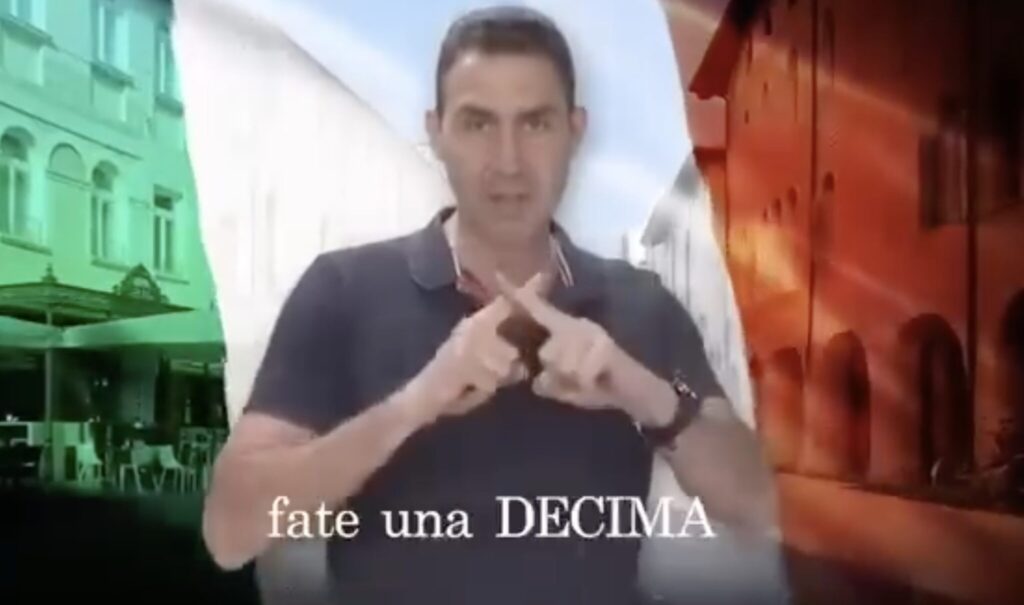
More on this story: The Rise of Vannaccismo: A Structural Shift in Italy’s Radical Right?