
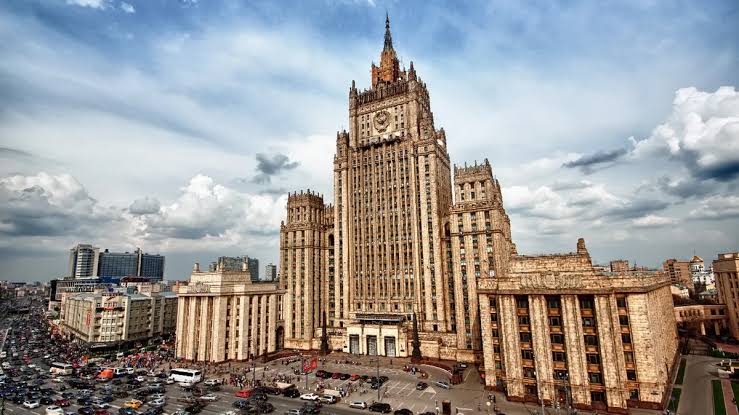
Against the backdrop of intensifying Russian hybrid activity in Europe, Poland is calling for a systematic reduction of Russia’s diplomatic presence across the European Union. Warsaw’s initiative envisages not only the possible expulsion of a significant number of Russian diplomats, but also restricting those who remain to the territory of the country in which they are accredited and tightening visa rules. In effect, Poland is proposing a shift from reacting to individual identified Russian intelligence officers toward dismantling part of the infrastructure that could potentially support their activities in Europe.
According to Polish Foreign Minister Radosław Sikorski, speaking on September 3, 2026, following a meeting of the Weimar Triangle, roughly 40 percent of the approximately 2,000 Russian diplomats accredited in EU member states may be working in the interests of Russian intelligence services. If this estimate reflects the actual scale of the presence of career intelligence officers and other associated personnel, the issue goes beyond the traditional use of diplomatic cover for intelligence collection. It would point to a substantial and permanent Russian intelligence infrastructure operating inside the European Union.
The central problem lies not so much in the number of Russian diplomats as in the functions such a network could potentially perform. Diplomatic status provides favorable conditions for legal residence, establishing contacts, holding meetings, traveling, using protected communications and maintaining links with Moscow. Combined with freedom of movement within the Schengen Area, this potentially allows a single intelligence hub to support operations far beyond the country in which its personnel are accredited.
This is why the Polish initiative has implications that go well beyond another round of diplomatic expulsions. Warsaw is effectively proposing to deprive Russian intelligence services of one of their principal operational advantages in Europe -the ability to use transnational diplomatic infrastructure as an enabling platform for intelligence and other covert operations.
From Classical Espionage to Enabling Hybrid Operations
Following the large-scale expulsion of Russian intelligence officers from European countries after 2022, Moscow was forced to partially adjust its operating model. Instead of relying almost entirely on career officers operating under diplomatic cover, Russian services have increasingly been able to turn to remotely recruited operatives, criminal networks, proxy structures and so-called expendable agents – individuals recruited for specific assignments without undergoing prolonged agent development.
This decentralization, however, does not mean that diplomatic cover has lost its importance. On the contrary, its function may have changed.
A career intelligence officer operating under diplomatic cover does not necessarily need to carry out sabotage personally or directly manage the operative conducting it. The officer’s value may instead lie in intelligence collection, identifying potential assets, maintaining contacts, assessing the operational environment, providing logistical support, transmitting information and establishing backup communication channels.
The contemporary Russian model can therefore be understood as a multilayered system:
Moscow → intelligence service → diplomatic/official infrastructure → intermediary or remote channel → local agent/proxy → operation.
The Polish proposal is aimed primarily at disrupting the intermediate layers of this system.
Rising Sabotage Activity Changes the Risk Assessment
Warsaw’s argument is reinforced by the sharp increase in incidents involving critical and defense infrastructure across Europe. Open-source figures attributed to Germany’s Federal Criminal Police Office indicate a substantial number of sabotage-related incidents, suspicious drone detections and overflights of critical infrastructure and defense-industry facilities during 2026.
However, this body of incidents does not in itself prove that they were coordinated by Russian diplomats. Such a conclusion would require operational or judicial evidence linking specific diplomatic personnel, Russian intelligence services and individual perpetrators.
The significance of the statistics lies elsewhere: they demonstrate a sharp increase in the burden on European counterintelligence services at precisely the moment when Russia retains a significant number of officially accredited personnel capable of operating relatively freely across the European space.
Poland’s logic is therefore primarily preventive. Even if only a portion of Russian diplomatic personnel perform intelligence functions, reducing their numbers raises Moscow’s operational costs, makes it more difficult to maintain networks and forces Russian services to rely more heavily on less secure channels.
Schengen as a Counterintelligence Vulnerability
The strongest element of the Polish proposal may not be the expulsions themselves, but rather restricting Russian diplomats’ movement to the countries in which they are accredited.
Under the current model, a diplomat accredited in one Schengen state enjoys considerably broader geographical mobility. From an intelligence perspective, this creates an important advantage: an officer under counterintelligence surveillance in one country could potentially use a neighboring state for meetings, reconnaissance or other operational activities.
It also creates opportunities for cross-border operational support. An operation in Germany, for example, would not theoretically have to be supported exclusively from a Russian diplomatic facility in Germany. Personnel or resources based in another EU member state could potentially perform particular supporting functions.
This is why bilateral expulsions have limited effects. A state may substantially reduce the Russian intelligence presence on its own territory without completely neutralizing the possibility that Moscow will use diplomatic infrastructure located in neighboring countries.
The Polish proposal is effectively designed to eliminate this asymmetry.
Why Moscow Has an Interest in Maintaining a Large Diplomatic Corps
For Russian intelligence services, diplomatic cover remains one of the safest mechanisms for maintaining career personnel abroad. Unlike illegals or recruited local agents, a diplomat has a legitimate reason to reside in the country, access to diplomatic facilities, opportunities to maintain contacts across political, military, economic and civil-society circles, and a degree of legal protection.
The size of Russia’s diplomatic corps therefore has more than symbolic significance. It helps determine the operational capacity of the Russian state presence abroad.
Reducing personnel means that individual officers must cover more tasks and maintain more contacts. This increases their operational workload, makes behavioral patterns more visible to counterintelligence services and reduces opportunities to rotate personnel.
A large-scale reduction of the diplomatic corps could therefore have a cumulative effect: it would not eliminate Russian intelligence activity, but it could reduce its scalability while increasing its operational costs.
Why an EU-Level Decision Matters
The principal weakness of previous European policy has been its fragmentation. Individual countries have expelled dozens of Russian diplomats, closed consulates or reduced staffing levels, but Moscow has been able to partially compensate for these losses by using its diplomatic presence in other states.
This creates a classic weakest-link problem: the effectiveness of EU counterintelligence measures is determined not by the country imposing the strictest restrictions, but by the state that leaves the greatest room for Russian activity.
A coordinated restriction on movement could therefore prove even more consequential than mechanically expelling 40 percent of Russian diplomats. It would turn each national counterintelligence jurisdiction from one component of an open Schengen system into a separate control perimeter for Russian diplomatic personnel.
Potential Consequences
Implementing Poland’s proposal is unlikely to end Russian hybrid operations. Instead, it would probably accelerate Moscow’s existing adaptation: greater use of illegals, third-country nationals, criminal intermediaries, remote recruitment through social media and messaging platforms, commercial structures and short-term operatives.
Yet this may be precisely the strategic objective.
Counterintelligence does not necessarily need to deprive an adversary of the ability to operate altogether. It may be sufficient to force the adversary to move from protected, scalable and legally established infrastructure toward more expensive, riskier and more easily exposed operating models.
The Polish initiative therefore points toward a potential transition in European counterintelligence policy from a reactive model – identify an individual spy and expel them -toward a systemic one:
reduce infrastructure → restrict mobility → complicate coordination → increase operational costs → force Russian services toward more vulnerable channels.
If Warsaw’s proposal wins the support of key EU states, its significance would extend far beyond another diplomatic confrontation with Moscow. It would amount to an attempt to structurally constrain the freedom of action of Russian intelligence services within the Schengen Area.
The greatest potential effect would not necessarily be a short-term decline in the number of Russian operations, but rather the degradation of one of the safest mechanisms available to support them.
Moscow would likely respond with reciprocal expulsions of European diplomats while shifting an even larger share of its intelligence and sabotage activity toward illegals, proxies and remotely managed networks. Reducing Russia’s diplomatic presence should therefore be accompanied by stronger counterintelligence measures targeting non-diplomatic Russian HUMINT, expendable agents, cross-border intermediaries and remote recruitment networks.
The central question for the EU is consequently no longer simply how many Russian intelligence officers are operating under diplomatic cover, but whether European governments are prepared to move from nationally fragmented expulsions toward a unified counterintelligence regime across the Schengen Area.
That is the broader strategic significance of the Polish initiative.For a think-tank publication, I would use “From Diplomats to Enabling Infrastructure: Poland Pushes the EU to Disrupt Russia’s Intelligence Network.” It captures the key analytical argument without asserting a direct diplomatic link to specific sabotage operations that the available evidence does not establish.