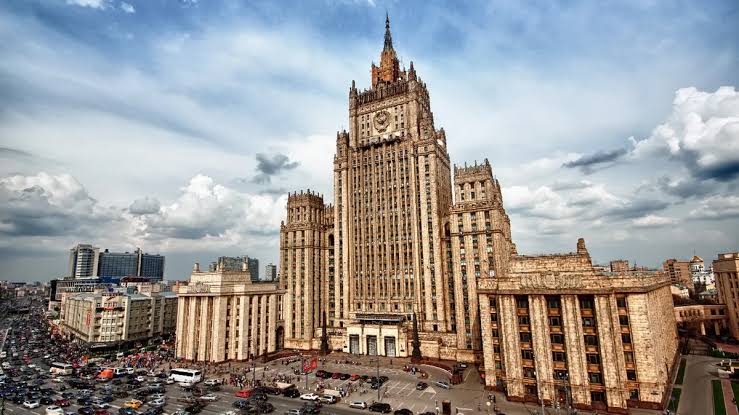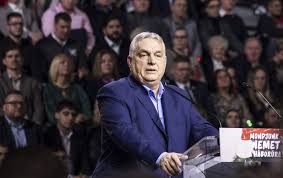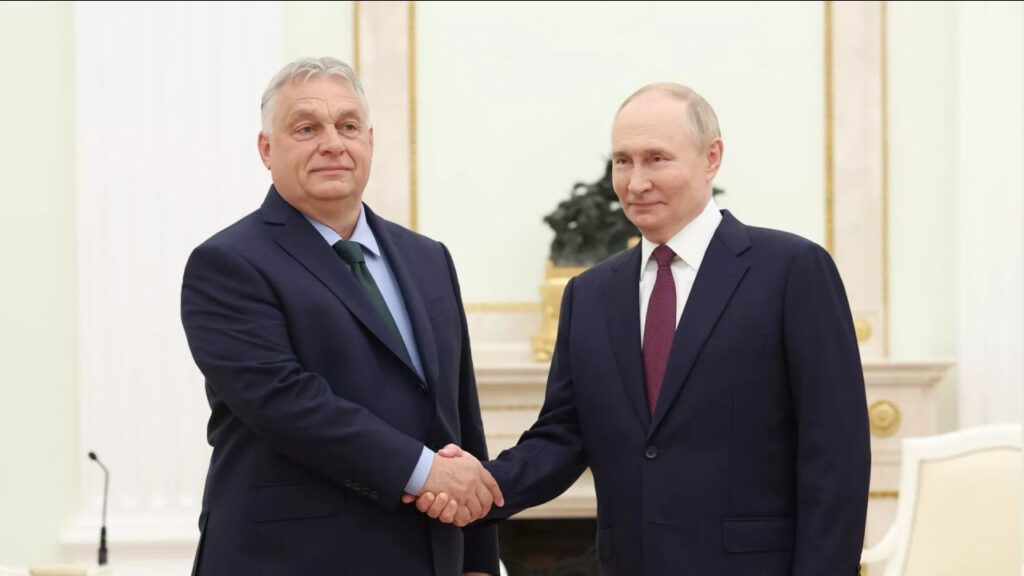

Hungary’s decision to declare ten employees of the Russian diplomatic mission personae non gratae is one of the clearest signals of a shift in Budapest’s security and foreign-policy model since Péter Magyar’s government came to power. The significance of the move extends far beyond a bilateral diplomatic dispute: for the first time in many years, the Hungarian authorities have effectively begun to view the Russian state presence not only as a channel for political and economic partnership, but also as a potential source of counterintelligence risk.
Foreign Minister Anita Orbán said the ten employees of the Russian mission had engaged in activities in Hungary that were unacceptable for diplomats under the Vienna Convention. Budapest did not disclose the specific nature of those activities, so it would be premature, on the basis of open-source information, to claim that all ten were career Russian intelligence officers or directly handled agents.
However, the formulation “activities incompatible with diplomatic status” is traditionally used when a host state suspects diplomatic personnel of intelligence or other covert activity. The scale of the decision—the simultaneous expulsion of ten people—further suggests that this was not an isolated incident but a broader counterintelligence problem.
At the same time, Budapest is deliberately leaving Moscow a channel for de-escalation. Anita Orbán stressed that the decision does not amount to a rupture of diplomatic relations and that Hungary intends to continue the necessary dialogue with Russia. Magyar’s new policy therefore does not represent a shift toward full confrontation with Moscow. Rather, it changes the governing principle of the relationship: from political tolerance of the Russian presence to managed engagement in which Hungary’s security interests take priority.
The End of the “Hungarian Exception”
The strategic significance of the decision becomes clearer when viewed against Budapest’s previous policy.
After Russia launched its full-scale invasion of Ukraine, most EU states substantially reduced Russia’s diplomatic presence. Hungary remained an exception for a long time. According to Hungarian investigative journalists, while other countries were expelling Russian diplomats, the number of Russian diplomatic personnel in Hungary actually increased.
This created a particular asymmetry. Tighter counterintelligence restrictions in Poland, the Czech Republic, the Baltic states and other countries of Central and Eastern Europe potentially increased Budapest’s importance as one of the few environments where Russia’s official presence remained comparatively less constrained.
The expulsion of ten employees should therefore be assessed not only in quantitative terms.
Moscow is losing more than ten potentially valuable operational positions—it risks losing Hungary’s special status as a relatively permissive environment for Russian state and intelligence activity inside NATO and the EU.
From Political Partner to Counterintelligence Problem
Under Viktor Orbán’s government, Moscow enjoyed an advantage in Hungary that it lacked in most other Central European countries: a favorable combination of political, economic and diplomatic conditions.
Budapest systematically criticized or slowed some European sanctions initiatives, maintained close energy ties with Russia and continued political dialogue with the Kremlin even after 2022.
For Russian intelligence services, the value of such an environment potentially extends beyond bilateral relations.
Hungary is simultaneously a member of the EU, NATO and the Schengen Area. This provides access to the European Union’s political and economic environment, proximity to NATO structures and a geographic position in the heart of Europe.
Budapest could therefore have been important not only as a collection point for information on Hungary itself, but also as a regional enabling environment for broader Russian activity in Central Europe.
That is the element that is now beginning to change.
Expulsion as the Beginning, Not the End, of the Operation
At the same time, it would be a mistake to assume that expelling ten diplomats automatically eliminates Russia’s agent infrastructure in Hungary.
If Russian intelligence services used favorable conditions in the country over an extended period to build contacts, some of those networks may continue to exist independently of individual diplomatic officers.
The key indicator of a genuine policy shift will therefore not be the expulsion itself, but what happens afterward.
The most important indicators will include possible investigations into Hungarian citizens and organizations that had contact with the expelled diplomats; scrutiny of financial and organizational channels; counterintelligence assessments of pro-Russian organizations; restrictions on replacing expelled personnel with new officers; and the level of intelligence sharing between Hungarian services and NATO and EU partners.
These indicators will determine whether the current decision is a one-off political signal to Moscow or the beginning of a systematic counterintelligence operation.
A Potential Blow to Russia’s Regional Intelligence Model
If Budapest is genuinely moving toward a systematic reduction of the Russian intelligence presence, the consequences could extend beyond Hungary.
Russian intelligence has traditionally benefited from differences among European counterintelligence regimes. When one country sharply restricts Russia’s diplomatic presence, some functions can potentially be shifted to a neighboring state with a more permissive regime.
Hungary was potentially an important link in this system precisely because of that asymmetry.
If the new government eliminates it, Moscow will lose some of its capacity for cross-border intelligence support in Central Europe. This is particularly important against the backdrop of Polish proposals to restrict Russian diplomats’ movement to the countries in which they are accredited.
In this context, Budapest’s decision and the Polish initiative may prove to be elements of a broader process: Europe’s transition from expelling individual identified intelligence officers to systematically reducing the operational infrastructure of Russian intelligence services across the Schengen Area.
The Political Effect May Be No Less Important Than the Counterintelligence Effect
The political dimension is equally important.
Under Viktor Orbán, the Kremlin had a government inside the EU that was regularly willing to challenge elements of European policy toward Russia. This gave Moscow an opportunity to exploit the EU’s unanimity requirement as an instrument of indirect influence.
Péter Magyar’s government will not necessarily turn Hungary into Russia’s most uncompromising opponent. Budapest retains economic interests, energy dependencies and an interest in maintaining a diplomatic channel with Moscow.
The fundamental change lies elsewhere: Russia can no longer automatically count on Budapest’s political loyalty as a permanent feature of the EU’s internal architecture.
This potentially reduces the Kremlin’s ability to use Hungary to delay or dilute common European decisions concerning Russia.
Moscow Is Already Showing That It Takes the Decision Seriously
Russia’s response is also an important indicator of the scale of the problem.
Moscow has promised a response to the expulsions. Russian rhetoric indicates that the Kremlin views the decision not merely as a technical diplomatic dispute but as evidence of a political shift in post-Orbán Hungary.
This creates a difficult dilemma for Moscow.
An excessively harsh response could accelerate the new Hungarian government’s reorientation toward the EU and NATO. An overly weak response, meanwhile, could create the impression that Russia is prepared to accept the loss of the special status it enjoyed in Hungary.
The Kremlin is therefore likely to try to combine a diplomatic response with efforts to preserve economic and political channels of influence.
What Moscow May Do Next
The most likely immediate response is a reciprocal or near-reciprocal expulsion of Hungarian diplomats. The longer-term adaptation of Russian intelligence services, however, may be more consequential.
Moscow may seek to compensate for the loss of diplomatic cover through non-diplomatic channels: business structures, intermediaries, third-country nationals, pro-Russian political and civic milieus, remote recruitment and personal contacts cultivated over previous years.
After the diplomatic expulsions, the principal task for Hungarian services therefore becomes mapping the residual network—identifying which contacts, assets and channels of access remain after the Russian diplomats’ departure.
Assessment
The expulsion of ten Russian diplomats does not in itself prove a complete strategic reversal in Hungary’s policy toward Russia. Budapest has explicitly stated that it intends to preserve necessary dialogue with Moscow, while the economic and energy ties between the two countries cannot be dismantled quickly.
Nevertheless, the decision has high indicator value.
For the first time since the change of government, Péter Magyar’s administration has demonstrated a willingness to impose concrete operational costs on Moscow in the interests of national security rather than merely changing its political rhetoric.
The principal consequence therefore does not lie in the number of diplomats expelled.
What is at stake is the possible end of the “Budapest exception”—a situation in which Russia could regard Hungary simultaneously as a political partner inside the EU and NATO and as a relatively favorable environment for maintaining its official and potentially intelligence-related presence in Central Europe.
If the expulsions are followed by further reductions in Russia’s diplomatic presence, investigations into local contacts, stronger counterintelligence cooperation with allies and support for EU-wide restrictions on Russian diplomats’ movement, the episode could be assessed not as an isolated diplomatic demarche but as the beginning of a structural dismantling of Russia’s influence infrastructure in Hungary.
For the Kremlin, this would mean losing far more than ten diplomatic posts: it would mean losing one of the few environments within the Euro-Atlantic space where political loyalty, diplomatic access and relatively favorable conditions for a Russian presence coexisted for an extended period.
The Magyar government’s change in policy toward the Kremlin is explained less by an ideological shift into an anti-Russian camp than by the need to dismantle Viktor Orbán’s political and security legacy and restore the confidence of Western allies. The expulsion of ten Russian diplomats on September 8 should be viewed in precisely this context. Reuters notes that the new government has explicitly identified the EU and NATO as Hungary’s principal alliances and has made restoring trust lost under the previous administration a priority.
Magyar Needs to Restore NATO and EU Trust
This is probably the principal factor. During Viktor Orbán’s years in power, relations between Hungarian intelligence services and some Western partners deteriorated significantly. According to Telex, relations with Poland became particularly problematic: Polish intelligence services virtually ceased communicating with their Hungarian counterparts, while similar problems emerged with the Baltic states. One of Foreign Minister Anita Orbán’s priorities has therefore been to restore allied trust.
The simultaneous expulsion of ten diplomats therefore has two audiences.
For Moscow, the message is: Budapest is no longer an environment in which the Russian intelligence presence enjoys special political protection.
For Warsaw, Brussels, Berlin, the Baltic capitals and Washington, the message is: Hungarian services can once again be trusted with sensitive intelligence concerning Russia.
The second message may be strategically more important.
The Change of Government Unblocked Counterintelligence Decisions
There is a strong indicator that the problem existed before Magyar came to power, but that Orbán’s political leadership did not allow counterintelligence services to act.
According to Telex/VSquare, after the April elections Hungary quietly expelled Russian intelligence officer Artur Sushko, who had been operating under diplomatic cover. Hungary’s Constitution Protection Office (AH) reportedly established that he had spent years collecting information on institutions close to the government. Particularly significant is the claim that the service recommended his expulsion as early as February, but the previous government blocked the decision. After the change of government, Sushko left the country on May 4.
If this information is accurate, the development represents more than a change in diplomatic rhetoric; it indicates a change in the relationship between the political leadership and counterintelligence:
Orbán: counterintelligence identifies a threat → political leadership may block action in order to preserve relations with Moscow.
Magyar: counterintelligence identifies a threat → the government permits or authorizes neutralization.
This is a more fundamental change than the expulsion of ten people itself.
The Russian Presence Has Become a Domestic Security Threat for the New Government
Magyar inherited a country in which the Russian presence was considerably deeper than in most Central European states. After 2022, when other EU countries sharply reduced Russian diplomatic missions, Hungary did not expel Russian diplomats; Reuters notes that, before this week, the last public expulsion had taken place in 2018.
There is also the problem of penetration of state systems. Euronews has cited a Direkt36 investigation into the compromise of the Hungarian Foreign Ministry’s IT systems by Russia’s FSB and GRU, which, according to the investigation, maintained access to sensitive information for years.
For Magyar, the Russian issue therefore also has a domestic security dimension: the government needs to establish which Russian networks were built during the previous 16 years and how deeply they penetrated Hungary’s diplomatic, political, economic and information environments.
Breaking with the Kremlin Helps Magyar Dismantle the Orbán System
This is where foreign and domestic policy intersect.
Magyar came to power promising to fight corruption and dismantle the power structures built during Orbán’s 16 years in office. AP directly links the diplomatic expulsions to the new government’s broader effort to dismantle the legacy of the previous administration.
The Russian dimension is therefore politically advantageous to the new prime minister for another reason: Orbán system → special relationship with Moscow → Russian political/economic/intelligence access
can be contrasted with: Magyar government → sovereignty → EU/NATO → counterintelligence normalization.
Magyar can therefore frame the reduction of Russian influence not as compliance with Brussels’ demands, but as the restoration of Hungarian sovereignty. He used the word “sovereignty” when commenting on the expulsions.
Russian Policy Itself Pushed Budapest to Reassess Its Threat Perception
Another important shift occurred in August: the new Hungarian government officially designated Russia as a threat. In a document signed by Magyar for the Hungarian delegation to the UN General Assembly, Budapest condemned Russian aggression and reaffirmed its support for Ukraine’s sovereignty and territorial integrity.
The sequence of events is therefore important: April—Orbán’s defeat → May—quiet expulsion of an alleged Russian intelligence officer → May—summoning of the Russian ambassador after the strike on Zakarpattia → August—Russia officially designated a security threat → September—simultaneous expulsion of ten Russian diplomats.
This increasingly resembles not an isolated diplomatic dispute but a consistent shift in threat perception.
But Magyar Is Not Moving Toward a Complete Break with Russia
Anita Orbán said as early as May that Russia would remain a partner, but that relations should no longer be based on “one-sided dependence.” After the diplomatic expulsions, she specifically stressed that Budapest would preserve the necessary dialogue with Moscow.
It is therefore more accurate to describe the change not as an anti-Russian turn, but as a transition from a privileged relationship to a managed relationship.
Russia remains an economic and diplomatic counterpart, but it should no longer receive political or counterintelligence exemptions.
Péter Magyar’s government changed its policy toward the Kremlin primarily because the special relationship with Russia shifted from being an asset of the Orbán system to becoming a strategic liability for the new government. It undermined NATO and EU confidence in Budapest, complicated cooperation between Hungarian intelligence services and their allies, and left Russian influence infrastructure inside the country that had developed under the previous government’s political tolerance.
The expulsion of ten diplomats therefore serves a dual purpose: externally, to return Hungary to the European counterintelligence framework; internally, to begin mapping and dismantling Russian networks that may have developed over previous years.
This raises an even more important KIQ: after the April elections, did Western intelligence services provide the Magyar government with an intelligence package on the Russian presence in Hungary that the previous administration was unwilling or unable to act upon? There is currently no public evidence that this occurred, but the scale and speed of the first counterintelligence decisions make it an important avenue for further research.Moscow, for its part, is signaling that it wants to prevent a complete rupture: on September 9, the Kremlin said that despite the expulsions it remained open to developing relations with Hungary. This further indicates how valuable preserving at least part of the special relationship with Budapest remains for Russia.