
Key Assessments
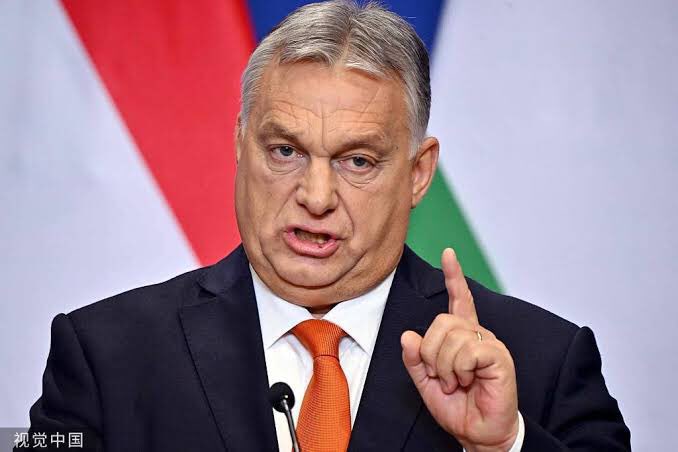
Reports that Donald Trump’s administration may promote former Hungarian Prime Minister Viktor Orbán for the post of UN Secretary-General warrant analysis not only as an international appointment but also in the context of Washington’s broader strategy for transforming multilateral institutions.
If reports of support for Orbán are confirmed, they could suggest that the Trump administration seeks not so much to reform the UN from within as to alter its political orientation by installing a leader ideologically aligned with the MAGA movement.
In that case, Orbán’s candidacy could serve several purposes simultaneously: securing Washington’s influence over the UN Secretariat, weakening the political standing of liberal-leaning European governments, creating an additional channel for talks with Moscow and Beijing, and demonstrating Trump’s ability to shape global institutions outside traditional diplomatic mechanisms.
At the same time, reports of support for Orbán, projected vote counts, and the White House’s intentions should be treated as unconfirmed until substantiated by independent sources or official statements.
It is essential to distinguish three questions: whether the Trump administration is actually promoting Orbán; what strategic motives might explain such a choice; and what powers Orbán would actually possess if elected Secretary-General.
What Is Known About Washington’s Initiative
On October 26, 2026, The Wall Street Journal reported that Trump administration representatives had suggested that Orbán consider running for UN Secretary-General. According to the newspaper, the American side had already discussed the idea with representatives of Russia and China, who, sources claimed, responded favorably.
U.S. officials believe Orbán could secure eight votes in the UN Security Council, potentially increasing that support to ten. Orbán himself is reportedly interested in the position but reluctant to enter the contest formally without sufficient assurances of success.
Importantly, this information is based largely on the WSJ report and subsequent accounts by other outlets. The White House has not confirmed official support for his candidacy, and Orbán has not announced that he is entering the race.
As of October 27, he is not included on the UN’s official list of candidates.
Thus, this remains an informal diplomatic initiative rather than a finalized political decision by Washington.
Why Trump Might Choose Orbán
Ideological Affinity: An Attempt to Extend MAGA into International Institutions
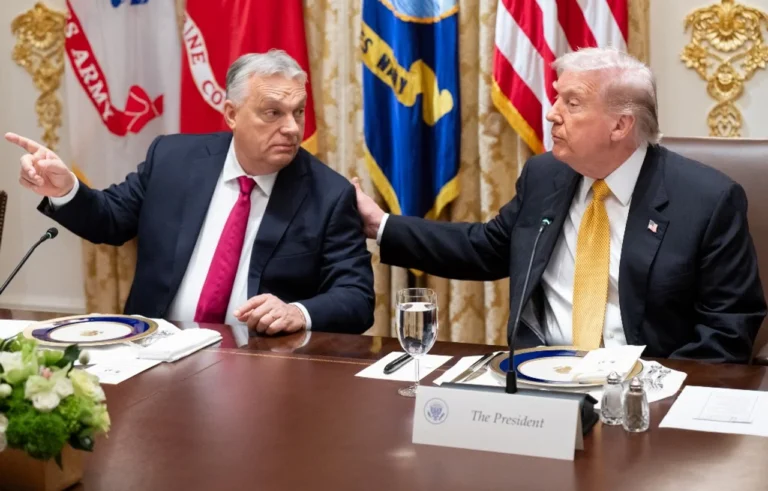
The most obvious explanation is the ideological compatibility between Trump and Orbán.
For many years, the Hungarian politician promoted a model of governance based on the primacy of national sovereignty, restrictive immigration policies, criticism of liberal nongovernmental organizations, and confrontation with supranational European institutions.
These positions substantially overlap with the MAGA political platform. That is why, according to U.S. media reports, administration officials describe Orbán as a desirable candidate for American conservatives.
In this context, Orbán’s appointment could carry symbolic significance for Trump.
The UN has traditionally been associated with multilateral diplomacy, international norms, human rights mechanisms, and cooperation among states. Trump has repeatedly criticized the effectiveness of these mechanisms and sought to reassess the U.S. role in international organizations.
Supporting Orbán could therefore be interpreted as an attempt to influence the UN’s ideological direction without withdrawing from the organization or abandoning its diplomatic opportunities.
Analytical hypothesis: Trump may seek to transform the office of UN Secretary-General from a symbol of traditional international consensus into a vehicle for advancing a sovereignty-centered approach to international relations.
However, the Secretary-General is required to act independently of member-state governments. Even a candidate politically close to Trump would therefore have no lawful mandate to implement the MAGA agenda on behalf of the UN.
Building an Informal Understanding Among the United States, Russia, and China
The second possible motive is geopolitical.
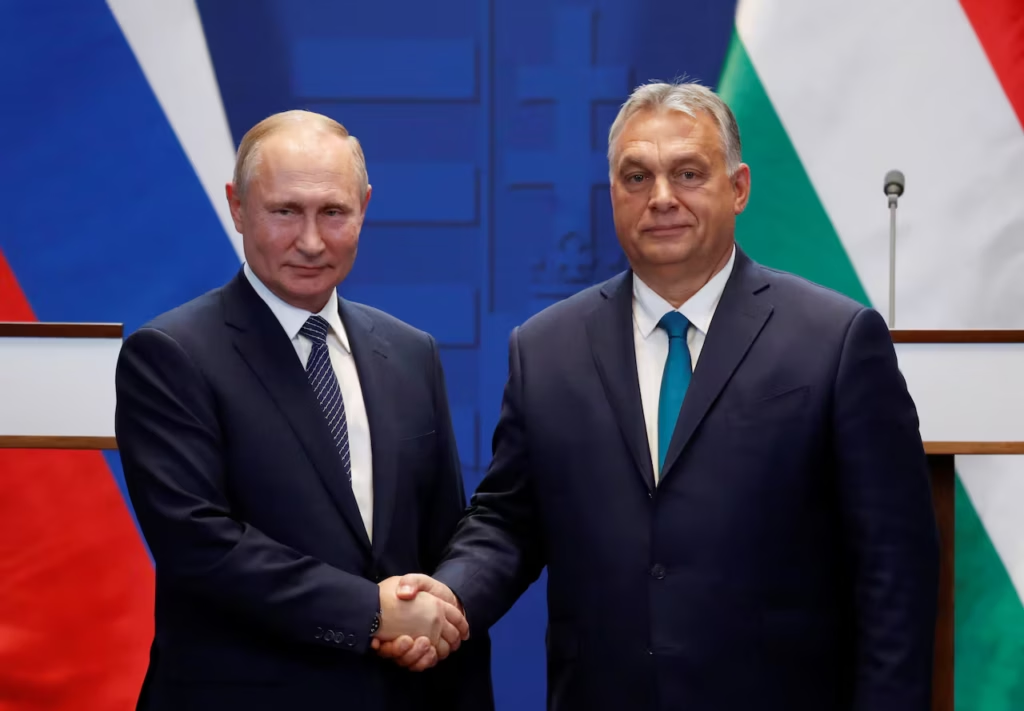
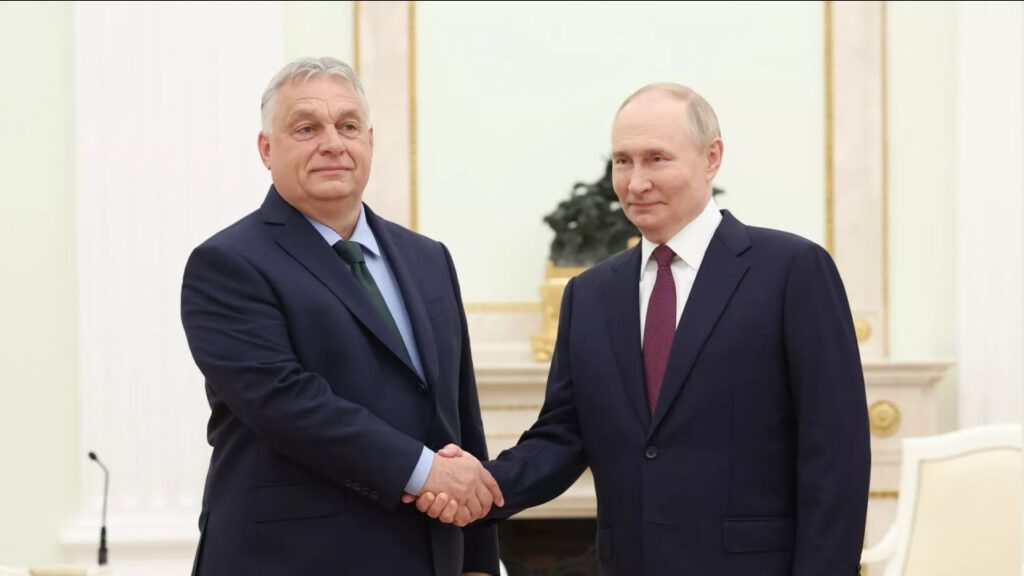
For many years, Orbán maintained working relations with Trump, Putin, and China’s leadership. Unlike many European politicians, he advocated maintaining economic cooperation with Russia and criticized certain EU sanctions decisions.
This characteristic could make him attractive to Washington as a potential candidate acceptable to three permanent members of the Security Council.
Backing Orbán could allow Trump to demonstrate an ability to reach agreement with Moscow and Beijing on an important international appointment despite differences among these countries.
Nevertheless, agreement on a single candidate would not amount to a strategic alliance among the United States, Russia, and China.
The three countries’ interests remain distinct:
A Political Signal to the European Union
A third motive could be to use Orbán’s candidacy as an instrument of political pressure on European allies.
During his sixteen years in power in Hungary, Orbán repeatedly clashed with the European Commission and other EU governments over the rule of law, migration, sanctions against Russia, and assistance to Ukraine.
Supporting his candidacy for the UN’s highest administrative office could signal that Washington is prepared to back politicians who are at odds with Europe’s political mainstream.
In that case, Orbán’s candidacy would serve a dual purpose: promoting Trump’s ally and demonstrating the independence of U.S. policy from Brussels’ position.
Yet this strategy has an obvious limitation: France and the United Kingdom possess veto power in the UN Security Council.
An attempt to impose an unacceptable candidate on European allies might therefore fail to secure his election and instead deepen transatlantic disagreements.
Personal Loyalty and Political Reward
A fourth explanation concerns the personal nature of Trump’s political relationships.
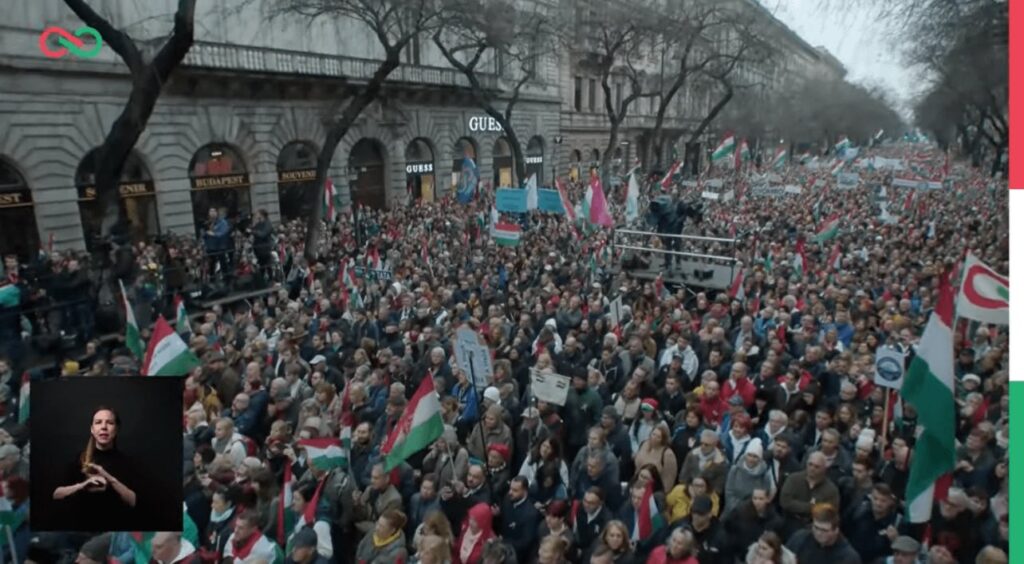
The U.S. president openly supported Orbán during Hungary’s parliamentary elections in April 2026, after which the Tisza party led by Péter Magyar removed him from power.
Orbán’s loss of the prime ministership created an opportunity for Trump to support a political ally in a new international role.
This could both allow Orbán to continue his international career and preserve his political influence.
Why Orbán’s Candidacy Could Benefit Moscow
For the Kremlin, Orbán’s potential election would matter primarily in political communication and international diplomacy.
As Hungary’s prime minister, Orbán opposed several EU sanctions initiatives, maintained contacts with Putin, and called for a negotiated settlement of Russia’s war against Ukraine.
If elected UN Secretary-General, he would formally have to refrain from representing national political interests. Nevertheless, his previous positions could influence his interpretation of international crises.
For Moscow, the potential advantages could take three forms.
First, a shift in diplomatic rhetoric. Orbán might attach greater importance to negotiations, a cessation of hostilities, and compromise agreements than to holding Russia accountable for its aggression.
Second, a shift in political priorities. The Secretary-General influences public diplomacy, mediation initiatives, and the UN Secretariat’s organizational priorities.
Third, the symbolic effect. The election of a politician who maintained contacts with Putin during the full-scale war could be used by Russian propaganda as evidence of Moscow’s gradually weakening international isolation.
However, the Secretary-General cannot unilaterally change Security Council resolutions, lift sanctions, or determine member states’ policies. His potential influence on positions regarding Ukraine would therefore be primarily diplomatic and administrative.
Why China Might Accept Orbán
China’s interest in Orbán’s potential candidacy could rest on different considerations.
Beijing traditionally emphasizes state sovereignty, noninterference in domestic affairs, and the need to reform global governance to account for the interests of non-Western states.
Certain aspects of Orbán’s political philosophy align with this approach.
Moreover, during his premiership Hungary developed economic ties with China, including investment and infrastructure projects.
Beijing could therefore view Orbán as a candidate unlikely to automatically support Western political initiatives concerning China.
Chinese support, however, is not guaranteed. Beijing may prefer a candidate with broader backing from Global South countries and fewer associations with U.S. domestic political struggles.
The Main Obstacle: France and the United Kingdom
The procedure for electing the UN Secretary-General places significant constraints on the American initiative.
Under Article 97 of the UN Charter, the Secretary-General is appointed by the General Assembly upon the recommendation of the Security Council.
A recommendation requires at least nine of the fifteen votes and no veto by any permanent member of the Security Council.
The Potential Vote Count for Orbán
The estimates of 8–10 votes come from reports about U.S. officials’ assessments, not an official vote. Even ten votes would not secure election in the event of a veto.
The positions of London and Paris could therefore become the decisive diplomatic factor.
Polish Foreign Minister Radosław Sikorski has already publicly questioned whether Poland would support Orbán. Ukrainian Foreign Minister Andrii Sybiha also reacted critically to reports of a possible nomination.
Another factor is that the 2026 selection process has featured active discussion of appointing the first woman as Secretary-General. According to Reuters on October 7, Rebeca Grynspan received nine positive votes in one informal Security Council poll.
Orbán’s entry could sharpen disagreements over the candidates but would not, in itself, guarantee a different outcome.
Potential Consequences for Ukraine
For Ukraine, Orbán’s potential appointment would primarily create diplomatic risks.
The issue is not the Secretary-General’s ability to change the international legal status of Ukrainian territories directly, but his capacity to influence the diplomatic context of negotiations.
The following questions would become especially important: Would the Secretary-General continue consistently to emphasize Ukraine’s territorial integrity and Russia’s responsibility for violating the UN Charter? Would the Secretariat begin to prioritize a cessation of hostilities without adequate security guarantees and monitoring mechanisms? Would UN humanitarian and human rights bodies retain their independence in documenting the consequences of Russian aggression? Could diplomatic mediation be used to promote agreements that Ukraine does not support?
Orbán’s election would not automatically entail a revision of the UN’s position on the war.
Possible Scenarios
| Scenario | Political rationale | Possible outcome |
| Orbán formally enters the race | The United States finds a state willing to nominate him | A new focal point for negotiations around the candidacy |
| Orbán remains an informal candidate | Washington tests other states’ reactions | The candidacy serves as a diplomatic signal |
| France or the United Kingdom opposes him | European states reject the candidate’s political profile | A Security Council recommendation becomes impossible if a veto is cast |
| Washington uses the candidacy as bargaining leverage | Support for Orbán becomes part of broader consultations | A possible agreement on another candidate or procedural issues |
The last scenario warrants particular attention.
It is possible that the Trump administration views Orbán not only as a potential Secretary-General but also as a bargaining instrument.
Supporting a politically contentious candidate could compel other permanent members of the Security Council to negotiate more actively with Washington.
In that case, even withdrawing Orbán’s candidacy could be viewed by the U.S. administration as part of a broader diplomatic compromise.
There is currently no evidence, however, that this tactic underlies the initiative.
Overall Assessment
The initiative to potentially nominate Viktor Orbán as UN Secretary-General could reflect several interconnected motives within Donald Trump’s administration: ideological affinity with the Hungarian politician, a desire to influence international institutions, an interest in reaching an understanding with Moscow and Beijing, and an intention to demonstrate political independence from European allies.
Of these explanations, Orbán’s ideological affinity with MAGA and his personal political relationship with Trump are the most directly supported. The other motives remain analytical hypotheses.
For Russia, Orbán’s potential election could create a more favorable diplomatic environment concerning the war against Ukraine. For China, his candidacy could be attractive because of its emphasis on state sovereignty and limits on external interference.
Nevertheless, the Secretary-General’s powers are not unlimited, and the selection process includes checks, notably the veto power of the Security Council’s permanent members.
Main strategic conclusion: Promoting Orbán, if it becomes official, could indicate that the Trump administration seeks to extend MAGA’s ideological principles from U.S. domestic politics into the system of global governance. At the same time, support for the candidacy from Russia and China would not necessarily imply that their long-term interests align with Washington’s.If so, this could suggest that the candidacy’s political and symbolic value to the White House extends beyond a desire to secure Orbán’s actual election.
More on this story: Orbán’s Kremlin Connection: Russia’s Role in Hungary’s Pre-Election Narrative

More on this story: “Viktor Orbán’s Russian Alignment: A Threat from Within the European Union”
More on this story: Peacekeeper or Invader? Hungarian Forces and the Future of Western Ukraine