
The intensification of U.S. pressure on Cuba should be viewed not only as an attempt to bring about political regime change in Havana, but also as part of the broader competition between the United States, Russia, and China for strategic influence in the Western Hemisphere.
Cuba remains important to Moscow as a potential platform for intelligence operations, political pressure on Washington, and a demonstration of Russia’s ability to operate close to U.S. borders. For Beijing, the island is attractive primarily as a geographically advantageous location for gathering intelligence on the United States, a political partner in Latin America, and a possible component of a long-term infrastructure presence.
The central hypothesis is that the Donald Trump administration seeks not simply to change Cuba’s government, but to eliminate or substantially curtail Russia’s and China’s ability to use the island as a strategic foothold immediately adjacent to U.S. territory.
The key question in assessing the U.S. strategy is whether the administration has a realistic plan for a political transition in Cuba, or whether it expects a combination of economic pressure, information operations, and displays of military force to trigger a split within the Cuban leadership.
A New U.S. Campaign: Signs of Coordinated Pressure
Events on October 23–26, 2026, suggest a notable synchronization of public signals from U.S. political leaders, the intelligence community, and military command.
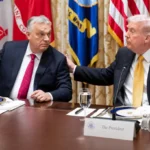
On October 23, Donald Trump, speaking in Florida, raised the possibility of U.S. warships passing near Cuba following operations against Iran. The president referred to a ship stopping approximately 50 yards from the coast and to Marco Rubio subsequently taking part in resolving the Cuban question.
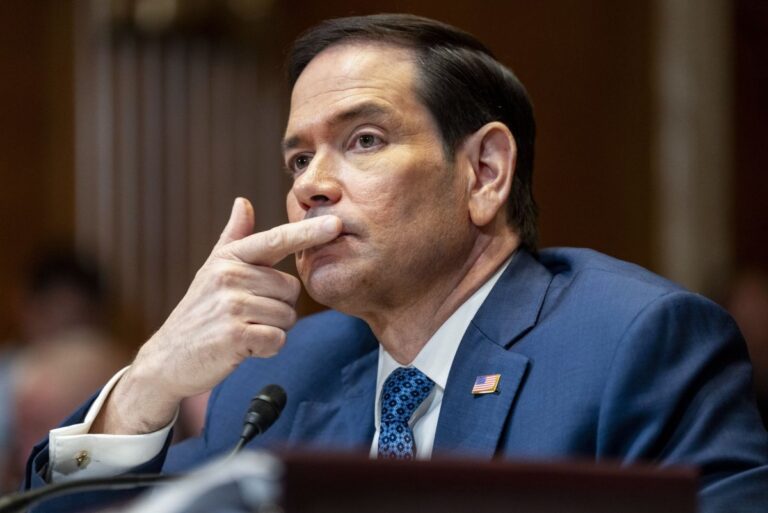
That same day, Secretary of State Marco Rubio publicly urged Cubans seeking political change to cooperate confidentially with the CIA. The U.S. intelligence agency circulated a corresponding appeal in Spanish. On October 24, SOUTHCOM commander General Francis Donovan endorsed the appeal, urging the Cuban population to seize the moment for change.
This sequence suggests the existence of a coordinated communications campaign. However, coordinated public statements do not prove that an approved military invasion or operation to overthrow the Cuban government is in place.
Sequence of U.S. Signals
- October 23 — Donald Trump
A public suggestion of possible naval pressure and Rubio’s role in resolving the Cuban question.
- October 23–24 — Marco Rubio and the CIA
An appeal for Cubans to cooperate with U.S. intelligence.
- October 24 — General Francis Donovan
Endorsement of the appeal on behalf of U.S. Southern Command.
- October 26 — Diplomatic Component
Reports of a meeting between Mike Hammer, head of the U.S. diplomatic mission in Havana, and Donovan.
Taken together, these steps create the effect of pressure through multiple channels. Cuba’s leadership is receiving a signal that the United States is prepared to employ diplomatic, informational, intelligence, economic, and military instruments.
The CIA’s public involvement is particularly significant. It is directed not only at potential informants but also at a broader audience within Cuba’s state apparatus. Potential recipients include officials, security personnel, and political elites who may doubt the current leadership’s ability to ensure stability.
At the same time, this conspicuous approach risks producing the opposite effect. Havana could use U.S. statements to intensify domestic repression, accuse the opposition of cooperating with foreign intelligence agencies, and mobilize the population around the defense of sovereignty.
Why Cuba Matters to Russia
An Intelligence Foothold Near the United States
For Moscow, Cuba has unique geographical significance. The island lies close to Florida, important maritime routes, military installations, and infrastructure in the southeastern United States.
Historically, the Soviet Union used Cuba for military and signals intelligence. The best-known example was the Lourdes facility, which Russia ceased operating in the early 2000s.
Today, Russian interests may include signals intelligence, monitoring U.S. military activity, cyber cooperation, and intelligence sharing with Cuban security services.
However, the historical operation of Lourdes does not establish that Russia has restored the facility in its former configuration. The extent of its present intelligence presence on the island remains insufficiently transparent.
An Asymmetric Response to U.S. Pressure
Cuba gives Moscow an opportunity to sustain tensions near U.S. territory without deploying large military formations.
In Russian strategic thinking, such a presence could serve as an asymmetric response to Washington’s support for Ukraine and NATO’s reinforcement of its eastern flank.
Moscow can use naval visits, training contacts, diplomatic statements, and security cooperation to demonstrate that U.S. territory is not insulated from geopolitical competition.
Russia’s capabilities, however, are constrained by its war against Ukraine, sanctions, and the need to sustain its own military operations. A large, permanent military deployment to Cuba would therefore be considerably more expensive and risky than an intelligence or symbolic presence.
Preserving an Allied Regime
For Russia, it is important not only to preserve access to Cuban territory but also to prevent the emergence of a government in Havana aligned with Washington.
A change in Cuba’s political leadership could lead to a review of agreements with Moscow, restrictions on access for Russian military and intelligence structures, and the loss of one of Russia’s few traditional partners in the Caribbean.
For this reason, Moscow may have an interest in preserving Cuba’s state system despite its economic weakness.
For the Kremlin, Cuba matters less as a major economic partner than as a geopolitical asset whose loss would weaken Russia’s global position.
The China Factor: Cuba as Part of Beijing’s Intelligence Infrastructure
Unlike Russia, for which Cuba has substantial historical and military-political value, China views the island primarily through the lens of long-term strategic competition with the United States.
Beijing’s greatest interest lies in the potential to collect information about U.S. military activity, maritime communications, signals infrastructure, and U.S. force operations in the Caribbean.
In May 2026, The Wall Street Journal, citing U.S. intelligence officials, reported a substantial expansion of Russian and Chinese intelligence activity in Cuba since 2023. According to the assessments cited, 18 signals-intelligence facilities had been identified on the island, three of them linked to China and two to Russia. This is a U.S. assessment, not independently verified information about the operators of every facility.
Of particular importance are the findings of the Center for Strategic and International Studies (CSIS).
In June 2026, CSIS reported the completion of a new antenna array at the Bejucal site near Havana. The array consists of 32 antennas arranged in two rings and could be used for radio direction-finding and determining the direction of incoming high-frequency signals. Researchers believe the facility is probably already operational. However, open-source evidence does not conclusively establish the degree of China’s direct involvement in operating it.
Cuban Facilities Relevant to Assessing China’s Intelligence Presence
Bejucal
Near Havana. A modernized antenna array capable of expanding regional signals-monitoring capabilities.
El Salao
Near Santiago de Cuba. Construction of the facility has slowed considerably; as of May 2026, the antennas had not been installed.
Other sites examined by CSIS include Wajay and Calabazar. Their functions and links to foreign intelligence organizations require further confirmation.
Why These Facilities Matter to Washington
Signals intelligence collected from Cuban territory could potentially monitor U.S. military activity in Florida and adjacent waters.
Of particular value are:
- U.S. Southern Command headquarters in the Miami area;
- U.S. Central Command headquarters at MacDill Air Force Base in Tampa;
- naval activity in the Caribbean;
- movements of military aircraft and ships;
- communications characteristics of U.S. military systems.
Even when secure communications channels are used, an adversary can derive valuable intelligence by analyzing frequencies, timing, direction, and density of radio traffic.
At the same time, not every antenna array is evidence of Chinese control. A definitive conclusion would require additional information about personnel, financing, equipment, and intelligence sharing.
Could Cuba Become a Chinese Military Outpost?
In theory, Beijing could seek to expand its use of Cuban ports, telecommunications infrastructure, and logistical capabilities.
However, establishing a full-fledged Chinese naval base on the island would carry a much higher political cost than using intelligence facilities.
Such a base could provoke a sharp deterioration in relations with the United States and expose Havana to additional pressure.
A more realistic model therefore appears to be a gradual expansion of intelligence and infrastructure presence without formally establishing a permanent military base.
Why Washington Is Changing Its Policy Now
First Motive: Neutralizing the Russian and Chinese Presence
The most important strategic motive is the U.S. desire to reduce the ability of its two principal geopolitical competitors to use Cuban territory.
According to U.S. intelligence assessments, Chinese and Russian activity on the island has expanded in recent years. The White House invoked the presence of facilities operated by foreign adversaries in its sanctions justification in May 2026.
This indicates that the security dimension is not merely an outside analytical explanation but also part of Washington’s official rationale.
Yet it remains unclear whether the United States seeks a complete change of regime in Cuba or would accept the existing political system in exchange for dismantling foreign intelligence infrastructure.
The answer to this question will define the true limits of U.S. demands.
Second Motive: Exploiting Cuba’s Economic Vulnerability
Cuba is experiencing a profound energy and economic crisis. Fuel shortages, prolonged power outages, declining production, and difficulties supplying food to the population undermine the state’s ability to maintain social stability.
Washington tightened restrictions on oil supplies to the island after Venezuelan exports ceased in early 2026.
In March, the Russian tanker Anatoly Kolodkin delivered approximately 700,000 barrels of oil, temporarily easing the energy situation. The United States permitted the shipment on humanitarian grounds without abandoning its broader sanctions policy.
For the Trump administration, Cuba’s current economic weakness may create favorable conditions for compelling Havana to negotiate.
At the same time, economic pressure has a dual effect. It weakens the Cuban government’s resource base but also worsens living conditions and may increase migration to the United States.
Third Motive: Removing the Last Major Anti-American Stronghold in the Caribbean
Following the U.S. operation against Venezuela’s leadership in early 2026, Cuba’s strategic position deteriorated.
Havana lost an important source of energy support and became more dependent on external partners.
In these circumstances, Washington may regard Cuba as the next element of a regional policy designed to reduce the influence of hostile or competing powers in the Western Hemisphere.
This resembles a contemporary reinterpretation of the Monroe Doctrine: the United States seeks to prevent extraregional powers from establishing strategic infrastructure near its borders.
However, directly applying the historical doctrine to contemporary policy has limitations. Today’s competition is not with nineteenth-century European colonial powers but with Russia and China in intelligence, technology, logistics, and political influence.
Fourth Motive: The Domestic Political Interests of Trump and Rubio
The Cuban issue has special significance in Florida politics, where anti-communist sentiment among parts of the Cuban diaspora remains an important factor.
Marco Rubio, whose political career is closely tied to the Cuban American community, has advocated a hard line toward Havana for many years.
A public display of resolve on Cuba ahead of the midterm elections may help Republicans mobilize this electorate.
Notably, Trump returned to the possibility of military action during a campaign appearance in Florida.
Military rhetoric may therefore serve both foreign-policy and domestic political purposes.
This does not mean that the threat of force is exclusively an election tactic. But the political context must be considered when assessing the likelihood of an actual operation.
Are Russia and China Coordinating Their Activities in Cuba?
Russia and China share an interest in preserving a Cuban government that is not aligned with Washington. Both also seek to maintain opportunities for political and intelligence activity near the United States.
Their objectives, however, do not fully coincide.
In October 2025, Russia ratified a military cooperation agreement with Cuba, creating an additional legal basis for bilateral military contacts.
At the same time, there is no open-source evidence of a unified Russian-Chinese operational command or a joint plan to counter the United States in Cuba.
A more defensible assumption is that the two countries operate in parallel, with partly overlapping interests.
Could U.S. Pressure Lead to Regime Change?
The greatest weakness of the U.S. strategy may be the assumption that a severe economic crisis will automatically produce a political uprising.
Cuba’s state system retains control over the security services, administrative mechanisms, and a substantial share of economic resources.
Public dissatisfaction does not necessarily develop into an organized political movement capable of changing the government.
Moreover, public CIA appeals may put Cuban opposition figures at risk by giving the authorities further grounds to portray any independent political activity as the product of U.S. interference.
The skeptical reaction of some Cubans described in the original report also matters. After years of U.S. promises and sanctions, the population may doubt that Washington is prepared to provide meaningful support for political change.
The gap between U.S. rhetoric and practical capabilities is particularly dangerous.
If Washington encourages the population to take action but has no plan to respond to possible repression, the result could be loss of life, discrediting of U.S. policy, and stronger arguments for Cuba’s rulers.
The most likely approach appears to be a strategy of prolonged coercion, with Washington using economic restrictions, intelligence activity, diplomatic pressure, and military signaling to obtain concessions.
At the same time, the risk of misreading the other side’s intentions will increase if the United States deploys additional naval forces near Cuba or Russia responds with a conspicuous military presence.
The escalation of U.S. pressure on Cuba in October 2026 indicates that the Trump administration seeks to exploit Havana’s economic vulnerability to achieve strategic objectives in the Western Hemisphere.
The most important foreign-policy factor is Washington’s growing concern about Russian and Chinese intelligence activity on the island. For the United States, Cuba is increasingly viewed not merely as a historical problem in relations with a communist regime, but as an element of global competition with Moscow and Beijing.
For Russia, keeping Cuba friendly means preserving an opportunity to exert strategic pressure on the United States and demonstrate a global presence. For China, signals-intelligence capabilities, infrastructure cooperation, and long-term influence in the Caribbean are of particular value.
However, changing Cuba’s regime is not necessarily the only way to eliminate these threats. In theory, Washington could achieve some of its security objectives through an agreement to restrict foreign military and intelligence activity in exchange for gradual economic relief.
The principal strategic conclusion: the current U.S. campaign against Cuba may aim to change the balance of power in the Caribbean rather than simply remove the Cuban communist leadership. Yet an attempt to achieve this through economic exhaustion and public calls for domestic resistance carries the risk of a humanitarian catastrophe, political radicalization, and renewed confrontation with Russia and China.
The most important indicator of the Trump administration’s future intentions will be whether Washington presents Havana with specific demands concerning Russian and Chinese intelligence facilities. If such demands become central to negotiations, that would confirm that the primary purpose of U.S. pressure is to strategically displace competitors from the region.
More on this story: Cuba protests: Havana regime cracks but tries to keep afloat with outside help

More on this story: Political Stability in Cuba: Risks of Power Change and Potential Consequences

More on this story: Trump’s Policies and Politics of Permanent Crisis