
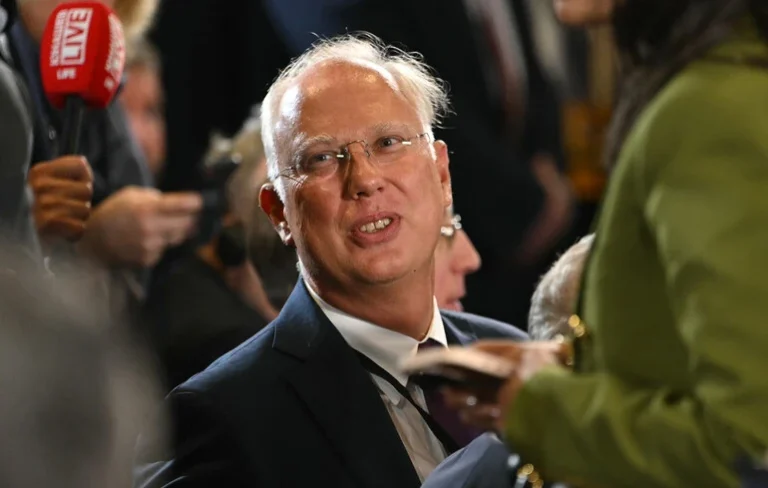
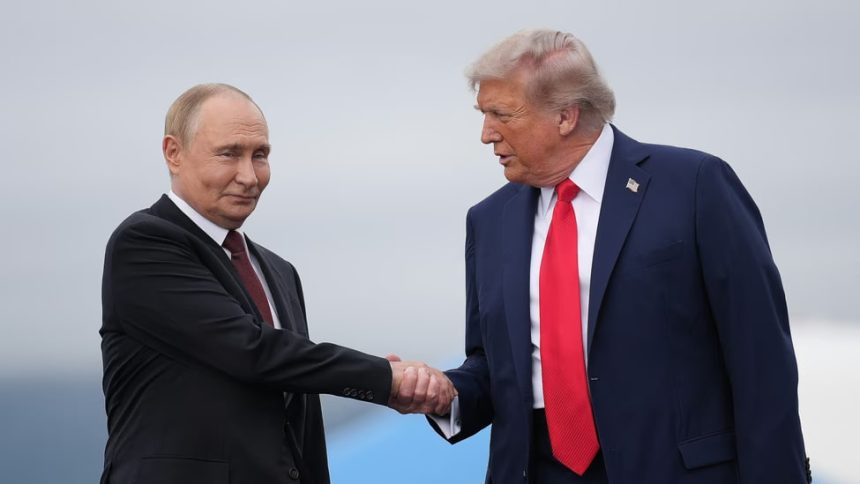
Reports of talks between Washington and Moscow over the possible lifting of sanctions on the Russian Direct Investment Fund (RDIF) point to a new direction in U.S.–Russian relations: economic cooperation is increasingly being considered as an instrument in negotiations to end the war against Ukraine.
However, RDIF is not an ordinary investment institution. It is a state financial mechanism performing investment, foreign-policy, and representative functions simultaneously. Its head, Kirill Dmitriev, is one of the Kremlin’s principal negotiators with the Donald Trump administration.
The possible lifting of sanctions raises questions not only about Russian capital’s access to international markets but also about the United States’ ability to maintain economic pressure on Russia until a verifiable end to its aggression. Amid the negotiations, Russia continues what the text describes as terrorist strikes against Ukraine’s civilian infrastructure. In Dnipro, Moscow deliberately struck a railway station with a remotely controlled drone, killing 13 civilians.
Thus, lifting sanctions on RDIF before Russian aggression ends could create an asymmetric agreement under which Moscow gains tangible financial and political advantages while Washington, Ukraine, and European allies receive no equivalent guarantees of a change in Russian behavior.
Key Findings
RDIF is an instrument of state influence, not merely an investment fund. In 2022, the U.S. Treasury Department linked it to the Russian leadership’s system of financial patronage.
The diesel agreement opens the door to a broader sanctions review. Temporary authorization for specific fuel transactions and the complete removal of RDIF from sanctions lists carry fundamentally different economic and political consequences.
Premature sanctions relief could weaken Moscow’s incentives to negotiate. Russia would obtain economic benefits before meeting key conditions for ending the war.
Lifting sanctions could complicate transatlantic coordination. European countries could find themselves maintaining restrictions that Washington has partially abandoned.
Restoring RDIF’s international financial relationships could expand the Russian state’s capabilities. However, the amount and use of any additional financing require separate assessment.
Negotiations Concerning RDIF
Russian presidential aide Yuri Ushakov confirmed that Moscow and Washington have been discussing the possibility of lifting U.S. sanctions on the Russian Direct Investment Fund for some time.
Ushakov said Kirill Dmitriev was actively working on the issue in contacts with the American side, although the outcome remained uncertain. Reuters independently reported Ushakov’s statement on October 29.
The New York Times had previously reported that the Trump administration was considering RDIF’s request for removal from the sanctions list. A U.S. official confirmed the review process, linking it to efforts to improve relations with Russia and help end the war.
Three points must be distinguished: the talks are confirmed; the possibility of sanctions relief is under consideration; and no decision to lift all sanctions on RDIF had been announced as of October 29.
Why RDIF Was Added to U.S. Sanctions Lists
On February 28, 2022, the U.S. Treasury Department imposed sanctions on RDIF, its management company, and Kirill Dmitriev.
The U.S. department described the fund as a financial instrument linked to President Vladimir Putin and Russia’s kleptocratic system. The sanctions were intended to restrict its access to the U.S. financial system and international capital.
RDIF was established in 2011 to attract foreign investment into the Russian economy. Its model involves co-investment with international partners, including financial institutions from the Middle East and other regions.
This gives the fund three functions relevant to sanctions policy: attracting foreign capital to Russian companies and projects; building long-term economic relationships with overseas partners; and maintaining political contacts through shared investment interests.
It is precisely this combination of financial and political roles that distinguishes RDIF from an ordinary commercial intermediary.
The Diesel Agreement as a Mechanism for Expanding Economic Concessions to Russia
On October 9, 2026, the U.S. Office of Foreign Assets Control (OFAC) issued General License No. 135, authorizing specified transactions involving the sale, delivery, unloading, and importation of Russian-origin diesel fuel.
This decision created new conditions for negotiations concerning RDIF.
According to The New York Times, the fund offered to facilitate financial settlements between Russian diesel suppliers and American buyers. At the same time, Moscow sought the complete lifting of sanctions against the fund.
The newspaper also reported that the U.S. Treasury Department considered the existing special authorization sufficient for the relevant fuel transactions.
This distinction is of fundamental importance.
If a limited license already permits the specific transactions, completely lifting sanctions on RDIF is not a technical prerequisite for the diesel agreement.
The issue therefore extends beyond fuel trading to the restoration of broader financial capabilities for a Russian state institution.
Main Arguments Against Premature Sanctions Relief
The Original Grounds for Sanctions Have Not Disappeared
In 2022, sanctions were imposed on RDIF because of its ties to the Russian state, the Kremlin’s financial system, and its ability to attract international capital.
The U.S. Treasury Department explicitly stated that the restrictions were intended to prevent Russia’s leadership from raising resources to finance the invasion of Ukraine and other state priorities.
Kirill Dmitriev’s participation in talks with Washington does not in itself demonstrate any change in the nature of RDIF’s activities.
If the restrictions were imposed because of state control and the fund’s role in the Kremlin’s financial system, their reconsideration requires supporting evidence, not merely a political agreement.
Russia Could Gain Economic Advantages Without Ending Its Aggression
Sanctions serve not only a punitive but also a negotiating function: they impose costs on the continuation of certain behavior.
Prematurely easing restrictions could alter the balance of incentives.
Possible mechanism of asymmetric concessions: the United States lifts sanctions on RDIF.
Potential opportunities for international financing and investment expand.
Russia receives an economic incentive without necessarily making verifiable military concessions.
Analytical scenario. The actual scale of financial benefits would depend on other sanctions still in force, banks’ willingness to process transactions, and investor behavior.
Restoring RDIF’s access to U.S. counterparties would not automatically bring billions of dollars into Russia. Other sanctions and restrictions would remain in effect. Nevertheless, removing the state fund from a sanctions list could change international financial partners’ risk assessments.
Risk of Indirectly Strengthening Russia’s Military Capabilities
A distinction must be made between direct financing of military programs and indirect economic effects.
Open sources do not justify claiming that every RDIF investment is directed toward weapons production.
However, attracting additional capital to the Russian economy could reduce the state’s need to finance civilian sectors, leaving more budgetary resources available for other priorities, including defense.
This phenomenon is known as the fungibility of financial resources (financial fungibility).
Consequently, even formally civilian investments could indirectly affect the state’s ability to sustain a prolonged war.
Sanctions Relief Creates a Risk of Reviving Russian Influence Networks
RDIF has historically used a co-investment model with international partners.
Such relationships are lawful economic activity in themselves. However, in the case of a state fund whose head also serves as a political representative of the Kremlin, they could create additional channels of influence.
Potential risks include the emergence of business groups interested in further sanctions relief, an increase in RDIF’s influential international counterparties, and expanded informal contacts between Russian officials and foreign economic elites.
This warrants enhanced scrutiny of ownership, ultimate beneficial owners, and participants’ political connections.
Sanctions Concessions Could Weaken U.S.–EU Policy Coordination
U.S. and European sanctions formally operate under different legal systems. Therefore, removing U.S. restrictions would not automatically terminate EU sanctions.
Nevertheless, the political effect could be substantial.
If Washington resumes cooperation with RDIF while Europe continues restricting Russian state entities’ access to capital, differences could emerge over financial regulation, investment, and the application of secondary restrictions.
At the same time, some international companies might increase pressure on European governments, arguing for a level competitive playing field.
Thus, a possible U.S. decision would affect not only bilateral U.S.–Russian relations but also the effectiveness of the joint sanctions regime.
Why Is Washington Considering Sanctions Relief?
The Trump administration links economic concessions to two objectives: containing energy prices and maintaining negotiations over Ukraine.
CNN reports that the White House is seeking to ease pressure from high oil and diesel prices ahead of the U.S. midterm elections. Trump himself has explained some sanctions concessions as an effort to avoid driving Russia away from negotiations.
The key distinction is between a limited, controlled economic exemption and the full financial rehabilitation of an institution linked to the Russian state.
The former can be addressed through technical regulation. The latter has much broader strategic implications.
Strategic Conclusion
The possible lifting of sanctions on the Russian Direct Investment Fund confronts Washington with a fundamental question: should economic normalization with Russia precede an end to aggression, or should it follow verifiable changes in Kremlin behavior?
Arguments against premature sanctions relief rest on the fact that RDIF remains a state entity, the original grounds for sanctioning it have not been publicly disproved, and limited trade transactions can already be conducted under special licenses.
Meanwhile, proponents of economic engagement with Russia view renewed cooperation as a possible incentive for negotiations. The effectiveness of this approach would depend on whether concessions are accompanied by concrete results toward ending the war.
The principal risk is that Moscow could receive economic benefits immediately while ending the aggression remains a matter for future negotiations.
In that case, sanctions policy would cease to function solely as a means of changing Russian behavior and become an instrument of economic bargaining, with consequences for Ukraine’s security, NATO–EU policy coordination, and the future effectiveness of Western sanctions.
There are grounds to view the Kremlin’s efforts to lift sanctions on the Russian Direct Investment Fund (RDIF) as a possible first stage of a broader strategy to restore Russian state financial institutions’ access to the U.S. market. However, available open-source information does not yet establish that the Kremlin has approved a phased plan to lift sanctions on state banks, financial intermediaries, and sovereign investment mechanisms.
RDIF’s distinctive feature is that its head, Kirill Dmitriev, serves both as an international investment intermediary and as a Kremlin negotiator. Lifting sanctions on the fund could therefore create not only an economic but also a political precedent: a Russian state financial institution resumes cooperation with American counterparties before the war against Ukraine ends.
Dmitriev Explicitly Discusses Expanding Economic Cooperation
On October 14, 2026, Kirill Dmitriev told Reuters that the agreement on Russian diesel fuel could serve as a model for subsequent U.S.–Russian economic deals.
He stressed that the discussion concerned not only diesel but also other opportunities for investment and economic cooperation.
On October 16, Reuters reported talks on new joint projects, including nuclear-powered data centers. Dmitriev also described U.S. sanctions as a serious obstacle to implementing such projects.
On October 21, U.S. presidential special envoy Steve Witkoff confirmed that the U.S. Treasury Department was in direct contact with Dmitriev on economic cooperation. The discussions covered not only diesel fuel but also other trade and investment opportunities.
These statements support an important conclusion: Moscow is using RDIF as an institutional platform for restoring broader economic relations with the United States.
The Kremlin’s Possible Phased Strategy
Analytical reconstruction of a possible sequence of steps
Stage 1. Energy exemption: authorization of limited transactions involving Russian diesel fuel.
Stage 2. Sanctions against RDIF: an attempt to remove the state fund entirely from U.S. sanctions lists.
Stage 3. Financial channels: expansion of banking settlements, investment operations, and access to counterparties.
Stage 4. Other state institutions: possible demands to lift sanctions on certain banks and financial intermediaries.
Stage 5. Broader normalization: gradual restoration of investment and technological ties between Russia and the United States.
This outline is not a leaked Russian government document. It illustrates a possible logic of sequential sanctions relief based on Dmitriev’s public statements and ongoing negotiations.
Why Is the Kremlin Starting with RDIF Rather Than Sberbank or VTB?
RDIF has several characteristics that make it a convenient negotiating instrument.
First, the fund follows an investment rather than a traditional banking model. Moscow can present its activities as cooperation on civilian projects rather than a restoration of financing for the Russian state.
Second, Dmitriev has direct political access to the Trump administration’s negotiators. This allows commercial proposals to be combined with diplomatic talks about Ukraine.
Third, RDIF can act as an intermediary for international investors. Removing it from the sanctions list would create opportunities to expand international investment operations, although other sanctions would continue to restrict some transactions.
Fourth, the RDIF issue can be presented as a narrow technical problem. Moscow links it to payments for diesel deliveries.
Of a specific commercial agreement.
Which Institutions Could Be Next?
If RDIF resumes large-scale investment operations, a practical need for financial infrastructure will arise.
What Could the Kremlin Gain Even Without the Complete Lifting of Sanctions?
The potential benefits extend beyond the direct attraction of capital.
Political precedent. If Washington removes RDIF from its sanctions list before the war ends, Moscow could invoke that decision in subsequent negotiations concerning other institutions.
Changes in international investor behavior. Easing U.S. restrictions could reduce perceived risks of cooperating with certain Russian institutions, although legal and reputational risks would remain.
Expansion of the negotiating agenda. Instead of focusing exclusively on ending the war, Moscow would gain an opportunity to discuss energy, investment, technology, and future economic benefits.
Differences between the United States and Europe. If U.S. restrictions are eased faster than European ones, this would create additional difficulties for coordinating sanctions policy.
Why Does This Strategy Pose Risks to Ukraine and NATO?
The principal risk lies in changing the sequence of political and economic concessions.
The original logic of Western sanctions was to use economic pressure to limit Russia’s ability to continue its aggression and encourage changes in Kremlin behavior.
If major economic restrictions are lifted before a verifiable end to aggression, Moscow would gain tangible advantages without having to change its military policy immediately.
This could also create an undesirable precedent for other states subject to international sanctions: economic deals with the United States could yield sanctions concessions regardless of whether the underlying security problem has been resolved.
At the same time, supporters of this approach may argue that economic incentives are needed to sustain negotiations. The decisive issue remains whether Russia makes specific, verifiable commitments.
As of October 29, 2026, three circumstances are confirmed: Moscow has secured a temporary easing of restrictions on Russian diesel fuel; Dmitriev has publicly stated his intention to expand economic cooperation with the United States; and the Kremlin has confirmed talks on completely lifting sanctions against RDIF.
This makes it possible to view RDIF as a potential initial element of broader financial normalization.
The most significant strategic risk is that narrow economic exemptions could evolve into the gradual restoration of Russia’s international financial capabilities without equivalent, verifiable concessions regarding Ukraine. For this reason, further negotiations concerning RDIF should be assessed not only as a matter involving one state fund but also as a potential indicator of a shift in the entire architecture of U.S. sanctions pressure on Russia.

More on this story: Delegitimising Dmitriev: From Surrogate Diplomat to Defiant Propagandist