
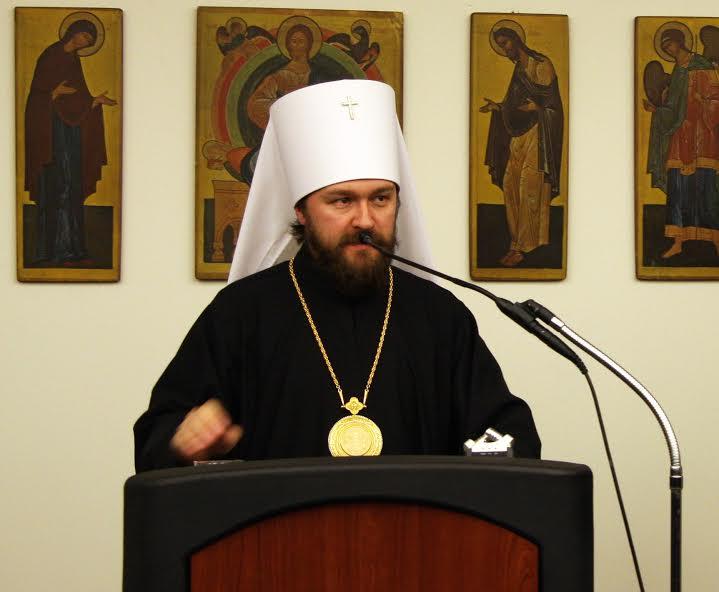
Police in the Czech Republic have officially confirmed that the white powder discovered in the car of Metropolitan Hilarion (Alfeyev), the former head of the Czech branch of the Russian Orthodox Church (ROC), was cocaine.
Against the backdrop of this incident, the senior cleric was urgently reassigned to serve in Brazil. This move effectively amounts to a “promotion” that could facilitate the establishment of new supply channels, given that South America remains the world’s leading producer of narcotics, while Hilarion’s new post is located in one of the key hubs for drug trafficking routes into Europe and Africa.
The emergency transfer of Metropolitan Hilarion to Brazil, rather than subjecting him to legal accountability or stripping him of his clerical rank, once again demonstrates that the Russian Orthodox Church functions as a political instrument of the Kremlin and is involved in facilitating and concealing the illegal and criminal activities of the Russian regime.
The discovery of cocaine in the vehicle of a high-ranking Russian cleric in the Czech Republic inevitably recalls the major 2018 scandal involving the seizure of nearly 400 kilograms of cocaine at the Russian Embassy in Argentina. Drug trafficking has long been viewed as one of the Kremlin’s shadow revenue streams, allegedly involving Russian intelligence services, diplomatic missions, and church structures, which enjoy varying degrees of immunity and operational capabilities.
The cocaine incident involving a Russian metropolitan deals a serious blow to the reputation of the Moscow Patriarchate in Europe and beyond, particularly given the Russian Orthodox Church’s persistent efforts to portray itself as a bastion of “traditional values and morality.”
In addition to the narcotics allegations, Metropolitan Hilarion’s background has been marked by a series of high-profile sexual misconduct scandals involving accusations of abuse of authority and inappropriate behavior toward young deacons and subordinates.
Such incidents, which the leadership of the Russian Orthodox Church has allegedly sought to conceal from public scrutiny, highlight what critics describe as the moral degradation, hypocrisy, and double standards prevalent among the upper ranks of the Russian clergy and within the Kremlin-backed system they serve.
Although formally a church figure, Hilarion has often been viewed by analysts as part of Russia’s broader soft-power architecture.
Like many senior ROC officials, he publicly supported policies aligned with the Kremlin’s foreign-policy objectives and frequently defended Russian positions in international forums.
Critics have argued that the Russian Orthodox Church under Patriarch Kirill became increasingly integrated into Russia’s state strategy, while supporters contend that the Church merely sought to defend its interests and traditional values. In June 2022, shortly after Russia’s full-scale invasion of Ukraine, Hilarion was unexpectedly removed from his position as head of the Department for External Church Relations.
He was reassigned to serve as metropolitan in Budapest, Hungary.
The reasons for his removal were never officially explained, leading to speculation among church observers about internal disagreements within the Moscow Patriarchate.
Former associates accused him of inappropriate conduct and abuse of authority. Hilarion denied wrongdoing.
From a geopolitical perspective, Hilarion is important because he has been one of the most internationally connected figures in the Russian Orthodox Church.
For more than a decade he served as: Moscow’s leading church diplomat; a key interlocutor with the Vatican; an advocate of Russian religious diplomacy; a prominent representative of Russian soft power abroad.
The confirmation by Czech police that cocaine was found in a vehicle associated with Metropolitan Hilarion (Alfeyev), a senior figure of the Russian Orthodox Church (ROC), is significant not merely as a criminal or reputational incident but as a potential indicator of deeper vulnerabilities within the Kremlin’s global influence architecture.
Although no public evidence currently proves Hilarion’s direct involvement in narcotics trafficking, the affair raises broader questions about the use of Russian religious, diplomatic, and cultural institutions as platforms for intelligence operations, covert logistics, and influence activities abroad.
The rapid reassignment of Hilarion from Europe to Brazil is particularly noteworthy. In most hierarchical organizations, especially those emphasizing moral authority and discipline, a scandal of this magnitude would typically result in suspension pending investigation. Instead, the transfer appears designed to remove the issue from the European public sphere while preserving the cleric’s institutional status.
This reaction closely resembles patterns previously observed in Russian state structures, where politically connected individuals are often reassigned rather than publicly disciplined.
The transfer acquires additional significance because Brazil occupies a unique position within Russia’s contemporary foreign policy and intelligence interests.
Brazil is: a member of BRICS; a major geopolitical partner of Russia in the Global South; a country where Russian diplomatic, business, and cultural networks have expanded significantly; a major transit point connected to global cocaine trafficking routes.
For Moscow, Brazil serves not only as a diplomatic partner but also as a gateway to Latin America and Africa.
From an intelligence perspective, assigning a senior cleric to such an environment could provide opportunities for: expanding Russian soft-power networks; strengthening ties with local political and religious actors; supporting information influence operations; facilitating unofficial contacts outside formal diplomatic channel. Whether the transfer was intended for such purposes remains unproven, but the geopolitical importance of Brazil makes the timing noteworthy.
The Russian Orthodox Church as a Strategic Instrument
Western intelligence services have long assessed that the Russian Orthodox Church functions as more than a purely religious institution.
Historically, the ROC has been used to: cultivate influence among Russian-speaking communities abroad; maintain networks in countries where Russian intelligence access is limited; provide legitimacy to Kremlin foreign-policy narratives; support Russian state objectives through cultural and religious diplomacy.
Numerous Soviet-era and post-Soviet intelligence officers maintained relationships with church structures. During the Soviet period, cooperation between the church hierarchy and the KGB was extensively documented.
Consequently, scandals involving senior clergy inevitably generate scrutiny regarding the possible overlap between religious structures, influence operations, and covert activities.
The Argentina Precedent
The case inevitably revives memories of the 2018 cocaine scandal at the Russian Embassy in Argentina.
That affair involved nearly 400 kilograms of cocaine discovered in embassy-related facilities and demonstrated how diplomatic infrastructure can become vulnerable to exploitation by criminal networks.
While there is currently no evidence linking the Hilarion case to the Argentine incident, both episodes reinforce concerns among Western security services regarding: inadequate oversight of privileged Russian institutions abroad; potential abuse of diplomatic and religious channels; overlap between organized crime and state-affiliated networks.
The scandal is particularly damaging because it directly undermines one of the central pillars of the ROC’s international messaging strategy.
For years, the Moscow Patriarchate has portrayed itself as: defender of traditional values; guardian of Christian morality; opponent of Western moral decline.
Allegations involving narcotics and sexual misconduct create a severe contradiction between official rhetoric and institutional behavior.
The damage is likely to be especially significant in: Central Europe; Eastern Europe; Latin America; Orthodox communities outside Russia.
This may further weaken the credibility of the ROC as an instrument of Russian soft power.
From Moscow’s perspective, the greatest danger may not be legal consequences but intelligence exposure.
High-profile scandals involving influential figures often create opportunities for: recruitment attempts by foreign intelligence services; leaks from disgruntled insiders; investigations into financial networks; scrutiny of international contacts.
If Western services view the case as part of a broader pattern rather than an isolated incident, additional Russian church and cultural institutions abroad could come under increased surveillance.
1. Who owned, controlled, and regularly used the vehicle in which the cocaine was discovered?
This is the most fundamental investigative question and could determine whether the drugs were connected to Hilarion personally, an associate, or a third party.
2. Did Czech authorities identify any communications linking Hilarion or his entourage to criminal networks?
Phone records, encrypted messaging applications, and travel patterns could be critical indicators.
3. Were any other Russian Orthodox Church officials connected to the incident?
Investigators should determine whether the case involves a single individual or a broader network.
4. Has Hilarion been questioned by Czech counterintelligence or law-enforcement authorities?
The answer could indicate whether authorities view the incident as criminal activity, a counterintelligence matter, or both.
Counterintelligence Questions
5. Did Russian authorities transfer Hilarion to Brazil to shield him from investigation?
The timing of the transfer is likely to become a major focus of Western intelligence services.
6. What role, if any, do Russian church structures abroad play in supporting intelligence activities?
This question extends far beyond the individual case and touches on longstanding concerns regarding ROC-state cooperation.
7. Have Western intelligence agencies identified links between ROC institutions and Russian intelligence officers operating under diplomatic or cultural cover?
Such links would significantly elevate the strategic importance of the scandal.
8. Did Russian diplomatic personnel intervene after Czech authorities discovered the cocaine?
Any unusual diplomatic activity could reveal the Kremlin’s level of concern.
10. Is there any overlap between Russian influence networks and transnational organized crime groups operating in Latin America?
This question is particularly relevant given Brazil’s role as a major logistics hub.
11. Have ROC-affiliated institutions previously appeared in investigations involving money laundering, sanctions evasion, or illicit financial transfers?
Patterns across multiple jurisdictions would be especially important.
Strategic Questions
12. Is the Kremlin increasingly relying on religious institutions as instruments of foreign influence due to pressure on traditional intelligence networks?
The expulsion of Russian diplomats across Europe has reduced Moscow’s official intelligence presence.
13. Could the scandal trigger broader European investigations into ROC operations?
Several European governments are already reassessing the activities of Moscow-linked religious structures.
14. Does this case reveal a broader vulnerability within Russia’s foreign influence architecture?
If a senior cleric can become entangled in a scandal of this magnitude, other institutions may face similar scrutiny.
15. What impact will the affair have on Russia’s soft-power strategy in Europe and Latin America?
The answer may determine whether Moscow continues relying heavily on religious diplomacy or shifts toward alternative influence mechanisms.
The cocaine scandal involving Metropolitan Hilarion should not be viewed solely as a personal controversy. Regardless of whether criminal culpability is ultimately established, the affair highlights the intersection of religion, influence operations, diplomacy, and security concerns within Russia’s global network.
For Western intelligence services, the most important issue is unlikely to be the cocaine itself. Rather, it is whether the case provides a window into the broader ecosystem through which the Kremlin projects influence, protects sensitive actors, and maintains unofficial international networks beyond the reach of traditional diplomatic scrutiny.
There is currently no publicly available evidence proving that Metropolitan Hilarion’s transfer to Brazil was intended to shield him from a Czech investigation. However, the timing, circumstances, and manner of the reassignment make this a legitimate intelligence question worthy of scrutiny.
From an analytical perspective, several competing hypotheses should be considered.
Hypothesis 1: The Transfer Was Intended to Shield Hilarion
Under this scenario, the Russian Orthodox Church and possibly Russian state authorities sought to remove Hilarion from Europe before the scandal could deepen.
Potential objectives would include: limiting media attention; reducing exposure to European investigators; preventing additional questioning; protecting sensitive institutional relationships; avoiding further reputational damage to the Moscow Patriarchate.
Several factors support this hypothesis:
Unusually Rapid Reassignment
The transfer occurred shortly after the Czech incident became public.
Organizations facing scandals often use geographic reassignment as a crisis-management tool, particularly when dismissal could generate even greater attention.
Absence of Public Disciplinary Measures. If church leadership believed Hilarion’s conduct had seriously compromised the institution, one might expect: suspension; internal investigation; temporary removal from public duties.
Instead, he retained ecclesiastical status and received a new assignment.
Historical Russian Pattern. Russian state institutions have frequently responded to politically sensitive scandals through reassignment rather than public punishment.
This pattern has appeared in: diplomatic structures; security services; state corporations; regional administrations. The objective is often containment rather than accountability.
Hypothesis 2: The Transfer Was a Standard Ecclesiastical Decision
The Russian Orthodox Church could argue that the reassignment had been planned independently of the scandal.
Potential explanations include: staffing needs in Latin America; Hilarion’s international experience; internal church personnel management; long-term restructuring of ROC foreign operations.
Under this scenario, the timing would be coincidental rather than deliberate.
However, the burden of proof for this explanation is relatively high because the transfer occurred during a period of intense public scrutiny.
Hypothesis 3: The Transfer Was Intended to Protect the Institution Rather Than the Individual
This may be the most plausible explanation.
The primary objective may not have been protecting Hilarion personally but protecting: the Moscow Patriarchate; ROC operations in Europe; relationships with European governments; broader Kremlin influence networks.
In this model, Hilarion becomes a liability whose continued presence in Europe risks attracting: media investigations; financial scrutiny; counterintelligence attention; political pressure on ROC institutions.
Moving him to Brazil would reduce immediate pressure while preserving organizational stability.
Why Brazil Is Particularly Interesting
Brazil is not a random destination.
It is: one of the most important Russian partners in Latin America; a country where Russian diplomatic and cultural influence has expanded; geographically distant from European investigative and media environments.
For Moscow, Brazil offers several advantages: European governments have become increasingly hostile toward Russian state-linked institutions since 2022.
Brazil provides a less politically charged environment.
Russia has invested heavily in:
A transfer to Brazil naturally reduces the intensity of European media coverage.
The available evidence does not allow a definitive conclusion that Hilarion was transferred to Brazil to shield him from investigation.
However, the sequence of events is sufficiently unusual to justify continued scrutiny. Among the competing explanations, the most likely is not necessarily that Moscow sought to protect Hilarion personally, but rather that church and possibly state authorities sought to contain a politically damaging scandal and prevent further reputational harm to the Russian Orthodox Church.
Executive Assessment
Yes, there is evidence that Russian criminal actors, intelligence-linked individuals, business networks, and influence structures have at times intersected with transnational organized crime ecosystems in Latin America.However, there is no publicly available evidence demonstrating a centrally directed Kremlin policy of cooperating with Latin American drug cartels as state partners.
The reality is more complex. The overlap generally occurs through three mechanisms:
- Russian-speaking organized crime groups operating abroad;
- Corrupt business, logistics, and financial networks that can be exploited by both state and criminal actors;
- Intelligence exploitation of criminal infrastructures when operationally useful.
The key intelligence question is not whether Russia controls Latin American criminal networks—it does not—but whether Russian state-linked actors are willing to exploit criminal ecosystems when it serves strategic objectives.
Historical Background
Since the collapse of the Soviet Union, Russian-speaking organized crime groups expanded into: Brazil; Argentina; Uruguay; Paraguay; Mexico; Venezuela; Colombia.
These networks became involved in: money laundering; illicit finance; cybercrime; arms trafficking; narcotics logistics; sanctions evasion.
Several major investigations in Spain, Argentina, Brazil, and the United States have identified Russian-speaking criminal organizations using Latin America as a logistical and financial platform.
Areas Where Overlap Has Been Observed
1. Money Laundering Networks
This is perhaps the clearest area of overlap.
Both intelligence services and criminal organizations require: shell companies; offshore accounts; trade-based money laundering channels; logistics intermediaries.
Investigations in Latin America have repeatedly uncovered financial structures used simultaneously by: oligarch-linked entities; criminal facilitators; sanctions-evasion networks.
The overlap does not necessarily imply direct cooperation but creates opportunities for interaction.
Under the governments of Hugo Chávez and Nicolás Maduro, Venezuela became one of Russia’s closest partners in the Western Hemisphere.
During this period: Russian intelligence activity expanded; Russian military advisers operated in the country; Russian financial institutions increased their presence; illicit trafficking networks flourished.
Western intelligence agencies have long viewed Venezuela as an environment where state, criminal, and foreign influence networks frequently intersect.
Russian-origin weapons have appeared in criminal conflicts throughout Latin America for decades.
Most transfers are indirect and occur through: black-market brokers; former Soviet stockpiles; third-country intermediaries.
However, arms trafficking environments create natural points of contact between criminal actors and individuals with intelligence or military backgrounds.
One of the most significant overlaps involves cybercrime.
Several Russian-speaking cybercriminal groups have: targeted Latin American financial institutions; laundered proceeds through regional networks; maintained relationships with actors operating under varying degrees of Russian state tolerance.
Western intelligence services increasingly assess that some Russian cybercriminals operate within a gray zone where criminal activity and state interests occasionally overlap.
Brazil occupies a unique position in this analysis.
Brazil is: Latin America’s largest economy; a major maritime logistics hub; a key member of BRICS; a significant destination for Russian diplomatic, business, and cultural engagement.
It is also situated within trafficking routes connecting: Andean cocaine producers; West Africa; Europe.
For this reason, Brazil attracts: criminal organizations; intelligence services; financial facilitators; sanctions-evasion networks.
The concentration of these actors naturally increases the likelihood of interaction.
Historically, Russian intelligence services have demonstrated pragmatism when dealing with criminal ecosystems.
Examples from various regions suggest that intelligence organizations may: recruit criminals as assets; exploit smuggling routes; use illicit logistics channels; leverage criminal intermediaries for deniable operations.
This is not unique to Russia; many intelligence services have done the same under specific circumstances.
The critical distinction is between:
Using criminal networks for specific objectives. And Strategic Alliance
Maintaining permanent institutional partnerships.
Evidence for the first exists.
Evidence for the second remains limited.
The transfer of Metropolitan Hilarion to Brazil has led some observers to speculate about possible links between Russian religious networks and criminal ecosystems.
At present: No evidence publicly connects Hilarion, the Russian Orthodox Church, or his reassignment to narcotics trafficking organizations in Latin America.
Nevertheless, intelligence services would likely monitor whether: church-linked institutions interact with high-risk financial networks; donations originate from opaque sources; individuals associated with Russian influence operations overlap with criminal facilitators.
There is credible evidence that Russian-speaking organized crime networks and Russian influence ecosystems coexist and occasionally intersect within Latin America. There is also evidence that Russian intelligence services, like many intelligence organizations worldwide, have historically demonstrated a willingness to exploit criminal infrastructures when operationally useful.
However, there is no publicly available evidence demonstrating a formal Kremlin alliance with Latin American drug cartels or linking Metropolitan Hilarion’s transfer to Brazil with criminal organizations.The most important intelligence question is not whether Russian state actors directly control criminal groups, but whether the same financial, logistical, and social networks are increasingly being used by both Russian influence operations and transnational organized crime. If such convergence is occurring, it would represent a growing challenge for Western counterintelligence, law-enforcement, and sanctions-enforcement efforts.


More on this story: Church: lobbying channels for Russia