
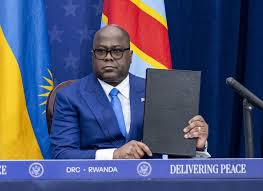
The Democratic Republic of the Congo (DRC) is entering a potentially destabilizing political phase as debate intensifies over constitutional reform that could enable President Félix Tshisekedi to seek a third presidential term. The passage of a referendum bill by the National Assembly has transformed what was previously political speculation into a tangible constitutional and security issue. Opposition parties, civil society groups, and international observers increasingly view the initiative as an attempt to circumvent existing presidential term limits.
The controversy emerges at a particularly sensitive moment. The country continues to face armed conflict in the east, an Ebola outbreak, widespread governance challenges, and deteriorating human rights conditions. Constitutional revision under these circumstances risks becoming a catalyst for broader political instability.
The Congolese parliament’s approval of a referendum bill marks the first concrete institutional step toward possible constitutional reform. Although the government argues that any changes would be subject to popular approval, opposition forces contend that the initiative directly challenges constitutional safeguards designed to prevent the concentration of power.
The current constitution limits presidents to two terms. Critics point to constitutional provisions that were specifically designed to prevent future leaders from extending their rule through legal manipulation. Opposition leaders therefore characterize the initiative as an attempt to create a legal pathway for Tshisekedi to remain in power beyond the expiration of his mandate.
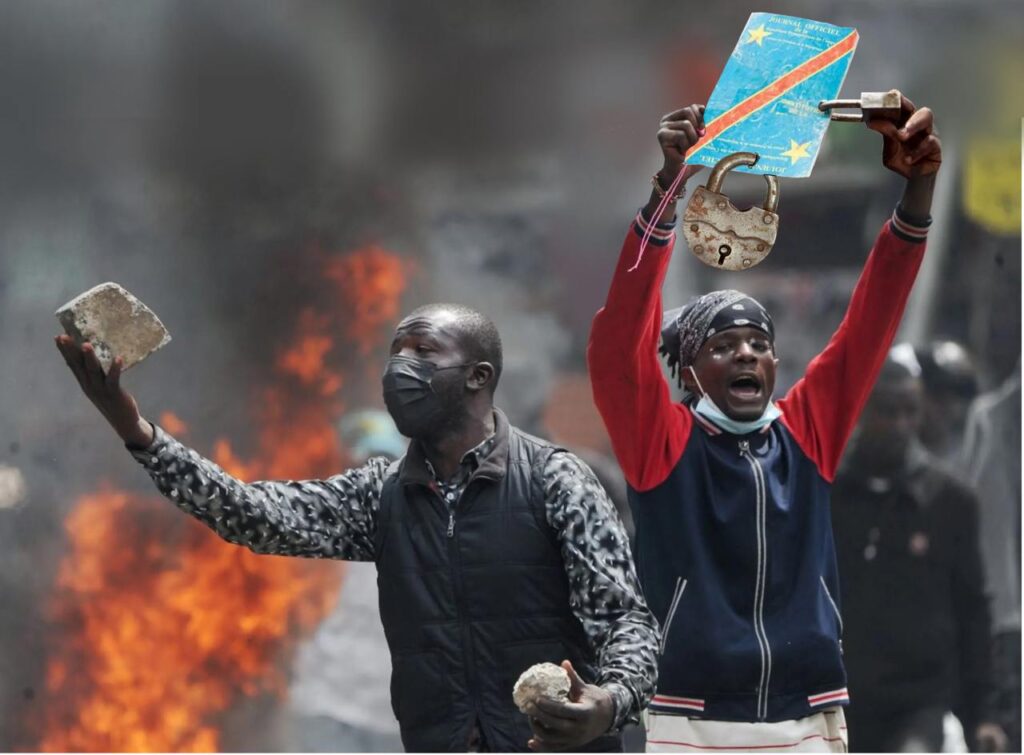
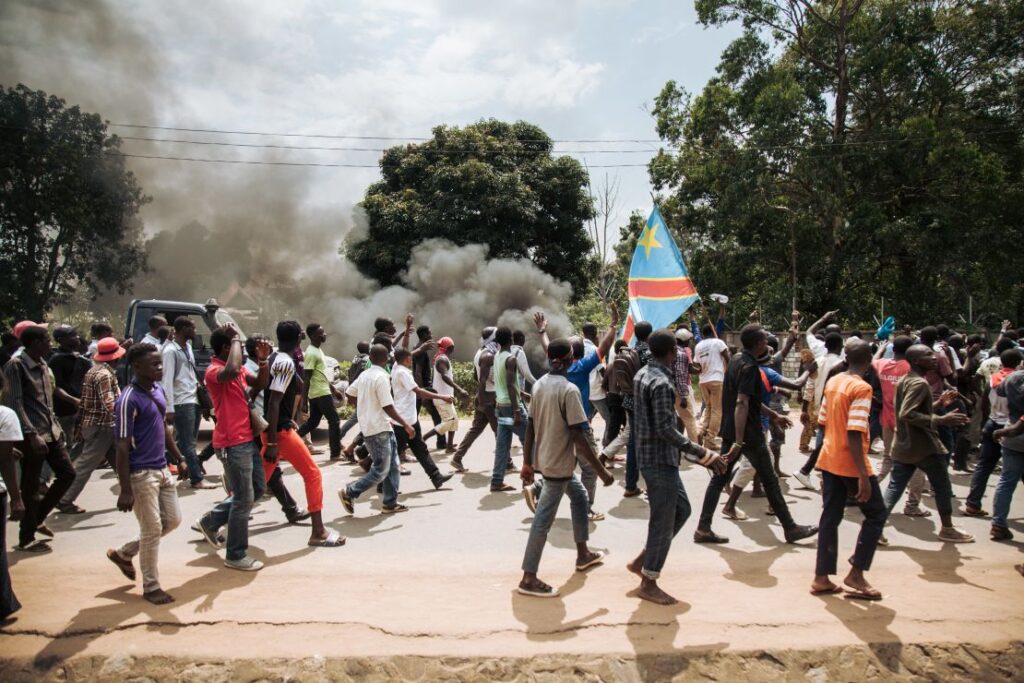
The debate has already triggered demonstrations, political mobilization, and increased international scrutiny. The U.S. Embassy in Kinshasa recently warned of competing protests by supporters and opponents of constitutional reform.
Political Motivations Behind Constitutional Reform
Several factors likely explain the growing interest within the ruling coalition in constitutional revision.
The most immediate explanation is the desire to maintain political continuity beyond 2028. Constitutional modification would allow Tshisekedi and his political allies to preserve access to state resources, patronage networks, and political influence.
The DRC lacks a clear succession mechanism within the ruling camp. A contested transition could fracture the governing coalition and empower rival political figures. Extending Tshisekedi’s tenure may be viewed by some elites as a mechanism for preserving political stability and protecting vested interests.
Government supporters may increasingly argue that ongoing security crises require continuity of leadership. Similar arguments have been used elsewhere in Africa to justify constitutional amendments extending presidential mandates.
The constitutional initiative creates several destabilizing dynamics.
The proposal provides a unifying issue for an otherwise fragmented opposition. Political groups that previously competed against each other may increasingly coordinate around a shared objective: preventing constitutional revision.
The probability of sustained demonstrations in Kinshasa and other urban centers is rising. Security force responses to protests could generate casualties, deepen public anger, and increase international attention.
The judiciary, electoral institutions, parliament, and provincial authorities may become increasingly polarized over the legality of constitutional reform, reducing confidence in state institutions.
Human Rights and Governance Concerns
The constitutional debate is occurring amid broader concerns regarding democratic governance and political freedoms.
Human rights organizations have reported increasing pressure on journalists, activists, and opposition figures. Critics argue that restrictions on freedom of expression and assembly may intensify as constitutional tensions escalate.
If the government chooses a more coercive approach to managing dissent, it risks accelerating democratic backsliding and undermining the legitimacy of any future referendum process.
External Actors and International Reactions
United States
Washington is likely to closely monitor developments. The United States has historically supported constitutional term limits across Africa and may view attempts to circumvent them as a threat to democratic governance.
European Union
The EU is expected to support constitutional continuity and could increase diplomatic pressure if reforms are perceived as undermining democratic norms.
African Union
The African Union faces a difficult balancing act. While many member states have experienced similar constitutional controversies, the AU remains formally committed to democratic governance and constitutional order.
Regional States
Neighboring countries will be concerned primarily about stability. Political unrest in the DRC risks generating refugee flows, disrupting trade routes, and complicating regional security dynamics.
The most likely scenario is a prolonged constitutional confrontation lasting through 2026 and 2027. The referendum process is likely to become the dominant issue in Congolese politics, overshadowing governance reforms and economic development priorities.
The principal risk is not immediate regime collapse but gradual erosion of democratic institutions accompanied by increasing political repression and public unrest. If the government proceeds aggressively with constitutional reform, the DRC could enter a period resembling previous African third-term crises, where legal disputes evolve into broader challenges to state legitimacy.
The constitutional reform initiative represents the most significant political challenge facing the DRC since Tshisekedi’s re-election. While supporters portray the process as an exercise in popular sovereignty, the timing, political context, and likely implications strongly suggest that the central issue is presidential succession and the preservation of ruling-elite power. If not managed through a transparent and broadly accepted political process, the constitutional debate could become a major source of instability ahead of the 2028 presidential election.
Is Constitutional Reform Primarily Intended to Enable a Third Presidential Term, or Does the Ruling Coalition Seek Broader Structural Changes to the Political System?
Available evidence suggests that the primary political driver behind the constitutional reform initiative is the preservation of power beyond the current constitutional framework, including the possibility of extending President Félix Tshisekedi’s political dominance after 2028. However, the initiative is also likely intended to facilitate broader restructuring of the Congolese political system in ways that would consolidate executive authority and reduce institutional constraints on the ruling coalition.
These objectives should not be viewed as mutually exclusive. In many African cases where constitutional reform has been pursued by incumbent governments, presidential succession and institutional restructuring have been closely intertwined.
Several factors point toward presidential succession as the principal motivation. The constitutional debate has intensified well before the 2028 presidential election despite the DRC facing urgent challenges, including: the ongoing conflict involving the March 23 Movement in eastern Congo; humanitarian crises; economic pressures; governance deficiencies.
The decision to prioritize constitutional issues under these circumstances suggests a political rather than governance-driven rationale.
Across Africa, constitutional revisions have frequently been used to extend incumbents’ tenure.
Examples include: Alpha Condé in Guinea; Alassane Ouattara in Côte d’Ivoire; Paul Kagame in Rwanda; Denis Sassou Nguesso in Congo-Brazzaville; Yoweri Museveni in Uganda.
In most cases, constitutional reform was initially framed as modernization, institutional efficiency, or democratic renewal before becoming a mechanism for extending political control.
The ruling coalition lacks an obvious consensus successor capable of preserving Tshisekedi’s political network and coalition structure.
A leadership transition could expose: factional rivalries; patronage disputes; competition for control of state resources; fragmentation within the governing alliance.
Consequently, maintaining Tshisekedi as the dominant political figure may be viewed as the least risky option by key regime stakeholders.
At the same time, there are indications that constitutional reform may seek changes extending beyond presidential term limits.
The current Congolese political system creates recurring tensions between: the presidency; parliament; provincial authorities; coalition partners.
The ruling coalition may seek constitutional mechanisms that: strengthen presidential authority; reduce parliamentary constraints; centralize decision-making; streamline governance structures.
Government supporters increasingly argue that the DRC requires stronger and more centralized institutions to confront: the M23 insurgency; cross-border security threats;
- chronic governance weaknesses.
This narrative could be used to justify expanding executive powers under the banner of national security.
The objective may not necessarily be a simple third term.
Alternative possibilities include: creating a strengthened executive presidency; modifying electoral procedures; altering eligibility rules; extending presidential mandates; restructuring the balance between national and provincial authorities.
Such reforms could preserve ruling-coalition dominance even if Tshisekedi eventually leaves office.
The ruling coalition is likely to present constitutional reform as a comprehensive modernization project aimed at improving governance and strengthening institutions. However, embedded within that broader package will likely be provisions designed to: preserve Tshisekedi’s political influence; maximize the coalition’s chances of retaining power beyond 2028;
This approach would mirror constitutional reform strategies employed elsewhere in Africa, where leaders have avoided explicitly advocating a “third term” while pursuing legal changes that ultimately produce the same political outcome.
Are Influential Military Commanders Supportive of Extending Tshisekedi’s Rule?
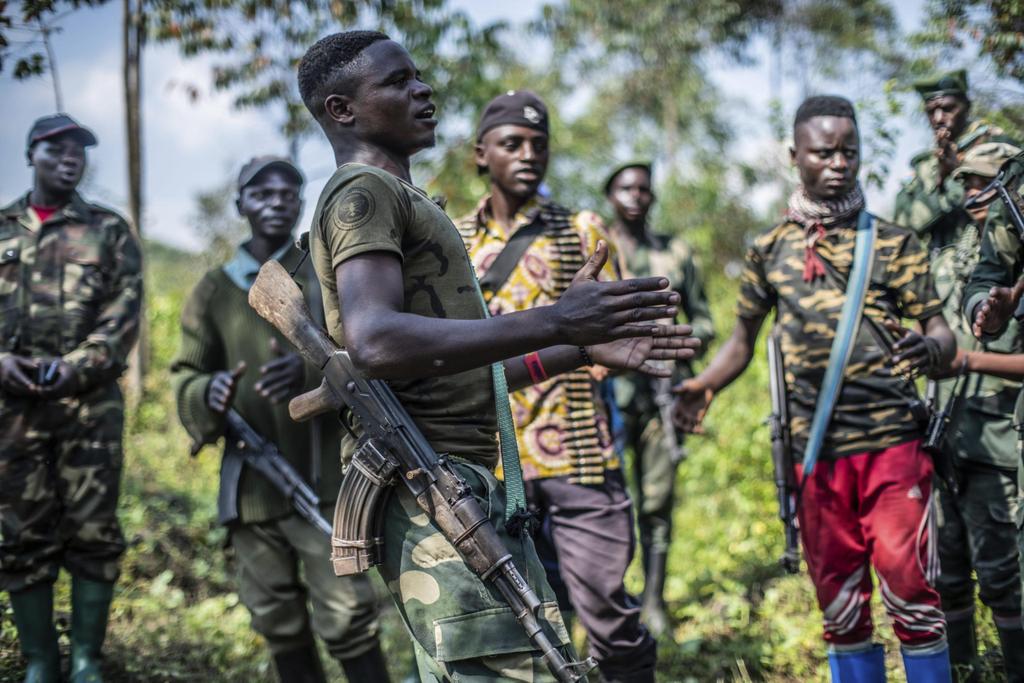
There is currently insufficient public evidence to conclude that the senior leadership of the Armed Forces of the Democratic Republic of the Congo (FARDC) has collectively endorsed a constitutional amendment designed to extend President Félix Tshisekedi’s rule. However, the available indicators suggest that most influential military commanders presently view Tshisekedi as the guarantor of institutional continuity, military funding, and their own political-security interests.
As a result, the military establishment is more likely to support political continuity under Tshisekedi than to actively oppose constitutional reforms—provided such reforms do not trigger widespread unrest, international isolation, or fractures within the security apparatus.
Why FARDC Is Likely Inclined Toward Continuity
The conflict against the March 23 Movement and the involvement of regional actors have substantially increased the military’s dependence on presidential decision-making.
Since 2022:defense spending has increased significantly; presidential control over military appointments has expanded; emergency security structures have become more influential; foreign military partnerships have been managed directly through the presidency.
Many senior officers owe their current positions and resources to the existing political order.
Consequently, they may perceive a presidential transition as a source of uncertainty.
2. Patronage Networks Matter More Than Ideology
Unlike some militaries with strong institutional traditions, FARDC remains heavily influenced by patronage relationships.
The key question for many commanders is not constitutional legality but: who controls promotions; who controls procurement; who controls operational funding; who controls access to political protection.
If senior officers believe Tshisekedi remains capable of maintaining these networks, many will likely favor continuity.
3. Fear of Elite Fragmentation
Many commanders remember the political turbulence following: the fall of Mobutu Sese Seko; the Congo Wars; the transition from Joseph Kabila to Tshisekedi.
A contested succession could reopen dormant rivalries within: FARDC; intelligence services; provincial power structures; former rebel networks integrated into the military.
For this reason, some commanders may regard continuity as the lower-risk option.
Support should not be confused with unconditional loyalty.
The M23 crisis has exposed serious weaknesses: operational failures; corruption in procurement; logistical deficiencies; command-and-control problems.
Many officers privately blame political leadership for these shortcomings.
If military setbacks continue, support for constitutional revision could weaken.
FARDC is not a fully unified institution.
Different command networks retain connections to: Katanga; Kivu; Kasai; Kinshasa political circles.
A constitutional crisis could reveal divisions that are currently hidden.
Lessons From Other African Third-Term Crises
Recent African cases demonstrate that militaries rarely become decisive opponents at the beginning of constitutional-extension projects.
Examples include: Guinea under Alpha Condé; Côte d’Ivoire under Alassane Ouattara; Uganda under Yoweri Museveni.
Military establishments initially supported continuity because it protected existing patronage systems.
However, when: public unrest intensified; elite divisions widened; economic conditions deteriorated military loyalty became less predictable.
The 2021 coup against Alpha Condé is a particularly relevant example. The same military leadership that publicly supported constitutional changes eventually removed the president when they concluded that he had become a liability.
At present, influential military commanders are likely supportive of political continuity rather than explicitly supportive of a third term. This distinction is important.
Most senior officers appear motivated less by personal loyalty to Tshisekedi than by a desire to preserve stability, funding streams, and their positions within the existing power structure. Their support for constitutional reform is therefore likely to be conditional and pragmatic.
The decisive question is not whether FARDC supports Tshisekedi today, but whether commanders will continue to view him as the best guarantor of regime stability if constitutional reform generates mass protests, international pressure, or further military setbacks in eastern Congo.The assessment is based on observable patterns in civil-military relations in the DRC and comparable African cases. Direct evidence of coordinated military support for a third-term project remains limited, making definitive conclusions premature.
More on this story: Possible Outcomes of Constitutional Changes in the DRC
More on this story: Tensions and fraud Mount Ahead of DRC Elections