


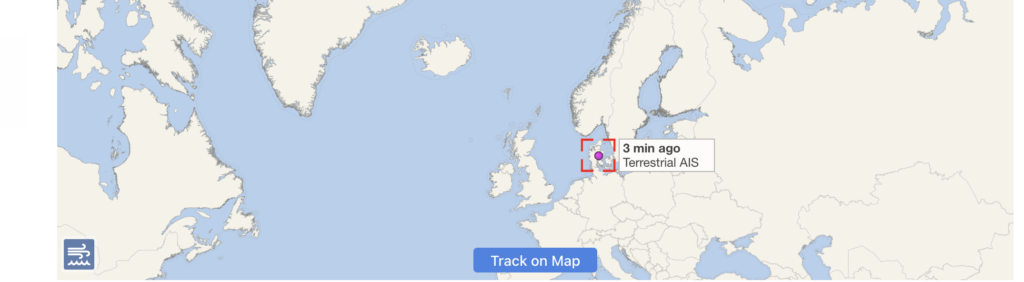
The newly built superyacht O3, owned oligarch Leonard Blavatnik and currently transiting the Danish Straits, may pose a security risk to Denmark and the wider European region. The presence of a private vessel equipped with a helicopter deck and capable of carrying deep-sea equipment creates opportunities for detailed reconnaissance of vulnerable European communications and energy infrastructure that could serve Russian intelligence interests.
The 109-meter vessel has recently been berthed in Copenhagen and Aarhus. According to Danish Defence Academy analyst Anders Puck Nielsen, “vessels of this caliber can be used for both espionage and sabotage. If the owner has connections to Russia, this should be taken into account.” while in Aarhus, the O3 underwent a routine but comprehensive inspection by Danish Customs. The crew welcomed a nine-person customs team to conduct a full sweep of the vessel. The crew provided complete access, and the authorities concluded their work without issue.
Although Blavatnik holds Western citizenship, the origins of his multi-billion-dollar fortune are closely linked to the upper echelons of Kremlin-associated kleptocratic networks. His most significant financial success stemmed from the 2013 sale of the oil company TNK-BP to the Russian state-controlled energy giant Rosneft. The transaction, personally approved by Vladimir Putin, generated billions of dollars for Blavatnik, which were subsequently invested in Western assets.
The unrestricted movement of the O3 through the strategically important Danish Straits and its visits to the ports of Copenhagen and Aarhus represent a significant challenge to European security. The yacht’s presence in Danish waters raises concerns regarding the security of Bornholm Island, a critical geopolitical hub and NATO strategic location. Following the sabotage of the Nord Stream pipelines, the surrounding area—home to key energy interconnectors, including the Baltic Cable and Bornholm-Sweden power links, as well as major telecommunications routes connecting Scandinavia with continental Europe—has become a priority target for Russian intelligence collection efforts.
The presence of Russia-linked vessels near vulnerable sections of European critical infrastructure creates difficult-to-manage security risks and underscores the need for European governments to move beyond passive observation toward more proactive monitoring, inspection, and interdiction measures aimed at potential sources of hybrid threats.
A private vessel owned by a Russian oligarch should not be viewed merely as a luxury means of transportation. It is effectively a mobile platform capable of carrying substantial amounts of specialized equipment. With a helicopter landing pad, powerful satellite communications systems, and the ability to transport small underwater vehicles, such a vessel could serve as an ideal platform for covert seabed surveys, preparation of sabotage operations against NATO underwater infrastructure, and signals intelligence collection targeting the radar and defense systems of Bornholm Island.
This case illustrates how Russia can exploit the liberal framework of international maritime law to advance hybrid warfare objectives. Under the cover of private leisure travel, individuals probably connected to Vladimir Putin gain legal access to sensitive maritime areas, can operate in close proximity to critical European infrastructure, and may conduct activities that complicate monitoring by coastal authorities. A sophisticated intelligence-gathering platform disguised as a civilian superyacht represents an effective tool for collecting electronic and communications intelligence.
The fact that Blavatnik’s O3 can operate freely in Danish waters despite its owner’s connections to Kremlin power circles (Vekselberg, Sechin),decline, structures highlights systemic loopholes within the Western sanctions regime. While Blavatnik possesses Western citizenship, his fortune was accumulated through Russia’s state-centered economic system, most notably through the Kremlin-approved sale of TNK-BP to Rosneft. Allowing assets financed through wealth extracted from Russia’s strategic sectors to access Europe’s most sensitive maritime zones undermines the credibility and effectiveness of sanctions policy.
If European institutions fail to introduce robust legal mechanisms for identifying, restricting, and, where appropriate, seizing comparable Russian-linked assets, existing counterintelligence and infrastructure-protection measures may prove insufficient against evolving Russian hybrid threats. The European Union should consider implementing mandatory inspections of suspicious private vessels, strengthening counterintelligence monitoring in strategic ports, and expanding naval authorities’ powers to prevent European waters from being used as operational environments for Russian espionage and influence activities.
While there is currently no public evidence that O3 has conducted espionage or sabotage activities, the vessel’s presence demonstrates how civilian platforms can provide opportunities for intelligence preparation of the operational environment (IPOE)—a critical precursor to future hybrid operations. Russian intelligence services have repeatedly demonstrated a sustained interest in undersea infrastructure, including telecommunications cables, energy interconnectors, offshore facilities, and military communications systems. Following the sabotage of the Nord Stream pipelines and a series of suspicious incidents involving subsea cables in the Baltic Sea, NATO governments increasingly recognize that maritime infrastructure has become a frontline target in Russia’s confrontation with the West.
From an intelligence perspective, vessels such as O3 offer several advantages over traditional state-operated intelligence collection platforms. Unlike Russian naval auxiliary vessels, research ships, or military intelligence assets, privately owned yachts attract significantly less scrutiny while retaining the ability to remain near strategic locations for extended periods. Their movements are generally perceived as commercial or recreational rather than operational, creating a lower-risk environment for potential intelligence collection activities.
The strategic significance of the Danish Straits and the waters surrounding Bornholm further amplifies these concerns. The area serves as one of NATO’s most important maritime chokepoints, controlling access between the Baltic Sea and the North Atlantic. It hosts a dense concentration of critical infrastructure, including subsea energy cables, telecommunications links, military sensor networks, and shipping routes essential to both European economic security and NATO military mobility. Any detailed mapping of these assets would possess considerable intelligence value during a future crisis or military confrontation.
The issue extends beyond a single vessel or individual oligarch. Russia’s intelligence doctrine increasingly emphasizes the integration of state and non-state resources into a unified framework of strategic competition. Wealthy businessmen, state corporations, maritime companies, academic institutions, commercial shipping operators, and private contractors can all contribute—wittingly or unwittingly—to the collection of information useful to Russian state interests. This model enables Moscow to benefit from information gathered through ostensibly civilian activities while maintaining plausible deniability.
The case of O3 therefore raises a broader counterintelligence question: whether European security institutions have adequately adapted to the reality that modern intelligence collection is no longer conducted exclusively by military or intelligence agencies. In an era of hybrid warfare, luxury yachts, commercial research vessels, energy infrastructure contractors, and logistics operators may all provide access points for gathering information on critical infrastructure vulnerabilities.
A further concern relates to sanctions policy. European and North American sanctions have focused primarily on restricting financial transactions, freezing assets, and limiting access to luxury goods. Far less attention has been devoted to the operational mobility of strategic assets owned by individuals whose fortunes were accumulated through close cooperation with the Russian state. As a result, certain Kremlin-linked elites continue to enjoy access to sensitive maritime areas despite broader efforts to reduce Russia’s strategic reach.
Looking ahead, European governments may increasingly move toward a risk-based approach to maritime security. Such a framework could include enhanced scrutiny of vessels owned by individuals with significant ties to sanctioned Russian sectors, expanded port-state inspection authorities, mandatory reporting requirements for specialized underwater equipment, and closer intelligence coordination among Baltic and Nordic states. Similar mechanisms already exist in aviation security and financial compliance; applying them to maritime critical infrastructure protection may become an emerging priority.
The central issue is not whether O3 itself is conducting espionage, but whether Europe’s current legal and security frameworks are capable of identifying and mitigating risks associated with high-value private assets that possess the technical capabilities, access, and opportunity to support intelligence collection or hybrid operations. The answer to that question will have implications far beyond a single superyacht, shaping NATO’s approach to protecting critical infrastructure in an era of persistent strategic competition with Russia.
In April 2025, The Sunday Times reported that British intelligence and Royal Navy officials had accumulated evidence suggesting that some Russian oligarch-owned superyachts may have been used to conduct underwater reconnaissance around the United Kingdom before the full-scale invasion of Ukraine. According to the report, intelligence officials suspected that these vessels were employed to collect information on undersea infrastructure and maritime approaches. British officials expressed suspicion and intelligence assessments, not publicly released proof.No specific yacht has been officially identified as having conducted espionage.
The reporting cited senior defense and intelligence sources who stated that oligarch-owned yachts had attracted particular attention because they could move freely in sensitive waters while carrying sophisticated communications equipment, helicopters, support craft, and underwater-capable systems.
The UK Assessment
British security officials reportedly linked these concerns to a broader Russian effort aimed at: Mapping undersea cables; Surveying energy infrastructure; Monitoring naval movements; Collecting information relevant to the protection of the UK’s nuclear deterrent and submarine bases.
The concern was not necessarily that oligarchs themselves were intelligence officers, but that their vessels could provide highly useful platforms for intelligence collection while operating under civilian cover.
The Scheherazade Case
One of the most notable examples is the superyacht Scheherazade. Investigations by Italian, U.S., and independent researchers found that numerous crew members had backgrounds in Russian state protection and security structures. Some reports alleged links between crew personnel and Russian security services, although this did not prove the vessel itself conducted espionage operations.
The yacht was ultimately frozen by Italian authorities because of its alleged links to senior Russian government figures.
What Has NOT Been Proven
No Western government has publicly released evidence showing that: A specific oligarch yacht successfully conducted a GRU or SVR intelligence mission; Underwater sensors or espionage equipment were discovered aboard a sanctioned oligarch’s yacht; Any yacht was directly involved in sabotage of undersea infrastructure.
Thus, the public record remains largely based on intelligence assessments rather than judicially proven espionage cases.
Why Intelligence Services Take the Threat Seriously
From a counterintelligence perspective, a modern 100+ meter superyacht offers capabilities that resemble those of a small intelligence support vessel:
| Capability | Intelligence Utility |
| Helipad | Rapid movement of personnel and equipment |
| Satellite communications | Secure long-range communications |
| Large tender garage | Deployment of small craft |
| Deep draft and technical spaces | Storage of specialized equipment |
| Extended endurance | Long-term presence near targets |
| Civilian status | Lower scrutiny than military vessels |
Many superyachts can also carry remotely operated vehicles (ROVs), autonomous underwater vehicles (AUVs), seabed-mapping sonars, and advanced communications systems that have legitimate civilian purposes but also possess intelligence value.
The strongest evidence available today suggests that Western intelligence agencies—particularly in the UK—believe some Russian oligarch-owned superyachts were used for maritime reconnaissance and intelligence preparation activities before 2022.
However, there is still a significant gap between: Intelligence assessments that a vessel was used for reconnaissance, and Publicly proven espionage operations attributable to a specific yacht.
“While no oligarch-owned superyacht has been publicly proven to have conducted a Russian intelligence operation, British intelligence assessments indicate that several such vessels were suspected of supporting maritime reconnaissance activities near critical UK infrastructure prior to 2022. These cases demonstrate the potential utility of privately owned luxury vessels as platforms for intelligence collection, seabed mapping, and hybrid operations conducted under civilian cover.”
This conclusion is evidence-based and avoids overstating what has actually been proven in the public domain.
If a luxury yacht or other privately owned maritime asset were used for intelligence collection, infrastructure reconnaissance, influence operations, or preparation of sabotage activities, several Russian intelligence and security structures could potentially benefit. The answer depends on the mission profile.
Main Directorate of the General Staff of the Armed Forces of the Russian Federation
Most likely beneficiary if the objective is military reconnaissance or future sabotage.
Potential interests: Mapping NATO naval infrastructure. Surveying undersea cables and energy interconnectors. Identifying vulnerabilities in ports, military facilities, and logistics hubs; Collecting targeting data for future military contingencies. Preparing the operational environment for sabotage operations.
This would fit the pattern seen in numerous European investigations concerning Russian interest in: Baltic Sea infrastructure. North Sea energy assets. Undersea communications networks.
The GRU has historically demonstrated willingness to use non-traditional platforms and civilian cover mechanisms for operational preparation.
Relevant GRU units
- Unit 29155 (covert action and sabotage);
- Unit 54777 (information and influence support). Naval reconnaissance elements of the Russian Navy operating alongside GRU requirements.
\
4. GUGI – Often Overlooked but Highly Relevant
Main Directorate of Deep-Sea Research
If the focus involves: Undersea cables, Seabed infrastructure, Offshore energy facilities, Deep-water reconnaissance.
Then GUGI is arguably the most relevant organization.
GUGI operates Specialized submarines, Deep-sea research platforms, Underwater reconnaissance capabilities.
Western intelligence services have repeatedly linked GUGI activities to surveillance of subsea infrastructure in the Atlantic and Baltic regions.A civilian vessel conducting seabed mapping could theoretically generate information useful to GUGI planners, even if the vessel itself had no direct operational relationship with the organization.
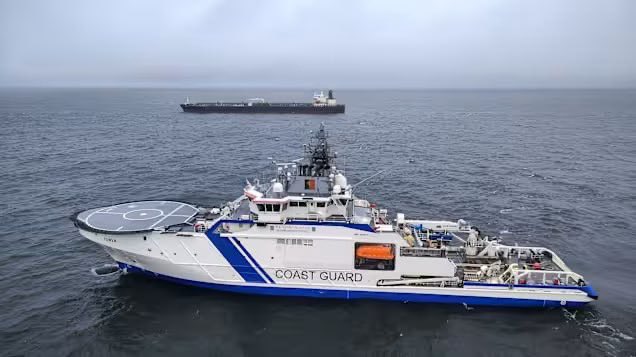
More on this story: Russian Sabotage of NATO’s Subsea Infrastructure in the Baltic Sea
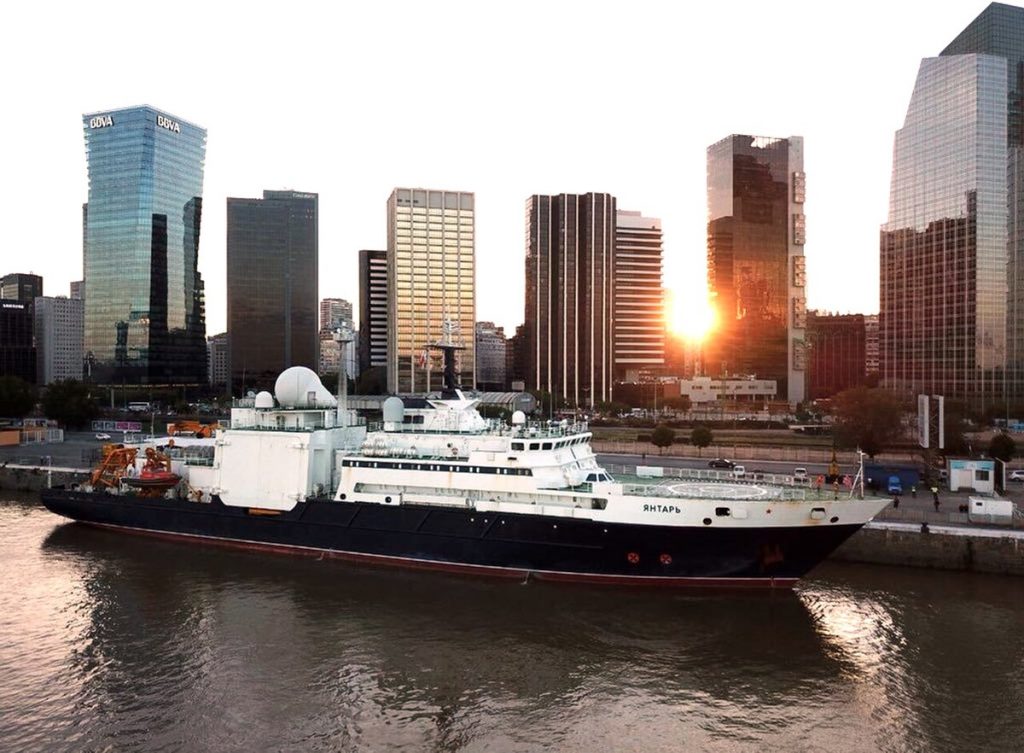
More on this story: Naval updates threaten underwater comms systems with sabotage attack

More on this story: Damage to SvalSat cable proves Russia further upping stakes