
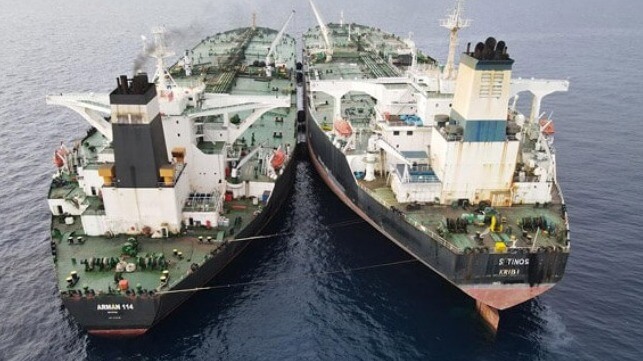
Cameroon’s decision to deregister vessels linked to Russia’s shadow fleet represents one of the most significant attempts by an African state to limit the exploitation of its maritime registry for sanctions evasion. The move follows sustained diplomatic pressure from the European Union and growing evidence that Cameroon had become one of the principal flags of convenience used by Russian shipping companies seeking to conceal ownership, circumvent oil sanctions, and continue financing the Kremlin’s war against Ukraine.
The deregistration campaign, however, addresses only part of the problem. Russia’s shadow fleet depends on structural weaknesses in global maritime governance rather than on any single registry. Although Cameroon has begun tightening oversight, significant technological, regulatory, and institutional deficiencies continue to expose its registry to abuse by Russian shipping networks and transnational organized crime.
The broader challenge extends beyond sanctions enforcement. The same weaknesses that facilitate Russian oil exports also enable narcotics trafficking, illegal fishing, money laundering, arms smuggling, and other illicit maritime activities, making Cameroon’s registry a growing concern for international maritime security.
Cameroon Emerges as a Major Hub for Russia’s Shadow Fleet
Since Western sanctions were imposed on Russian energy exports following the full-scale invasion of Ukraine, Moscow has built an extensive “shadow fleet” of aging tankers operating outside normal international shipping practices.
Cameroon has emerged as one of the principal jurisdictions exploited by these networks.
According to recent maritime investigations, approximately 100 vessels linked to Russia’s shadow fleet have used the Cameroonian flag since December 2025, placing Cameroon among the three most frequently exploited registries alongside Russia and Sierra Leone.
This rapid expansion reflects a broader Russian strategy of migrating vessels away from traditional open registries as international enforcement tightened.
Why Russia Uses the Cameroonian Flag
The choice of Cameroon is not accidental.
Russia’s shadow fleet requires registries capable of providing rapid vessel registration while conducting limited scrutiny of ownership structures and sanctions exposure.
Several factors make Cameroon particularly attractive.
Weak Regulatory Oversight
Unlike major maritime registries such as Panama, Liberia or the Marshall Islands, Cameroon possesses comparatively limited institutional capacity to verify: beneficial ownership; insurance arrangements; classification certificates; sanctions compliance; vessel histories.
These limitations create opportunities for shell companies and intermediary firms to obscure Russian ownership.
Low Registration Costs
Compared with major international registries, registration under the Cameroonian flag remains relatively inexpensive.
Lower administrative costs significantly reduce operating expenses for aging vessels that already face rising insurance premiums and compliance costs due to sanctions.
For Russia’s shadow fleet—which often operates with minimal maintenance and limited commercial profitability outside sanctioned trades—keeping registration costs low is a strategic advantage.
Administrative Flexibility
Russian shipping companies frequently: change vessel names; transfer ownership through shell companies; switch flags multiple times within short periods.
Registries with limited verification mechanisms allow these changes to occur more rapidly than heavily regulated maritime administrations.
Reduced International Scrutiny
Although international monitoring has intensified considerably over the past two years, Cameroon’s registry historically received far less scrutiny than larger registries.
This allowed Russian operators to maintain plausible deniability while complicating efforts by insurers, customs authorities, and sanctions investigators to trace ownership.
Why Would Cameroon Allow It?
The motivations are considerably more complex than simple political support for Russia.
Economic Incentives
Ship registries generate revenue through: registration fees; annual renewal payments; certification services; licensing of maritime agents.
For developing countries with relatively limited sources of foreign currency, expanding a national registry represents an attractive source of income requiring comparatively little infrastructure investment.
Limited Institutional Capacity
Evidence suggests that Cameroon’s maritime administration suffers from: outdated legislation; insufficient digital monitoring; shortages of trained inspectors; limited beneficial ownership verification; fragmented regulatory oversight.
These weaknesses reduce the government’s ability to distinguish legitimate operators from sanctions-evasion networks.
Outsourced Registry Management
Like several other open registries, aspects of Cameroon’s ship registration system have historically relied on private agents operating internationally.
Such arrangements increase efficiency but also create opportunities for fraudulent registrations and inadequate due diligence.
Recent investigations have revealed cases in which vessels falsely claimed Cameroonian registration through unauthorized intermediaries, further complicating enforcement efforts.
The Shadow Fleet Is About More Than Oil
Although Russian crude exports remain the fleet’s primary mission, many Cameroonian-flagged vessels have also been linked to broader criminal activity.
Investigations have connected vessels flying the Cameroonian flag to: cocaine trafficking; illegal, unreported and unregulated (IUU) fishing; money laundering; ship-to-ship transfers designed to conceal cargo origin; customs fraud; sanctions evasion involving Iran and Venezuela.
The January seizure by Spanish authorities of nearly 10 tonnes of cocaine aboard a Cameroonian-flagged merchant vessel demonstrates how weaknesses exploited by Russia’s sanctions-evasion network also facilitate transnational organized crime.
Consequently, strengthening Cameroon’s registry serves not only sanctions enforcement but broader international maritime security objectives.
Why the European Union Increased Pressure
The EU’s concern extends beyond Russia’s oil revenues.
Every successful sanctions-evasion operation weakens: European energy sanctions; maritime transparency; international insurance standards; anti-money laundering mechanisms.
Cameroon had already attracted international criticism before the Russian shadow fleet expanded.
In 2023 the European Union issued the country a “red card” over failures to combat illegal fishing.
In 2024 the United Arab Emirates prohibited Cameroonian-flagged vessels from entering its waters because of mounting concerns over registry integrity.
These developments significantly increased diplomatic pressure on Yaoundé to reform its maritime governance.
Why Registry Reform Alone Will Not Solve the Problem
The current reforms represent an important first step but are unlikely to eliminate Russian use of flags of convenience.
Russia has repeatedly demonstrated its ability to migrate vessels between registries as enforcement intensifies.
If Cameroon becomes less accessible, operators are likely to seek alternative jurisdictions offering: limited regulatory oversight; inexpensive registration; weak beneficial ownership controls; limited sanctions enforcement capacity.
In other words, the shadow fleet exploits systemic weaknesses in the global maritime system rather than dependence on any particular flag state.
Implications for Russia
Cameroon’s crackdown increases operational costs for Russia’s sanctions-evasion network.
Russian operators may now be forced to: re-register vessels under alternative flags; establish additional shell companies; employ more complex ownership structures; rely increasingly on fraudulent documentation; expand ship-to-ship transfers in international waters.
Each additional layer of concealment raises transaction costs while increasing the probability of detection.
Although unlikely to halt Russian oil exports, these reforms gradually reduce the efficiency and profitability of the shadow fleet.
Strategic Outlook
The Cameroonian case demonstrates an important evolution in Western sanctions policy.
Rather than focusing exclusively on Russian shipowners, the EU and its partners are increasingly targeting the global infrastructure that enables sanctions evasion—ship registries, insurers, classification societies, financial intermediaries, and beneficial ownership networks.
As this strategy expands, Russia will likely continue shifting its maritime operations toward jurisdictions with weaker regulatory institutions, particularly in parts of Africa, Asia, and the Middle East.
Whether this approach succeeds will depend less on sanctioning individual vessels than on strengthening global maritime governance and assisting vulnerable flag states in developing modern registry management, digital verification systems, and effective enforcement mechanisms.
Assessment: Cameroon’s reforms represent a meaningful step toward improving maritime governance, but they do not eliminate the structural vulnerabilities that Russia exploits. Moscow’s reliance on the Cameroonian flag illustrates how the shadow fleet adapts to enforcement pressure by exploiting weak regulatory environments. Unless registry reforms are accompanied by stronger international cooperation, digital vessel verification, and greater transparency in beneficial ownership, Russia is likely to continue relocating its shadow fleet among permissive jurisdictions while maintaining a substantial portion of its sanctioned oil exports.
To what extent do private maritime registration agents facilitate sanctions evasion through fraudulent or inadequately verified registrations?
Private maritime registration agents represent one of the most critical enabling nodes in Russia’s shadow fleet architecture. While they are rarely the ultimate beneficiaries of sanctions-evasion schemes, they frequently serve as intermediaries that make such schemes operational by registering vessels, managing documentation, and obscuring ownership structures. In jurisdictions with limited regulatory capacity, inadequate oversight of these agents significantly increases the risk of fraudulent or insufficiently verified registrations.
How the System Operates
Many flag-of-convenience registries, particularly in developing countries, outsource parts of their registration process to private companies or authorized representatives located outside the flag state. These agents market the registry internationally, process applications, collect documentation, and liaise with maritime authorities.
In well-regulated systems, agents are subject to stringent oversight, including verification of: beneficial ownership; sanctions exposure; classification certificates; insurance documentation; vessel history; compliance with international maritime conventions.
Where oversight is weak, however, private agents can become a major vulnerability.
Methods That Facilitate Sanctions Evasion:
Limited Verification of Beneficial Ownership
The most common weakness is inadequate verification of the vessel’s true owner.
Russian operators typically employ complex corporate structures involving: shell companies; offshore holding firms; nominee directors; multiple ownership transfers across jurisdictions.
If registration agents rely primarily on submitted documentation without independently verifying beneficial ownership, sanctioned entities can conceal their involvement behind layers of intermediaries.
Rapid Flag Switching (“Flag Hopping”)
Russia’s shadow fleet frequently changes flags to complicate sanctions enforcement.
Private registration agents can accelerate this process by: processing registrations quickly; accepting incomplete documentation; failing to investigate recent ownership changes; overlooking inconsistencies in vessel histories.
This allows vessels to disappear from one registry and reappear under another before regulators or insurers update their databases.
3. Weak Due Diligence on Vessel Histories
Many shadow-fleet vessels are:
over 20 years old; previously sanctioned; involved in ship-to-ship transfers; operating without recognized insurance; associated with repeated ownership changes.
Failure to examine these indicators enables high-risk vessels to obtain new registrations despite extensive compliance concerns.
The Cameroon Case
The Cameroonian registry illustrates both the opportunities and risks associated with private registration systems.
Recent investigations indicate that: unauthorized websites and intermediaries falsely claimed authority to issue Cameroonian registrations; numerous vessels displayed the Cameroonian flag without valid authorization; the government subsequently deregistered dozens of vessels after identifying fraudulent registrations.
These developments suggest that sanctions evasion was facilitated not only by regulatory weaknesses within Cameroon but also by the activities of private intermediaries operating beyond effective government oversight.
Are Registration Agents Deliberately Assisting Russia?
Assessment: Moderate Confidence
There is currently limited public evidence that most registration agents knowingly participate in Russian sanctions-evasion networks.
A more plausible explanation is that several factors combine to create vulnerabilities: commercial incentives to maximize registrations; inadequate compliance procedures; insufficient sanctions-screening capabilities; fragmented oversight across jurisdictions; limited resources for independent verification.
Nevertheless, some intermediaries may knowingly accept higher-risk clients because registration fees generate significant revenue and enforcement risks have historically been low.
Why Russia Prefers This Model
flag-of-convenience registries This provides:
- plausible deniability;
- fragmented accountability;
- slower regulatory responses;
- greater difficulty tracing beneficial ownership;
- opportunities for rapid re-registration when sanctions expand.
In effect, the registration agent becomes a critical logistical facilitator rather than a political actor.
As the European Union, G7, and other partners strengthen enforcement against Russia’s shadow fleet, private maritime registration agents are likely to become an increasing focus of regulatory and investigative efforts.
Future measures may include: mandatory beneficial ownership verification before registration; enhanced due diligence requirements for authorized agents;mdigital integration of registry databases with international sanctions lists; regular audits of private registration firms; suspension or revocation of licenses for agents that repeatedly process high-risk vessels; greater information sharing between flag states, insurers, port authorities, and financial intelligence units.
Private maritime registration agents are not the architects of Russia’s sanctions-evasion strategy, but they constitute one of its most important operational enablers. Their role is especially significant in jurisdictions where regulatory oversight is limited and due diligence procedures are underdeveloped. Strengthening supervision of these intermediaries—particularly through mandatory beneficial ownership checks, sanctions screening, and international information sharing—would substantially increase the operational costs of Russia’s shadow fleet and reduce its ability to exploit flags of convenience.
What Reforms Are Needed for Flags-of-Convenience Registries to Prevent Involvement in Russia’s Shadow Fleet and Other Sanctions-Evasion Networks?
Russia’s shadow fleet has exposed major weaknesses in the international flag-of-convenience (FOC) system. Many registries remain governed by legal frameworks developed decades ago—long before modern sanctions regimes, complex beneficial ownership structures, and digital vessel identity manipulation became central features of maritime commerce.
To reduce their vulnerability to sanctions evasion, flag states require reforms at three levels: National legislation;Maritime administration and registry governance; International maritime law and cooperation
I. National Legal Reforms
Mandatory Beneficial Ownership Disclosure. Many registries require only the legal owner of the vessel.
Shadow fleet vessels are usually owned through: offshore shell companies; nominee shareholders; trusts; layered holding companies.
Consequently, authorities often cannot identify the real controlling party.
Required Reform: National maritime laws should require: disclosure of Ultimate Beneficial Owners (UBOs);verification of ownership through corporate registries; annual ownership updates; criminal penalties for false declarations.
The registry should refuse registration where beneficial ownership cannot be verified.
Mandatory Sanctions Screening. Many registries currently have no statutory obligation to screen applicants against: UN sanctions; EU sanctions; U.S. OFAC SDN List; UK sanctions; Canadian sanctions.
Reform. Every registration should include mandatory sanctions screening before: initial registration, renewal, transfer of ownership, mortgage registration.
Criminal Liability. Many jurisdictions impose only administrative penalties.
Legislation should criminalize: knowingly registering sanctioned vessels; falsifying registry documentation; concealing ownership; assisting sanctions evasion.
Penalties should include: imprisonment, corporate fines, revocation of registry licenses.
Registry Governance Reform
Licensing of Private Registration Agents. Many registries outsource registration to private companies with minimal oversight.
Reform. Private registration agents should be: licensed; audited annually; subject to compliance inspections; required to maintain AML programs; certified in sanctions compliance.
Repeated violations should result in permanent license revocation.
Digital Verification Systems. Many registries still rely on paper documentation.
Modern systems should integrate: IMO databases; AIS history; beneficial ownership databases; sanctions databases; insurance verification; classification society records.
Artificial intelligence could automatically detect: frequent flag changes; ownership anomalies; identity inconsistencies; repeated ship-to-ship transfer patterns.
Mandatory Due Diligence
Registries should classify vessels according to risk.
High Risk: over 20 years old; recent flag changes; shell-company ownership; opaque financing; previously sanctioned.
Enhanced due diligence should become mandatory.
International Legal Reform
Amend IMO Guidelines
The International Maritime Organization currently issues guidance on ship registration but leaves substantial discretion to flag states.
New IMO standards could require: beneficial ownership transparency; sanctions screening; digital registry interoperability; minimum due diligence requirements.
Amend UNCLOS Practice
The United Nations requires a “genuine link” between a vessel and its flag state (Article 91), but the concept is undefined and weakly enforced.
Many FOC registries grant nationality to vessels with no meaningful economic, operational, or managerial connectionto the flag state.
Reform Options
Clarify “genuine link” by requiring: meaningful management presence; identifiable beneficial owners; financial accountability; effective regulatory oversight.
This would reduce abuse of open registries.
International Registry Audits
No international body regularly audits registry quality.
An IMO-led audit system could evaluate: sanctions compliance; ownership verification; inspection procedures; registry transparency; digital security.
Persistent failures could trigger international restrictions.
Financial Reform
Registries should cooperate with: Financial Intelligence Units; FATF members; customs authorities; insurers; banks.
Insurance Reform
Many shadow fleet vessels operate without legitimate P&I insurance.
Registries should require: valid insurance verification; confirmation from recognized P&I Clubs; annual insurance audits.
Registration should automatically lapse if insurance becomes invalid.
Port State Cooperation
Information sharing between: flag states; port states; coast guards; customs authorities; financial intelligence units remains fragmented.
Real-time digital information exchange should become mandatory.
Legislative Changes Needed
Most FOC countries—including Cameroon, Sierra Leone, Comoros, Gabon, Togo, and others—would likely need amendments to: Maritime Codes
Introduce: beneficial ownership requirements, sanctions compliance obligations, enhanced inspection authority.
Anti-Money Laundering Laws
Expand reporting obligations to include: maritime registries; registration agents; shipping intermediaries.
Criminal Codes. Introduce offences covering: sanctions evasion; fraudulent registration; document forgery;concealment of vessel ownership.
International Standards That Should Be Updated
Several existing instruments could be strengthened rather than replaced:
| Instrument | Proposed Reform |
| UNCLOS | Clarify and operationalize the “genuine link” requirement under Article 91. |
| IMO Registration Guidance | Establish binding minimum due diligence and sanctions-screening standards for flag administrations. |
| FATF Recommendations | Explicitly classify maritime registries and authorized registration agents as obliged entities for AML/CFT compliance where appropriate. |
| International Convention on Standards of Training, Certification and Watchkeeping (STCW) and SOLAS | Integrate digital identity verification and stronger documentation standards to reduce opportunities for identity fraud, while preserving their core safety focus. |
Intelligence Outlook
Russia’s shadow fleet demonstrates that sanctions enforcement increasingly depends on the quality of maritime governance, not merely on the breadth of sanctions lists. As long as some flag states maintain weak verification procedures, opaque ownership rules, and limited oversight of private registration agents, sanctioned vessels will continue to migrate among permissive registries.
Future sanctions policy is therefore likely to evolve beyond targeting individual ships toward imposing minimum governance standards on flag administrations themselves. States that modernize their legal frameworks, improve transparency, and strengthen cooperation with international maritime and financial authorities will be less vulnerable to exploitation by sanctions-evasion networks and better positioned to maintain the credibility of their registries in global shipping.

More on this story: The Graham Sanctions Bill: Strategic Escalation Against Russia’s Shadow Economy
More on this story: Sanctions at Sea: How Russia Uses African Flags to Protect Its Oil Exports