
The dissemination of more than 180 fabricated social media posts across X, Bluesky, and TikTok ahead of Germany’s upcoming state and local elections represents a coordinated Russian influence operation designed to manipulate the country’s political environment rather than merely spread disinformation. The campaign relied on fabricated allegations of corruption, drug abuse, murder, and sexual misconduct targeting political candidates while simultaneously amplifying social and historical divisions between eastern and western Germany. The narratives promoted throughout the operation consistently reflected pro-Kremlin, anti-German, and anti-European messaging intended to undermine confidence in Germany’s democratic institutions and political leadership.
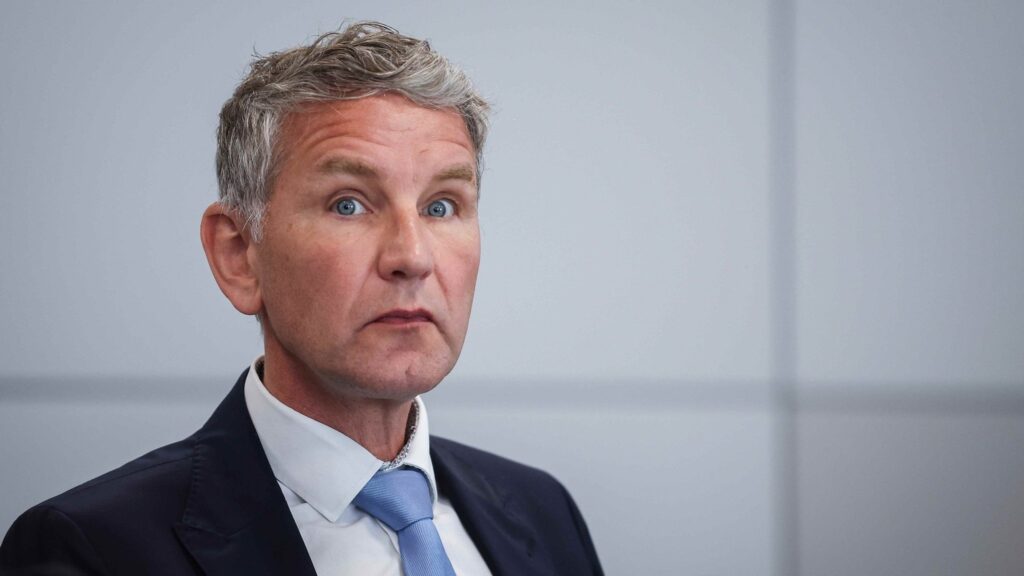
A particularly significant feature of the campaign is its highly selective targeting. Representatives of all major political parties were subjected to coordinated disinformation except the far-right Alternative for Germany (AfD) and the left-wing populist Sahra Wagenknecht Alliance (BSW). This selective approach strongly suggests that the operation was not intended simply to generate political instability but to shape the electoral environment in ways that could indirectly benefit political actors whose foreign policy positions are broadly compatible with Russian strategic interests. Both parties have consistently advocated policies that overlap with key Kremlin narratives, including calls for reducing military support to Ukraine, reassessing sanctions against Russia, and restoring political dialogue with Moscow.
The operation should therefore be understood not as an isolated disinformation campaign but as part of a broader Russian effort to reshape Germany’s political landscape before a series of strategically important regional elections. Scheduled for September 2026, elections in Saxony-Anhalt, Lower Saxony, Mecklenburg-Western Pomerania, and Berlin will serve as a key indicator of public sentiment ahead of Germany’s next federal election. Current polling places the AfD in a leading position in several eastern states, making these elections particularly significant for Moscow’s long-term objective of strengthening political forces skeptical of Germany’s current foreign and security policy.
The campaign has been attributed to the Storm-1516 influence network, which Western governments and researchers associate with Russia’s Main Directorate of the General Staff (GRU). Its operational methods—including bot networks, fabricated content masquerading as reports from reputable media organizations, coordinated amplification through fake social media accounts, and artificially inflated view counts—reflect a mature Russian information warfare capability that prioritizes sustained influence over immediate viral success. Although individual posts attracted more than 100,000 views, the comparatively low level of authentic user engagement indicates that the campaign relied heavily on coordinated inauthentic behavior rather than genuine public interest.
Measured solely by traditional social media metrics, the campaign’s immediate effectiveness appears limited. However, evaluating Russian influence operations exclusively through engagement statistics risks overlooking their broader strategic purpose. Moscow increasingly employs information operations to shape the long-term information environment rather than to persuade audiences through individual pieces of content. By continuously injecting fabricated narratives into public discourse, Russia seeks to blur the distinction between verified information and disinformation, gradually weakening public confidence in established media, democratic institutions, and electoral processes. In this respect, the strategic objective is not necessarily to convince citizens to believe specific falsehoods but to create uncertainty regarding the reliability of all sources of information.
Germany occupies a central position within Russia’s broader hybrid campaign against Europe. As the European Union’s largest economy and one of Ukraine’s principal political, military, and economic supporters, Germany represents one of the Kremlin’s highest-priority targets for political influence. Weakening Germany’s domestic political cohesion directly affects European decision-making on sanctions, military assistance to Ukraine, NATO deterrence, and broader transatlantic security policy. Consequently, Russian influence operations targeting Germany should be viewed as attacks against the political resilience of the European Union as a whole rather than solely against German domestic politics.
One of the campaign’s most strategically significant elements is its deliberate effort to deepen divisions between eastern and western Germany. Russian information operations consistently exploit existing socioeconomic disparities, differing historical experiences, and varying political attitudes inherited from the former German Democratic Republic. Rather than creating entirely new grievances, Moscow systematically amplifies existing societal tensions to reinforce political polarization and complicate consensus-building at the federal level. Sustained exploitation of these divisions has the potential to constrain Berlin’s ability to formulate coherent long-term domestic and foreign policies, particularly on issues related to European security and support for Ukraine.
Although the immediate operational impact of the campaign appears modest, its cumulative strategic effect could prove considerably more significant. Persistent exposure to fabricated narratives and manipulated information environments may gradually erode public trust in government institutions, mainstream journalism, electoral integrity, and democratic governance itself. This degradation of institutional trust represents one of the principal objectives of Russian information warfare because it reduces societal resilience against future influence operations and increases political fragmentation.
The campaign also illustrates the increasingly integrated nature of Russia’s hybrid strategy against Europe. Information operations are no longer conducted independently but are coordinated with cyberattacks, espionage, sabotage, economic coercion, and other forms of hybrid activity. Together, these mutually reinforcing instruments are intended to create a persistent perception of instability, compel European governments to divert political and financial resources toward managing internal crises, and ultimately weaken Europe’s capacity to sustain long-term support for Ukraine.
From a strategic perspective, the September 2026 elections should therefore be viewed as more than regional political contests. They represent an important test of Germany’s democratic resilience against sustained foreign information warfare and a potential indicator of how effectively European institutions can protect electoral processes from increasingly sophisticated Russian hybrid operations. Even if the current campaign fails to produce measurable electoral gains for Moscow’s preferred political actors, it contributes to the Kremlin’s longer-term objective of gradually eroding public trust, deepening political polarization, and weakening European unity—outcomes that serve Russian strategic interests regardless of individual election results.
More on this story: AfD, Russian Influence, and the Growing Risk of Ethnic Polarization in Germany