
Russia appears to be building in Madagascar something more consequential than another African security partnership. The pattern described in the September 23 investigation by Radio Liberty points toward an emerging integrated Russian influence architecture combining military protection, GRU-linked personnel, access to strategic infrastructure, alternative financial mechanisms, commercial intermediaries and information operations.
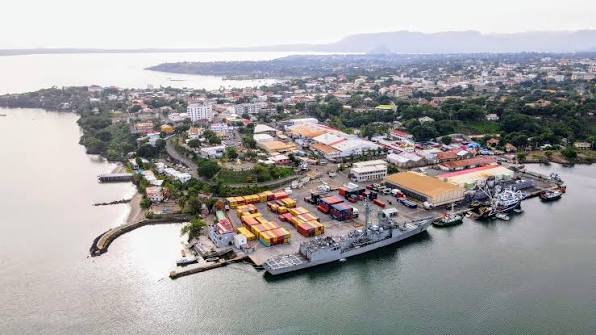
The most important objective may ultimately be geographic rather than purely political: obtaining durable access to Madagascar and, particularly, to Antsiranana/Diego-Suarez, whose deep-water harbor sits near the northern entrance to the Mozambique Channel and major western Indian Ocean shipping routes. Moscow is likely seeking to exchange regime protection for maritime access.
The presence of figures associated with Russian military intelligence is therefore particularly significant. Andrei Averyanov, former commander of GRU Unit 29155 and now a central figure in Russia’s Africa Corps operations; naval intelligence officer Anton Papshev, and Yury Mikheev, whose biography contains multiple indicators linking him to the Russian military-intelligence environment. Investigators additionally identified five Africa Corps personnel operating in Madagascar.
Russia’s approach appears to follow a sequence already visible elsewhere in Africa: political instability → security assistance → regime protection → military training → elite penetration → economic agreements → financial infrastructure → information influence → access to strategic assets.
Madagascar, however, potentially offers Moscow something its Sahel partnerships cannot: direct access to the Indian Ocean.
The 2025 Political Crisis Created Russia’s Opening
The decisive opportunity emerged from Madagascar’s 2025 political crisis.
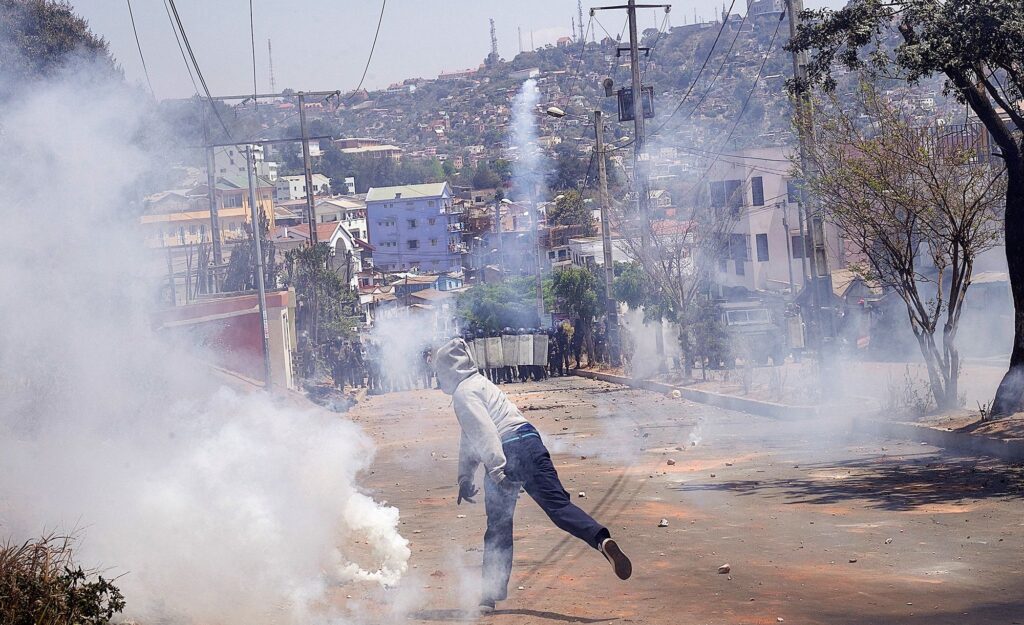
Youth-led protests beginning in September over electricity and water shortages expanded into demands for President Andry Rajoelina’s resignation. After elements of the military sided with demonstrators, Rajoelina left the country and Colonel Michaël Randrianirina emerged as the new leader.
Russia moved quickly.
By December 2025, Randrianirina acknowledged receiving the first Russian weapons shipment. On December 20, OSINT researchers tracked Russian military aircraft RA-86572 was tracked flying from the Seychelles to Madagascar’s Ivato airport carrying approximately 40 Africa Corps personnel, including General Andrei Averyanov. Russian instructors subsequently began training Malagasy forces at Ivato, with the first phase completed by March 2026. Africa Corps personnel also reportedly began protecting senior members of the new political establishment.
The chronology suggests that Moscow recognized the post-coup transition as an opportunity to establish a security relationship before Madagascar’s new political order had consolidated.
TThe service Russia provides is not simply weapons.
It is regime security
The Russian proposition can effectively become: Moscow protects the new political leadership → the leadership becomes increasingly dependent on Moscow → Russia receives privileged access to military, political and economic decisions.
That resembles the security-for-influence model Russia has developed through Wagner and subsequently the Africa Corps in several African states. The source investigation explicitly makes this comparison.
The Averyanov Factor Suggests Madagascar Is Not a Routine Defense Relationship
The presence of Andrei Averyanov substantially increases the significance of the operation.
Averyanov previously commanded GRU Unit 29155, associated by Western governments and investigations with clandestine operations in Europe. He has subsequently emerged as a senior figure overseeing Russian military-security operations in Africa.
His repeated involvement with Madagascar’s new leadership is therefore noteworthy.
Averyanov traveled with the first Africa Corps deployment in December 2025 and subsequently appeared around high-level Malagasy-Russian contacts. He partcipated at February 2026 discussions involving Randrianirina’s government and Russian Deputy Prime Minister Alexander Novak and at Randrianirina’s arrival in Moscow for talks with Vladimir Putin.
This suggests that Madagascar is being handled at a level above ordinary military-to-military cooperation.
The operation appears to combine three structures:
GRU-linked personnel – strategic coordination and intelligence,
Africa Corps – training, security and physical presence,
Russian state institutions – diplomatic, economic and infrastructure agreements.
The boundaries between military diplomacy, intelligence activity and commercial expansion consequently become increasingly blurred.
Anton Papshev May Be Particularly Important
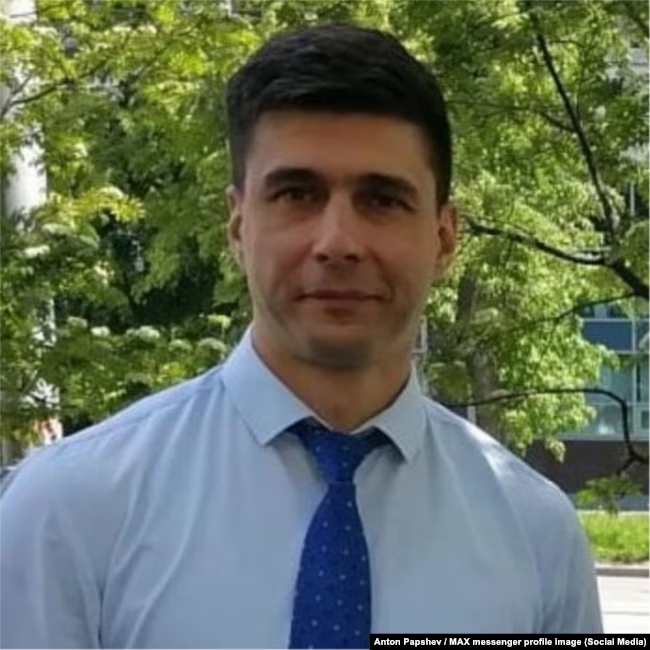
The most revealing individual identified by the investigation may be Captain 1st Rank Anton Papshev.
His professional background is unusually relevant to Madagascar’s geography.
Papshev graduated from the Kaliningrad naval institute specializing in special-purpose radio-electronic systems. In 2009, he served at the 1237th Strategic Radio-Electronic Intelligence Center. He subsequently served under diplomatic cover in South Africa and later as assistant military attaché in Ethiopia. In 2025 he was attached to military unit 45807, which linked to the GRU’s 78th Intelligence Center.
This background raises a significant analytical question.
If Russia’s objective in Madagascar were limited to training infantry or supplying weapons, why deploy an officer with naval and strategic SIGINT experience?
Madagascar provides an exceptional location for maritime intelligence.
From northern Madagascar, Russian systems could potentially observe activity across:
- the northern Mozambique Channel, approaches toward East Africa, traffic between the Cape route and the Indian Ocean, naval movements around the southwest Indian Ocean.
This does not demonstrate that Russia has established a SIGINT facility there. The available sources do not establish one.
But Papshev’s professional profile makes intelligence collection a legitimate KIQ, particularly if Russian access to Antsiranana expands.
4. Antsiranana Is Probably the Strategic Prize
The investigation’s most consequential element concerns Antsiranana – historically Diego-Suarez.
The former French naval facility possesses one of the western Indian Ocean’s outstanding natural deep-water harbors. It lies near the northern entrance to the Mozambique Channel, close to routes connecting the Indian Ocean with southern Africa and the Cape route. Le Monde reports that Russia has expressed interest in the site, while France is separately discussing its civilian modernization with Madagascar.
A Russian delegation accompanied Madagascar’s foreign minister during an April 2026 visit to Diego-Suarez, according to the investigation.
Independent analysis by Critical Threats has similarly assessed that Moscow is probably seeking sea access in exchange for regime protection, noting reported discussions concerning Russian access to Antsiranana.
This would be strategically significant.
Russia currently lacks the network of permanent overseas naval facilities possessed by the United States. Madagascar could instead support a more flexible model:
port access rather than formal ownership, logistics agreements rather than a declared Russian naval base, fuel storage rather than permanent fleet deployment, military advisers rather than a large Russian garrison.
Such an arrangement would also have historical precedent. Academic research identifies Antsiranana as part of the Soviet Union’s flexible global naval-access strategy during the Cold War.
The Mozambique Channel Changes the Strategic Equation
Madagascar should not be viewed simply as another African country where Moscow is seeking influence.
Its geography makes it fundamentally different from Mali, Burkina Faso, Niger or the Central African Republic.
The Mozambique Channel separates Madagascar from the African mainland and forms one of the western Indian Ocean’s principal maritime corridors.
Russian access to northern Madagascar could therefore connect Moscow’s growing African presence with an Indian Ocean strategy.
The conceptual network becomes:
Sahel/Central Africa
↓
East African relationships
↓
Madagascar
↓
western Indian Ocean
↓
Middle East / Asia maritime routes
Madagascar could therefore become a logistical hinge between Russia’s continental African network and maritime operations.
Toamasina Is a Different but Equally Important Target
Russia’s potential interest should not be limited analytically to Antsiranana.
Toamasina is Madagascar’s principal commercial port, and it is undergoing a major modernization program. The port authority describes the expansion as one of Africa’s largest, backed by approximately $639 million in Japanese financing. A new 333-meter section of the C4 quay was formally handed over in March 2026.
The strategic distinction is important:
Antsiranana = military/naval potential.
Toamasina = commercial/logistical potential.
Control or privileged influence over both would create a far more powerful Russian position than a naval agreement alone.
Toamasina connects maritime trade with Madagascar’s principal economic corridor toward Antananarivo. The World Bank approved another $200 million in April 2026 to strengthen transport and logistics infrastructure, including the railway connecting the capital with Toamasina.
Russia therefore has potential access to an island whose transport infrastructure is simultaneously being modernized with substantial Western and Japanese financing.
That creates an unusual geopolitical situation: Western and Japanese capital may improve infrastructure that a more Russia-aligned Malagasy government could later make accessible to Russian commercial or strategic actors.
There is currently no evidence that Russia controls Toamasina. The distinction between demonstrated Russian interest in Antsiranana and broader potential interest in Madagascar’s port system should therefore be maintained.
Oil Storage May Be the Bridge Between Commercial and Military Access
Another detail deserves greater attention.
During Prime Minister Mamitiana Rajaonarison’s May visit to Moscow, talks reportedly included Russian petroleum supplies and construction of Russian oil-storage facilities in Madagascar.
On its face this is an energy project.
Strategically, however, petroleum storage near a port can provide the logistical foundation for a much broader presence.
The progression could be:
Russian fuel imports → storage facilities → Russian commercial operators → regular tanker calls → port servicing infrastructure → dual-use logistics → potentially naval replenishment access.
This does not mean civilian storage facilities automatically become military installations. But fuel infrastructure would significantly lower the logistical cost of sustaining Russian maritime activity around Madagascar.
The distinction between commercial and military infrastructure could consequently become deliberately ambiguous.
A7 Could Supply the Missing Financial Layer
The investigation also intersects directly with the A7 network.
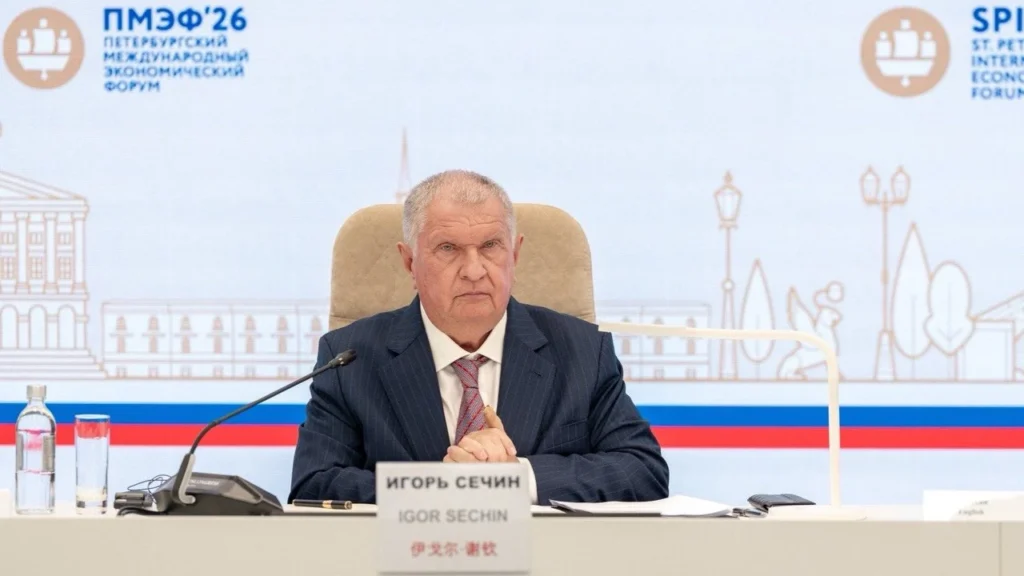
In January 2026, after visiting Madagascar, Belarusian businessmen Alexander Zingman and Oleg Vodchits traveled to Dar es Salaam. The same route that day was reportedly taken separately by Mikhail Dorofeev, deputy chairman of Promsvyazbank and chairman of A7’s board, and Moldovan Igor Khimich.
The investigation does not establish that these trips were coordinated. Zingman’s representative denied any connection to A7 and said the overlap was coincidental. That denial should be retained in any assessment.
Nevertheless, A7 is strategically relevant because Russia faces a structural problem in expanding economic relations with Madagascar: many major Russian financial institutions are sanctioned.
The normal route Russian bank → Malagasy bank can therefore expose Malagasy institutions to sanctions and correspondent-banking risks.
A system such as A7 potentially offers an alternative:
Russian rubles / export proceeds→ A7 clearing network → third-country entities / digital assets → African counterparty → goods, services or infrastructure project.
Thus, if Africa Corps provides the security layer, A7 could theoretically provide a financial layer enabling Russian projects to operate despite Western restrictions.
The source itself treats A7’s possible Madagascar role as a prospective mechanism rather than a demonstrated operational fact.
Zingman Illustrates the Commercial-Intermediary Layer
Alexander Zingman’s presence is important for another reason.
His company Aftrade DMCC had negotiated a €30.8 million agricultural-transformation contract with Madagascar involving, among other things, plans for Belarusian agricultural machinery. The contract referenced funding connected to a 2015 Russia-Madagascar development agreement. The new government subsequently cancelled the agreement, while Zingman’s representatives say Aftrade continues discussions over agricultural mechanization.
More significantly, Papshev traveled to Madagascar in July 2026 aboard the same aircraft as Zingman and Vodchits. Zingman’s representative declined to confirm or deny the joint journey and rejected allegations connecting him with the Africa Corps or A7.
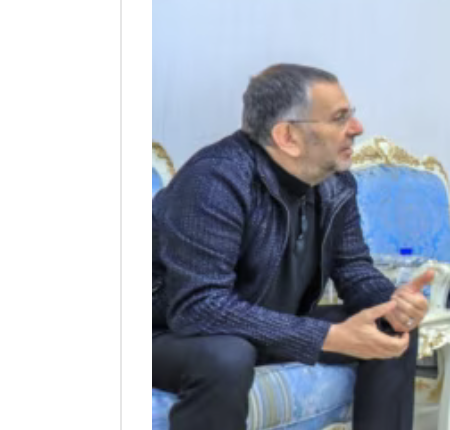
The available evidence therefore does not justify describing Zingman as a GRU operative.
But it does illustrate the type of ecosystem Russia has repeatedly used in Africa: state officials + military/intelligence personnel + nominally private businessmen + local political elites + state-backed financing.
Each component can formally remain separate while collectively advancing Russian access.
Russia Is Building Political Infrastructure as Well
Military penetration is being accompanied by information and political activity.
Emerging ecosystem is involving Rossotrudnichestvo, the Russian House project, the Russian-linked African Initiative media platform, the “Russ-Mada” radio program and visits by Malagasy influencers to Russia.
A more politically consequential development is the creation in March 2026 of the Patriotic Awakening of United Madagascar (RPMU) as the political wing of the Friends of Russia association. Its leader Richard Rakotonirina has publicly emphasized his ties to Russia and Moscow’s assistance.
Russia is therefore cultivating not merely relations with the current leadership but alternative political constituencies.
That is consistent with Moscow’s earlier behavior in Madagascar. Prigozhin-linked structures intervened in the 2018 presidential election and supported multiple candidates rather than betting on only one.
This suggests an important principle: Moscow’s objective is not necessarily loyalty to one Malagasy leader. It is durable influence over the political system regardless of who ultimately controls the presidency.
The Emerging Architecture
Taken together, the available evidence suggests the emergence of a layered Russian architecture:
Strategic direction → GRU / Russian Defense Ministry→ Averyanov and associated military-intelligence personnel → Security layer→ Africa Corps → training + weapons + protection of political elites → Maritime layer → Antsiranana / potential port access → fuel storage + logistics + possible naval support→ Economic layer → Russian energy/infrastructure projects → commercial intermediaries→ Financial layer PSB / potentially A7 and alternative settlement mechanisms → Influence layer→ Rossotrudnichestvo + African Initiative + Friends of Russia/RPMU → Political objective→ long-term access to Malagasy decision-making → Strategic objective → western Indian Ocean presence.
What Russia Probably Does Not Need
Moscow does not necessarily need a formally declared “Russian naval base in Madagascar.”
That could provoke unnecessary international resistance.
A cheaper and politically less visible model would be: access agreement + repair facilities + fuel storage + intelligence presence + military advisers + periodic naval calls.
From an operational perspective, such an arrangement could deliver much of the utility of a base without requiring Madagascar to formally surrender control of territory.
This is consistent with scholarship describing the Soviet approach to overseas naval access as a flexible network rather than simply a collection of permanent bases.
Russia’s activity in Madagascar has moved beyond conventional defense diplomacy. The combination of Africa Corps deployments, GRU-linked personnel, protection of political elites, weapons deliveries and high-level political contacts indicates an attempt to institutionalize Russian influence within the post-2025 political order.
Antsiranana is likely the most strategically valuable potential Russian asset. Its geography could give Moscow a logistical and potentially intelligence foothold overlooking the western Indian Ocean and the Mozambique Channel. Independent reporting confirms Russian interest in the site.
Anton Papshev’s presence deserves particular intelligence attention. His naval and strategic electronic-intelligence background is consistent with requirements associated with maritime situational awareness, although there is currently no public evidence demonstrating establishment of a Russian SIGINT station.
Russia appears to be pursuing a distributed rather than purely military model. Security assistance, commercial intermediaries, information operations, political networks and potentially alternative financial infrastructure reinforce one another.
A7 should be treated as a KIQ rather than a proven component of the Madagascar operation. The source identifies suggestive travel overlaps and a clear structural need for alternative cross-border settlements, but does not establish that A7 currently finances Russian activity on Madagascar.The central strategic contest may ultimately concern access rather than ownership. Moscow does not need sovereign control of a Malagasy port. Reliable access to Antsiranana, fuel infrastructure and protection agreements could provide much of the strategic benefit at substantially lower political cost.
More on this story: Madagascar presidential elections show democracy crisis