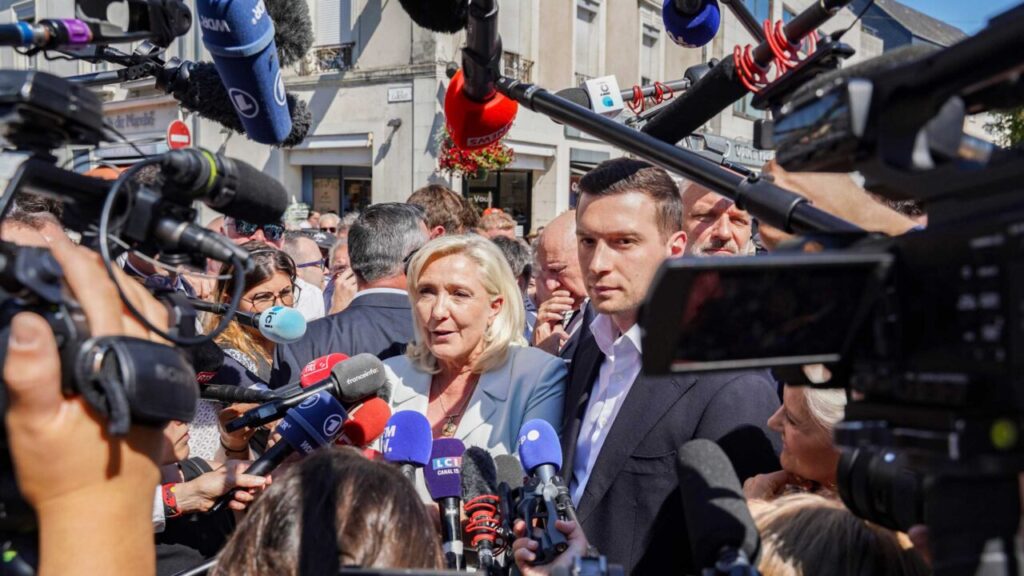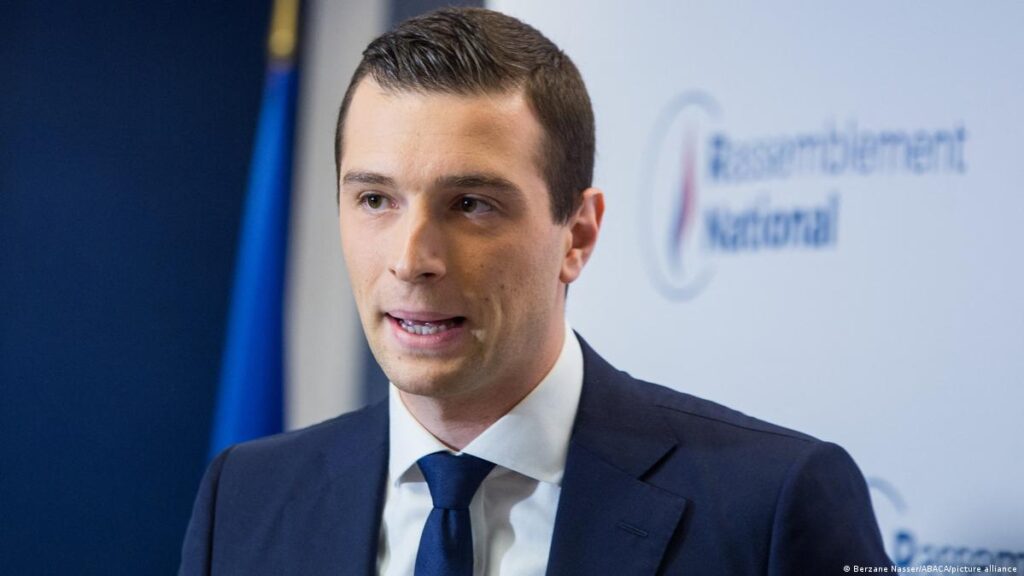

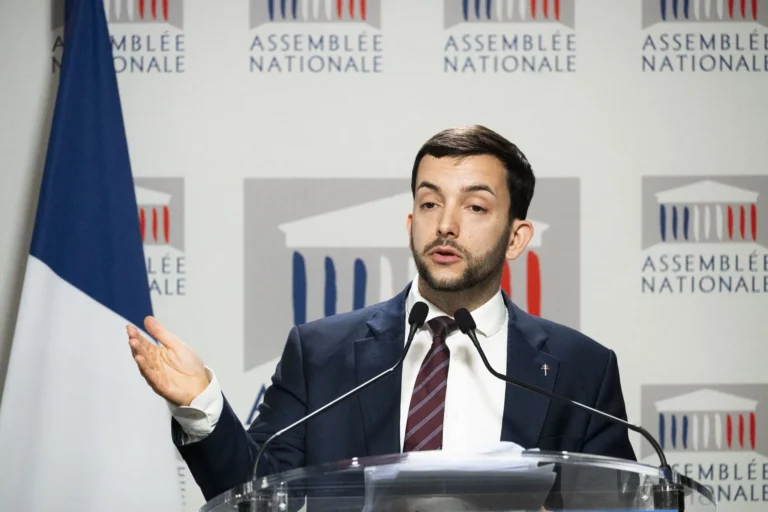
French National Rally (Rassemblement national, RN) MP Jean-Philippe Tanguy found himself at the center of a political controversy after using the phrase “work sets you free” (le travail rend libre) at a party rally in Vierzon. The wording is virtually identical to the French translation of the Nazi slogan Arbeit macht frei, which was displayed at the entrances to several Nazi concentration camps, including Auschwitz and Dachau.
After the controversy erupted, Tanguy denied any intention to invoke Nazi symbolism. He said the phrase was part of a broader argument about work, decent wages and social rights as instruments of economic freedom. At the same time, the MP effectively refused to acknowledge that the wording itself was inappropriate. He apologized to victims of antisemitism and to people for whom the phrase might carry particularly painful family associations, while stressing that he did not consider the substance of his statement wrong.
The available evidence is therefore insufficient to establish with confidence whether Tanguy deliberately used the historical allusion. Yet the political significance of the incident goes beyond determining his personal intent. For an experienced parliamentarian, the use of a phrase carrying such unmistakable historical baggage suggests, at minimum, a willingness to employ provocative language in which the line between conventional conservative discourse and historically coded far-right meanings can become blurred.
The incident is particularly sensitive for RN because of its long-running strategy of “de-demonization” (dédiabolisation) — an effort to distance the party from the most radical elements of the former Front National’s legacy and turn it into a political force acceptable to a broader electorate. Episodes of this kind therefore create a dual risk for the party: they can attract the attention of the more radical segment of the right-wing electorate while giving opponents grounds to question the depth of RN’s ideological transformation.
From Marginal Discourse to Political Normalization
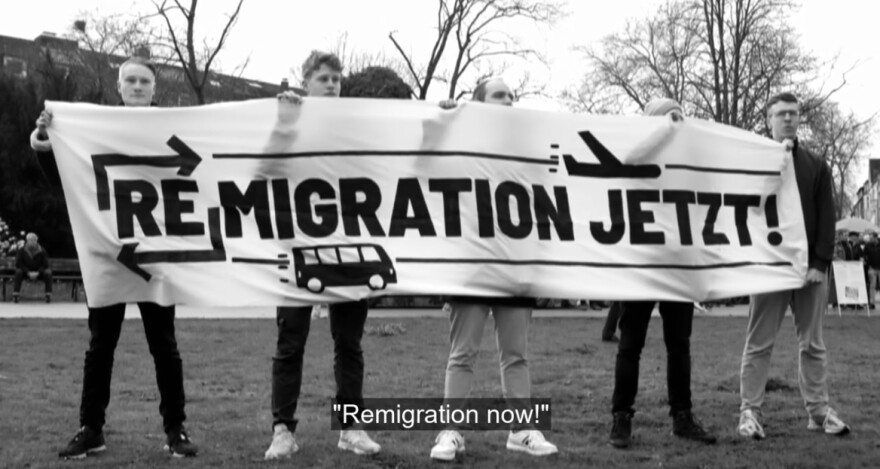
The broader context of the controversy is the gradual movement of some radical-right rhetoric from the political margins into the mainstream. This process, however, is not a “revival of fascism.” Contemporary European radical-right parties differ substantially in their ideologies and in their attitudes toward democracy, violence and historical fascism. At the same time, ideas that two decades ago were largely associated with the political fringe — an ethnocultural conception of the nation, restrictive immigration policies, the opposition of “the people” to political elites, criticism of supranational institutions and the notion of a cultural threat – have become considerably more common in European politics.
This shift is not driven by a single factor, but by the convergence of several crises.
Fatigue from successive crises has accumulated. The financial crisis, the 2015–2016 migration crisis, the COVID-19 pandemic, Russia’s war against Ukraine, the energy shock, inflation and rising housing costs have created a sense of permanent instability among parts of the electorate. In such an environment, demand grows for political forces that offer simple causal explanations for complex problems and promise to restore state control over borders, the economy and domestic security.
Economic insecurity is increasingly intertwined with cultural insecurity. For some voters, migration is simultaneously associated with competition for housing, jobs and social services and with fears of losing cultural identity. It is precisely the combination of economic and cultural grievances that creates a broader electoral coalition for radical-right forces than either factor would generate on its own.
A crisis of political representation is also unfolding. Some citizens view traditional center-right and center-left parties as components of the same political system, insufficiently capable of responding to their concerns. Economic security, migration and perceptions of fairness remain important drivers of fluctuations in trust in public institutions. Under these conditions, voting for a radical party can be not only an ideological choice but also a means of punishing the political establishment.
Social media have substantially lowered the barrier to the spread of radical discourse. Algorithmic information environments reward confrontational, emotional and provocative content. Political messages built around fear, threat, cultural conflict and an “us versus them” divide therefore enjoy favorable conditions for dissemination. This allows ideas that once circulated in relatively closed radical milieus to penetrate mass political communication.
The strategy of the radical right itself has changed. Many contemporary parties in this spectrum no longer openly use fascist symbols or question elections as a mechanism for gaining power. Instead, they have adapted their rhetoric to a democratic environment: ethnic nationalism is recast in the language of “cultural compatibility,” racial hierarchy as the defense of “European civilization,” and overt authoritarianism as arguments for a “strong state,” sovereignty and the restoration of order.
As a result, what is taking place is less a mass return of classical twentieth-century fascism than the normalization of certain elements of the radical-right worldview and vocabulary. The boundary of acceptable political discourse is gradually shifting: formulations that might once have ended a politician’s career increasingly produce a short-lived media controversy after which the politician remains within mainstream politics.
Why the Tanguy Case Matters
It is in this context that the Jean-Philippe Tanguy episode acquires broader significance. Its importance does not lie in the claim that a single phrase proves RN is “neo-fascist” — no such conclusion can be drawn from one incident. The more important question is whether such cases form a recurring pattern and whether there is a gap between the party’s official modernization and the political culture of some of its cadres.
If RN MPs, candidates and officials repeatedly become embroiled in controversies involving antisemitic remarks, racist statements, Nazi allusions, historical revisionism or contacts with more radical milieus, this may indicate that “de-demonization” has primarily changed the party’s external communications and electoral strategy, while elements of its older ideological environment persist within its personnel structure.
An assessment of RN should therefore examine not Tanguy’s statement in isolation but the cumulative pattern of incidents, personnel links and responses by the party leadership. A key indicator is not only what individual RN representatives say, but whether the leadership sanctions such behavior, distances itself from it or, conversely, allows controversies to pass without significant political consequences.
In a broader perspective, the Tanguy case illustrates one of the central paradoxes of contemporary European politics: the radical right is becoming more influential not necessarily because most of society is becoming more radical, but largely because it has learned to translate themes traditionally associated with the far-right milieu — identity, migration, sovereignty, demography and cultural threat — into language acceptable to a much broader range of voters.
The empirical basis for this conclusion is substantial. The European Commission has noted that right-wing extremism is increasingly moving from a more marginal phenomenon into the mainstream, with social media accelerating the process. (Migration and Home Affairs) Research based on the European Social Survey indicates that support for the radical right is explained by a combination of cultural opposition to immigration and economic concerns, with the cultural component being a particularly strong predictor. (Cambridge University Press)
The economic factor has not disappeared either: according to OECD data for 2025, 52% of respondents in the countries surveyed named inflation among their three leading concerns, while poverty/inequality and employment also remained significant sources of concern. (OECD) At the same time, the EU’s ActEU research project links short-term fluctuations in political trust to economic security, migration and perceptions of fairness. (Research and Innovation)
Why Radical-Right Discourse Is Moving from the Periphery into Europe’s Political Mainstream
The movement of radical-right ideas into Europe’s political mainstream should be understood not simply as a “return of fascism,” but as a gradual decline in the political and social cost of views that were previously regarded as marginal. Research increasingly distinguishes between mainstreaming — the entry of actors and ideas into the central arena of political competition — and normalization, when these positions themselves cease to be viewed as unacceptable by a significant share of society. In 2026, the European Knowledge Hub on Prevention of Radicalisation specifically highlighted the role of mainstream parties in legitimizing far-right actors, ideas and rhetoric.
The Radical Right Has Identified Issues on Which Some Voters See Mainstream Parties as Ineffective
Migration has become one of the most powerful new political cleavages in Europe. New research from Oxford University Press shows that attitudes toward immigration are no longer a secondary issue: they are helping to reshape traditional political divisions and party competition. Parties are increasingly seeking to demonstrate their “competence” on migration, often by adopting tougher positions.
A voter does not necessarily have to share the historical ideology of the far right to support a radical-right party. Voting behavior may instead be driven by more concrete concerns: border control, migration, crime, housing, welfare benefits, the cost of living or a sense that the state has lost control.
Therefore, the electoral growth of the radical right does not translate into a proportional increase in the number of committed far-right voters.
A 2026 study, for example, confirms that immigration skepticism is one of the main predictors of voting for the radical right, while cautioning against automatically equating a desire to reduce immigration with xenophobia or racism.
The Radical Right Itself Has Been Transformed
A second factor is that the radical right has learned to market its ideas in a different language.
Classical far-right vocabulary became politically toxic after 1945. Contemporary radical-right parties have largely replaced it with more acceptable concepts:
| Traditional radical discourse | Contemporary political formulation |
| ethnic nationalism | defense of national identity |
| racial incompatibility | cultural incompatibility |
| closing the country to outsiders | border control |
| ethnic supremacy | “national preference” |
| authoritarian state | strong state / law and order |
| anti-globalism | restoring sovereignty |
| opposition to liberal democracy | struggle against “elites” |
| demographic panic | defense of European civilization |
This does not mean that all the concepts listed in the right-hand column are inherently radical or undemocratic. What matters is the context, the substance of the specific policy and the way these concepts are used.
This semantic adaptation has allowed some radical-right parties to move far beyond their traditional electoral base.
The “Agenda Capture” Effect Has Emerged
Perhaps the most important change is that the radical right does not even need to enter government in order to influence policy.
When radical-right parties gain substantial support on migration, mainstream center-right parties face a dilemma: ignore the issue or try to win voters back by proposing tougher policies of their own.
Research in the Oxford Review of Economic Policy finds that the rise of the populist radical right has affected the positions of mainstream parties, some of which have adopted tougher stances on immigration and cultural protectionism.
This produces a cycle: the radical right raises an issue → the issue gains electoral salience → mainstream conservatives respond → the radical position enters ordinary political debate → its social stigma declines.
Research on electoral discourse also points to a form of outbidding: right-wing and radical-right forces may compete with one another over the toughness of their migration proposals.
The Radical Right Has Broadened Its Socioeconomic Offer
Another important transformation is that these parties increasingly avoid presenting themselves solely as parties of migration and national identity.
Some seek to address wages, pensions, purchasing power, deindustrialization, social protection and regions that have fallen behind at the same time.
This creates a politically effective formula: welfare state + national preference.
A 2026 study shows that radical-right parties in Western Europe have increasingly discussed economic issues, while expert assessments suggest that their economic positions have shifted closer to the center over time, although they remain less clearly defined than those of other party families.
This allows them to appeal simultaneously to parts of the working-class electorate, the lower middle class, small business owners and culturally conservative voters.
Political Protest Has Become No Less Important Than Ideology
Voting for the radical right can function as a vote against the system.
In its analysis of the 2024 elections, the European Parliament identified both ideological and protest voting; Eurosceptic and far-right forces strengthened their positions in those elections.
For some voters, supporting such a party does not mean “I accept its entire ideology,” but rather: “the traditional parties no longer represent me.”
This helps explain why radical-right parties can make inroads among social groups that historically did not belong to the far-right electorate.
Social Media Have Removed the Old Information Barriers
In the past, a marginal political movement depended heavily on traditional media. Editors effectively served as gatekeepers: they decided whom to invite, whom to give airtime and which statements were considered socially acceptable.
Social media have largely removed this barrier.
European experts on countering right-wing extremism have noted the deliberate dissemination of such milieus’ narratives through mainstream media and online platforms in order to normalize them and expand their audience. These actors use not only traditional far-right themes but also social issues, including workers’ rights.
Political content now competes primarily for attention rather than editorial approval.
Conflict, fear, outrage and provocation are highly effective mechanisms for capturing that attention.
The “Window of Acceptability” Is Shifting
This may be the central mechanism for analyzing the Jean-Philippe Tanguy case.
Political normalization unfolds gradually: marginal proposition → provocation → controversy → repeated exposure → debatable position → one of several legitimate positions → element of mainstream policy.
The significance of individual controversies therefore lies not only in whether a particular statement was intentional.
The more important question is:
What happens to the political cost of making such a statement?
If, twenty years ago, a particular historical allusion might have meant political isolation, while today it produces a controversy lasting several days without long-term personnel consequences, this may be an indicator that the boundaries of acceptable discourse are shifting.
A comparative study of 24 European countries also identified a reverse backlash: under certain conditions, the success of the radical right can mobilize an opposing reaction and strengthen more positive attitudes toward immigration among other segments of society.
Thus, the radicalization of discourse can simultaneously strengthen countermobilization.
Europe Is Experiencing Less a “Return of Fascism” Than a Restructuring of the Political Center. Neo-fascist organizations remain a distinct category and should not automatically be equated with all populist or radical-right parties. At the same time, some themes, concepts and policy proposals that were once associated primarily with the radical right have become part of ordinary party competition.
And this is changing the political center itself.
It is telling that new Oxford University Press research describes immigration as a long-term structural force reorienting European party politics.
The process can therefore be summarized as follows: crises → a sense of lost control → demand for an alternative → growth of the radical right → response by mainstream parties → adoption of parts of its agenda → declining stigma → normalization → further expansion of the electoral base.For RN, the key question is whether “de-demonization” has genuinely transformed the party’s political culture or has primarily made its external communications more acceptable to the mass electorate.