
Russian Flag as a Shield: How Moscow Is Rebuilding the Shadow Fleet After Western Interceptions
The passage of a large group of tankers carrying Russian oil through the English Channel on September 19–20, 2026, demonstrates that, following the shift by Western governments from sanctions toward the physical interception of individual vessels, Moscow has begun adapting not only its shipping routes but also the legal, insurance, and corporate architecture of its oil exports.
According to AIS data, 11 tankers with a potential combined capacity of approximately 10 million barrels passed through the English Channel toward Asian markets over the course of two days. At current elevated global oil prices, the value of such a flow approaches $1 billion. In mid-September, Russia’s Urals crude was trading at approximately $110 per barrel, while ESPO exceeded $120. The sharp increase in oil prices therefore simultaneously raises the economic value of every successful voyage and Russia’s potential revenues from maintaining access to Asian buyers.
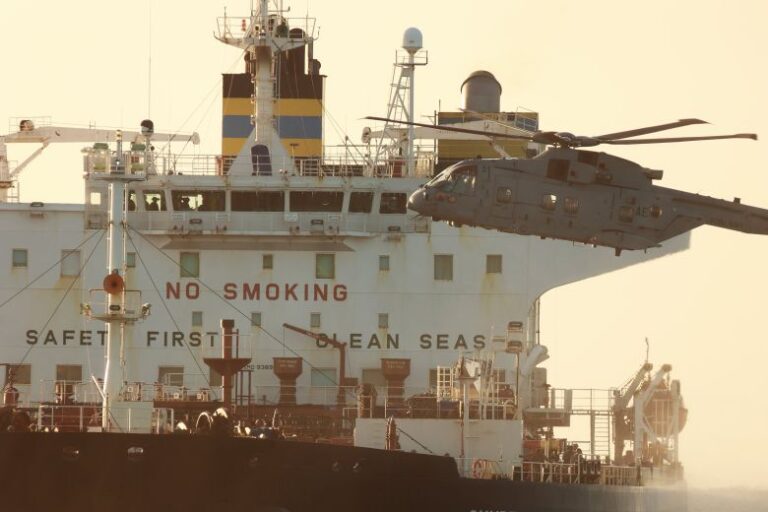
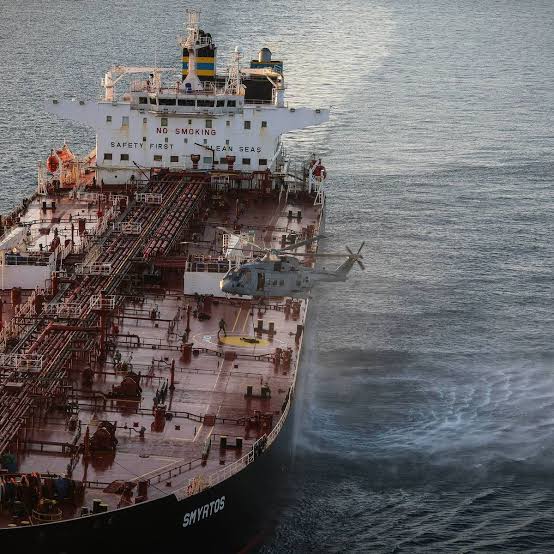
A turning point came with the British interception of the tanker Smyrtos on June 14, 2026. Royal Marines and the National Crime Agency seized the vessel in the English Channel after British authorities determined that it lacked a legitimate flag. Its captain was subsequently charged with violating British sanctions. The absence of valid state registration created substantially broader legal grounds for boarding than would have existed in the case of a properly registered foreign merchant vessel.
The operation against Smyrtos therefore exposed a vulnerability in the traditional shadow-fleet model: the use of opaque offshore flags reduced Moscow’s direct political responsibility for the vessels but simultaneously made them more legally vulnerable to Western enforcement.
Russia’s response has been to shift part of this risk directly under Russian state jurisdiction.
From Shadow Fleet to Sovereign-Risk Fleet
One of the clearest trends has been the sharp increase in the use of the Russian flag.
According to the KSE Institute, the Russian flag’s share of oil volumes transported by the shadow fleet increased from 3 percent in May 2025 to 23 percent in April 2026. Russia, Cameroon, and Panama became the three principal flag states for shadow tankers.
At the same time, Moscow is developing its own insurance infrastructure. KSE identified at least 30 shadow tankers using coverage provided by three Russian insurers — AlfaStrakhovanie, Sogaz, and Balance Insurance. Twenty of these vessels sailed under the Russian flag.
Moscow is therefore gradually constructing a vertically integrated system designed to circumvent Western maritime infrastructure:
Russian oil → Russian-linked trader → shadow tanker → Russian registry → Russian flag → Russian insurance → Asian buyer.
The more components of this chain are removed from G7 and EU jurisdiction, the less the effectiveness of the price cap depends on formal decisions taken in Brussels or London.
The Russian Flag Does Not Provide Immunity — But It Raises the Cost of Interception
The assertion that a merchant vessel flying the Russian flag becomes “sovereign Russian territory” is legally inaccurate.
Nevertheless, changing the flag has a real operational effect.
Article 92 of UNCLOS establishes that vessels on the high seas are generally subject to the jurisdiction of their flag state. Article 110 permits a warship of another state to board a foreign vessel only on limited grounds — including reasonable suspicion of piracy, slave trading, or that the vessel is without nationality.
The latter factor was particularly important in the Smyrtos case.
Consequently, registering a shadow tanker under the Russian flag does not make it inviolable or give it the immunity enjoyed by a warship. It does, however, remove one of the most convenient legal grounds for inspection statelessness.
For European governments, the issue therefore shifts from enforcement against a vessel with questionable legal status to a considerably more complicated jurisdictional confrontation with Russia.
Moscow can additionally exploit any attempt to forcibly intercept a Russian-flagged vessel for political escalation, even though the Kremlin’s characterization of such an operation as an “act of aggression” would not by itself determine its status under international law.
The real value of the Russian flag is therefore not absolute legal immunity but deterrence through escalation risk.
Moscow Has Created a Multi-Layered Risk-Distribution System
More importantly, Russia is not transferring its entire oil fleet to the Russian flag.
Instead, a multi-layered system is emerging.
The first tier consists of Russian-flagged vessels used for some of the most politically sensitive shadow-fleet operations. Moscow accepts direct jurisdictional exposure while simultaneously increasing the political cost of interception.
The second tier consists of Russian, Chinese, Emirati, and other operators capable of functioning outside traditional Western maritime infrastructure.
The third tier consists of formally legitimate vessels owned by European shipping companies that can transport Russian oil provided they comply with the sanctions regime.
This third tier presents a particularly significant problem for the EU because it creates an internal enforcement gap: Russia does not necessarily need a shadow tanker for every shipment if part of its exports can be carried by vessels belonging to companies based inside the sanctions coalition itself.
The term shadow fleet is therefore becoming increasingly inadequate to describe the problem. Moscow is effectively operating a hybrid oil-transport ecosystem, in which sanctioned and non-sanctioned vessels, Russian and European operators, perform different functions within the same export chain.
The Greek-Cypriot Factor
The participation of European shipowners deserves particular attention.
If the data showing that seven of the 11 vessels that passed through the English Channel on September 19–20 were connected to EU shipowners are confirmed at the level of beneficial ownership and commercial management, this would point to an important structural problem: Russian oil exports are being sustained not only by the shadow fleet but potentially also by parts of the legitimate European shipping sector.
At the same time, the mere fact that a European-owned vessel transports Russian oil does not establish a sanctions violation.
The critical questions are the transaction price and the maritime services used.
As of February 1, 2026, the EU set the price cap on Russian crude oil at $44.10 per barrel. The mechanism restricts access to specified European maritime services for Russian oil sold above the established threshold.
Consequently, the assertion that European shipowners were transporting Urals crude priced at $100–110 per barrel would require evidence of the actual transaction price of the specific cargo, rather than merely the prevailing market quotation for Urals.
This is where enforcement should be concentrated.
High Oil Prices Turn Shipping Enforcement Into a Strategic Issue
The situation has become particularly significant because of the sharp rise in global oil prices.
As of September 18, ESPO had exceeded $120 per barrel, while Urals had reached approximately $110. The gap between the European price cap of $44.10 and the market price of Russian crude has therefore become exceptionally large.
The wider this spread becomes, the stronger the economic incentive to circumvent the price cap.
For example, a tanker carrying 700,000 barrels at a $66 difference between a $44 cap and a $110 market price represents more than $45 million in additional cargo value. Even expensive arrangements involving vessel re-registration, opaque corporate structures, alternative insurance, and complicated payment mechanisms can therefore remain economically viable.
This is why enforcement directed solely against individual tankers cannot resolve the problem.
Smyrtos Changed the Calculus — But Did Not Break the System
The British operation had an important demonstration effect: for the first time, the shadow fleet faced not merely asset freezes or port restrictions, but the physical seizure of a vessel.
Subsequent developments, however, demonstrated the system’s capacity to adapt.
By June 26, at least 11 tankers identified by Ukrainian intelligence as belonging to the shadow fleet had passed through the English Channel after the seizure of Smyrtos. Other vessels began circumventing the British Isles via the Atlantic.
Moscow and operators associated with Russian oil exports therefore adopted a classic model of risk dispersion:
low-risk vessels → shortest route through the English Channel
higher-risk vessels → longer Atlantic route
selected vessels → Russian-flag protection
This does not eliminate sanctions risk, but it makes large-scale interception considerably more difficult economically, legally, and politically.
What the EU Can Do
The principal mistake would be to respond to Russia’s adaptation solely by increasing the number of physical interceptions.
A potentially more effective model would be to make every voyage economically toxic for the entire commercial ecosystem surrounding the vessel.
The EU and G7 could simultaneously strengthen sanctions against beneficial owners, commercial and ISM managers, insurers, traders, and banks involved in servicing specific cargoes; tighten scrutiny of price-cap attestations; restrict violators’ access to European ports and maritime services; coordinate secondary sanctions with the United States and the United Kingdom; and rely on port-state jurisdiction where it provides a stronger legal basis than attempting boarding operations on the high seas.
Company-level enforcement is particularly important. If a shipowner or operator systematically participates in sanctions-evasion schemes, sanctions against a single tanker merely allow the company to substitute another vessel. Measures targeting the corporate group, its management, insurance, and financing would substantially increase the cost of circumvention.
Russian insurance should become another priority. The migration of vessels away from G7-linked P&I clubs toward Sogaz, AlfaStrakhovanie, and other Russian insurers reduces the leverage of the price-cap mechanism, but it also creates a new vulnerability: where international and domestic law permits, European states can demand credible evidence that vessels have adequate insurance coverage for environmental and liability risks.
Russia did not eliminate the vulnerabilities of its shadow fleet following the seizure of Smyrtos — it redistributed the risk.
Transferring some tankers to the Russian flag removes one of the strongest grounds available to Western states for boarding vessels on the high seas — lack of nationality — while simultaneously giving Moscow greater scope to politically escalate any forcible interception.
More important, however, is the hybridization of the system. Russian oil exports are becoming less dependent on a single “shadow fleet.” Moscow combines Russian flags and insurers, opaque Asian and Middle Eastern corporate structures, alternative shipping routes and — wherever possible — legitimate international maritime infrastructure.
The passage of a large group of tankers through the English Channel should therefore not be interpreted simply as evidence that sanctions have “failed.” Rather, it is an indicator that Western enforcement is lagging behind the adaptation of Russian oil logistics.
The Western response should consequently shift from hunting individual vessels toward ecosystem sanctions: simultaneous pressure on the shipowner, beneficial owner, vessel manager, insurer, trader, bank, and ultimately the buyer.
The objective should not be to physically stop every tanker. It should be to make the transportation of Russian oil above the price cap sufficiently expensive, legally hazardous, and commercially unattractive to reduce the margin Moscow derives from sanctions circumvention.
More on this story: he Greek Connection: How Shipowners Sustain Russia’s Shadow Oil Fleet