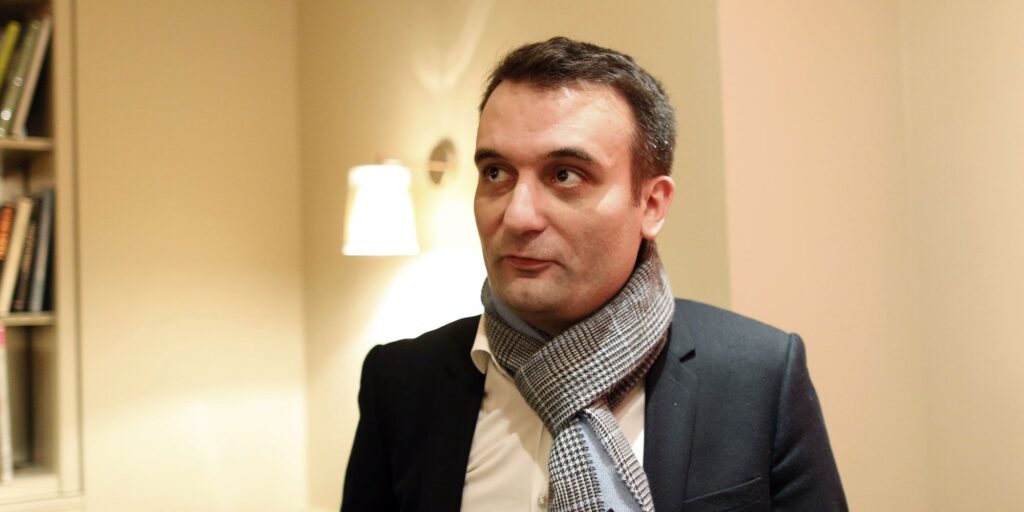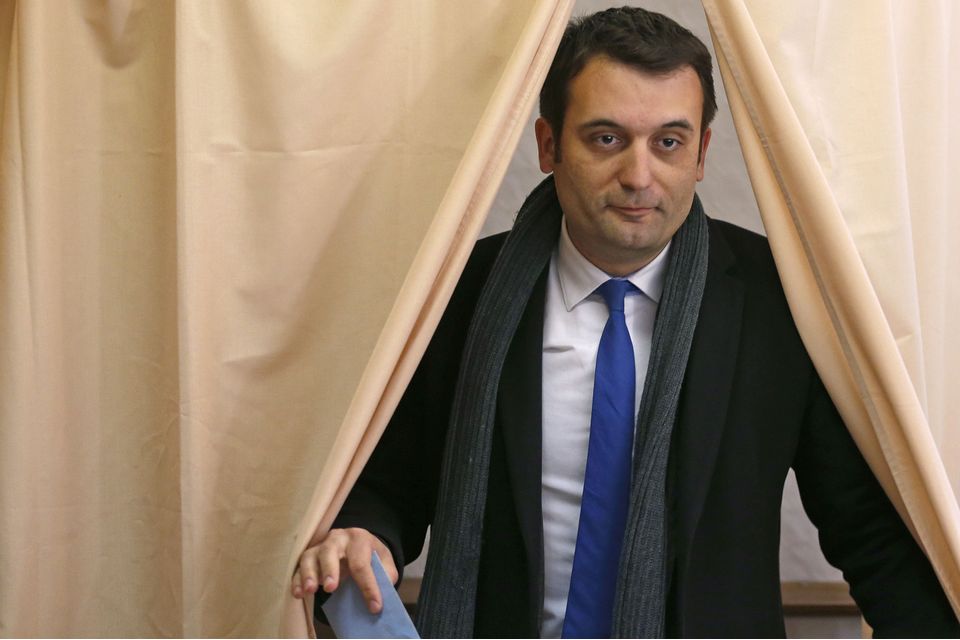

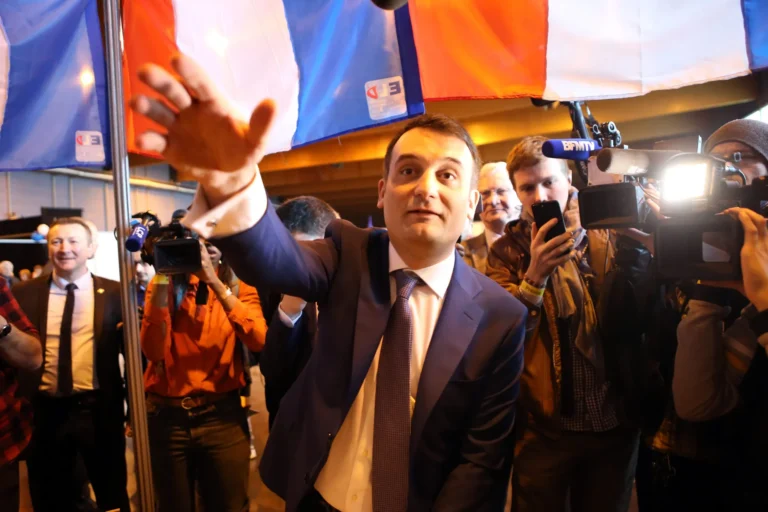
The Assises de la Souveraineté, held near Arras on September 12, 2026 and organized by Florian Philippot’s Les Patriotes, should be viewed as more than another anti-war or anti-sanctions event. It became a platform for consolidating France’s sovereigntist milieu ahead of the 2027 presidential campaign. According to Les Patriotes, organizers expected more than 3,500 participants and later claimed attendance exceeded 4,000. Philippot closed the meeting with a speech that his party presented as the de facto launch of his presidential campaign.
The composition of the participants is significant in its own right. Announced speakers included Nicolas Dupont-Aignan, Alexis Poulin, Caroline Galactéros, Régis Le Sommier, André Bercoff, Pierre-Yves Rougeyron, Jacques Cheminade, Nikola Mirkovic, and other figures from France’s sovereigntist and alternative-media milieu.
This makes Arras less a standalone “pro-Russian rally” than a gathering point for a political and media ecosystem, parts of which have in recent years promoted positions that coincide with key Russian foreign-policy interests: ending military assistance to Ukraine, lifting or easing sanctions, restoring relations with Russia, distancing France from NATO, and weakening integration within the EU.
From Russia Today to the Post-RT Ecosystem
Particularly notable was the presence of people who had previously worked with Russia Today (described in the paper as affiliated with the GRU) or appeared regularly on its broadcasts.
After RT was banned in the EU, the formal infrastructure of Russian state media in France was substantially constrained. That did not, however, mean the disappearance of the environment it had helped create.
A Le Monde investigation in June 2026 reported that, after RT France closed in 2023, part of its former team continued operating within an alternative French-language information ecosystem. The newspaper described, among other things, the work of a de facto “RT en français” and its use of Philippot’s demonstrations against French support for Ukraine as content for disseminating pro-Russian messages, including to French-speaking audiences outside France.
An important mechanism therefore emerges: Russian state media → French commentators → alternative media ecosystem → political rallies → social networks → mainstream political debate.
In this model, Moscow does not necessarily have to create every message directly. Much of the information infrastructure can operate autonomously because French political actors themselves produce content that aligns with Russian strategic interests.
Philippot as an Amplifier, Not a Proven Russian Agent
In recent years, Philippot has consistently taken positions that overlap with Russian information narratives concerning Ukraine.
He has opposed military and financial support for Kyiv, called for France to distance itself from NATO, criticized sanctions, and warned of what he describes as Western governments’ efforts to draw France into a war with Russia.
In 2022, Le Monde noted that Philippot repeated one of the Kremlin’s central arguments about the alleged special role of “Nazis” in Ukraine.
In 2026, his rhetoric continued to overlap with Russian strategic communications. In particular, Philippot described Vladimir Putin’s actions regarding Euroclear as a “brilliant move” and used the issue of frozen Russian assets to argue against EU policy toward Russia.
This makes it possible to characterize him as a domestic amplifier of Kremlin-compatible narratives.
Information overlap alone, however, is not evidence of operational control.
In 2015, Le Monde published material based on hacked correspondence among Russian officials concerning relations between the Kremlin and the Front National. Russian interlocutors discussed the FN’s position on Crimea and the possibility of “thanking the French”; in discussions of financing, Philippot was mentioned as one of the people Marine Le Pen had consulted.
This shows that, while he was in the FN leadership, Philippot operated within a political environment that Moscow regarded as a potentially useful partner.
The Real Intelligence Gap: Not the GRU, but the Intermediaries
Russian influence operations in Europe do not necessarily depend on direct contact between a politician and an intelligence officer. A multilayered structure is considerably safer:
Russian state / security ecosystem
↓
state media / political institutions / ideological organizations
↓
French intermediaries, journalists, commentators and activists
↓
Les Patriotes / rallies / alternative media
↓
French electorate
The key question, therefore, is not “Did the GRU recruit Philippot?” but whether a stable chain exists between his political infrastructure and Russian state or state-linked structures for transmitting narratives, resources, access, or coordination.
Philippot cannot be analyzed separately from his previous role in the Front National.
It was precisely while he was one of the FN’s leaders that the party became central to controversy over Russian financing and political contacts with Moscow.
Correspondence published by Le Monde showed that Russian officials closely monitored the FN’s position after the illegal annexation of Crimea and viewed Marine Le Pen’s statements favorably.
This demonstrates at least a political channel of mutual interest between the Kremlin and France’s radical-sovereigntist milieu well before the emergence of the current information ecosystem around Les Patriotes.
Arras as a Political-Network Hub
The 2026 event therefore matters for more than its specific statements about Russia.
Its strategic function lies in network consolidation.
In a single physical space, it brought together politicians, alternative media, former or regular RT contributors, anti-EU activists, the Frexit milieu, commentators critical of support for Ukraine, and an audience Philippot seeks to mobilize ahead of 2027.
This creates a horizontal network capable of disseminating the same messages without centralized command.
For Russian information strategy, such a structure is especially useful because the narrative ceases to look Russian.
Instead of Moscow → RT → French audience, the model becomes: French politician → French journalist → French alternative media → French voter.
The Russian origin or strategic utility of a given narrative thus becomes far less visible.
The Goal Is Not to Make the French Pro-Russian
Russian strategy does not necessarily need to persuade French voters to support Putin.
A more realistic objective is to persuade them that Ukraine costs France too much; sanctions hurt the French more than Russia; Russia cannot be defeated; aid to Kyiv only prolongs the war; NATO is pushing Europe toward conflict; the EU restricts French sovereignty; and normalization with Moscow is a pragmatic alternative.
If these perceptions spread widely enough, Moscow can achieve a strategic result without generating mass positive attitudes toward Russia.
It only needs to increase the political cost of continuing support for Ukraine.
Why 2027 Matters
The presidential campaign gives this network an opportunity to convert information influence into political influence.
Official Les Patriotes materials after the Arras event explicitly linked it to preparations for the 2027 presidential campaign.
The most significant indicator in the coming months will therefore not be Philippot’s own polling numbers, but narrative penetration—the extent to which arguments now circulated by his milieu migrate into much larger political forces and national media.
A successful influence operation does not necessarily bring the politician who originated a message to power.
Its effect may instead be that far more influential actors begin repeating the same arguments.
Key Assessment
The events in Arras demonstrate the emergence in France of a political-media environment in which anti-sanctions, anti-Ukraine, and anti-Atlanticist messages are increasingly integrated into domestic political mobilization ahead of the 2027 presidential campaign.
Three other levels of connection are documented instead: Philippot’s historical role in the FN leadership during a period of expanding contacts between the party and Russia; his long-term repetition of arguments compatible with Kremlin information narratives; and his inclusion in a French political-media ecosystem partly formed around former Russia Today platforms and contributors.
It is within this intermediary layer—event financing, travel to Russia, personal contacts, media production, legal entities, sponsors, consultants, and digital coordination—that investigators are most likely to determine whether the observed synchronization reflects ideological convergence alone or a more organized Russian influence architecture.
The intermediary layer is considerably easier to trace than a direct Philippot–GRU connection, but it must be divided into several levels of evidentiary confidence. The most important new finding is that Russian influence operations did not merely circulate arguments similar to Philippot’s; they systematically used Philippot himself as an authentic French amplifier of narratives useful to Moscow.
The Strongest Established Node: Social Design Agency → Philippot
French and international investigations link Russia’s Social Design Agency (SDA) and Structura to the Doppelgänger operation. The French Senate, citing VIGINUM, describes SDA and Structura as Russian entities that worked for Russian state institutions; their infrastructure was used for influence operations targeting France and other Western countries.
This is where Philippot enters the picture.
Leaked internal SDA materials reported by the French investigation Complément d’enquête showed that SDA included Philippot on a list of French opinion leaders whose statements corresponded with Russian information objectives. In one internal report, SDA claimed that its narratives entered public discourse in target countries and were reproduced by opinion leaders and media. Philippot was cited among the examples.
Kremlin-linked influence infrastructure → SDA/Structura → information operation → amplification/recycling of Philippot content → French audience.
Doppelgänger Directly Amplified Philippot
This has been confirmed by several independent sources.
A Le Monde investigation found that the French component of Doppelgänger used a network of fake Facebook pages to amplify Florian Philippot’s tweets about Ukraine. The Russian system presented such French politicians as the voice of an alleged French “silent majority.”
The information cycle therefore looked approximately like this:
Philippot produces authentic French political content
↓
Russian influence infrastructure selects it
↓
Doppelgänger amplifies it artificially
↓
pseudo-media reproduce it
↓
bots/accounts increase visibility
↓
the message returns to French information space as apparently domestic opinion.
This is considerably more significant than the simple observation that “Philippot repeats Russian narratives.”
Philippot becomes a content asset without necessarily being a recruited asset.
3. Portal Kombat Did Much the Same
VIGINUM uncovered another major Russian information network—Portal Kombat/Pravda.
TF1 described a revealing case in which the French segment of the network published an article claiming that “France” was demanding radical measures against Zelensky. In fact, the claim originated from a single post by Florian Philippot.
This demonstrates a very specific mechanism:
Philippot → statement → Russian aggregator → “France says…”
In this way, the position of a small French political force can be transformed by the Russian information system into the appearance of a broader public position.
4. The Second Circuit: RT France → Post-RT Infrastructure → Philippot Rallies
Here the connection is even more tangible.
After RT France was shut down in 2023, part of its former team continued working for French-language RT from Moscow. Le Monde reported that former RT France employee Nadège Abderrazak worked directly at Philippot demonstrations against French support for Ukraine in late 2025.
Material gathered in Paris was broadcast by RT en français and also distributed to French-speaking audiences in Africa.
This creates another closed loop:
Les Patriotes organize demonstration
→ RT-linked journalist records participants
→ Russian state media package the material
→ rally becomes evidence of “French opposition to Ukraine”
→ content is redistributed internationally.
This is more than ideological overlap. It is an operational interaction between information ecosystems, although by itself it still does not establish coordination between Philippot and the Russian state.
5. Alexis Poulin—A Particularly Interesting Bridge Actor
He is one of the most promising individuals for further network analysis.
RT en français itself currently lists Alexis Poulin among its team alongside Xavier Moreau and other commentators.
At the same time, Poulin has longstanding direct contacts with Philippot’s political milieu: as early as 2022, Philippot invited him for an extended interview, while Poulin was already a regular RT France commentator.
Poulin therefore currently appears to be one of the clearest human bridges between:
Russian state media ecosystem ↔ French alternative media ↔ Philippot political ecosystem.
This does not mean that Poulin is an agent of Russian intelligence. There is no evidence supporting such a conclusion. From a network-analysis perspective, however, his role warrants priority examination.
6. Xenia Fedorova—An Even More Important Upper-Level Node
Former RT France chief Xenia Fedorova is important to understanding the architecture of the broader network.
According to Le Monde, France’s DGSI had taken an interest in her activities; after RT France closed, a small parallel team continued supplying French-language RT with content from Paris. The newspaper also described her contacts within French political and media circles.
Separately, Mediapart documented Fedorova attending a reception at the Russian Embassy in Paris on June 10, 2026.
The potential chain can therefore be formulated more specifically:
Russian state information apparatus
↓
RT / RT en français
↓
Xenia Fedorova / former RT personnel
↓
French commentators and alternative-media personalities
↓
Philippot demonstrations / Les Patriotes ecosystem
↓
French audiences.
However, Fedorova → Philippot coordination has not been established.
An Older Financial-Political Circuit Also Exists, Dating Back to the FN Era
This is where the most substantial historical material concerning Philippot himself emerges.
Hacked correspondence among Russian officials from 2014, published by Mediapart and analyzed by Le Monde, discussed both the Front National’s position on Crimea and financing.
Philippot is explicitly mentioned in the correspondence: Russian interlocutors wrote that Le Pen had “spoken to Philippot” and that he was considering the issue; the Russian Foreign Ministry and contacts concerning financing were mentioned in parallel. After Le Pen recognized the results of the so-called Crimean “referendum,” the Russian interlocutors wrote that the French should be “thanked.”
The FN subsequently received Russian loans: €2 million through a structure linked to Russian funds and €9 million from the First Czech Russian Bank.
This establishes an important fact: Philippot was within the FN leadership circle at the same time that Russian actors were discussing both the party’s political positions and its financing.
Jean-Luc Schaffhauser—A Potentially Key Historical Intermediary
Philippot was politically connected to the milieu from which Jean-Luc Schaffhauser emerged.
Le Monde described the Forum démocratique circle in which Philippot, Philippe Murer, Schaffhauser, and Pierre-Yves Rougeyron intersected. Philippot later helped bring part of this milieu into the FN. Schaffhauser subsequently became an intermediary in securing the roughly €9 million Russian loan.
The historical pattern therefore looks like this:
Philippot political/intellectual circle
↕
Schaffhauser
↓
Russian networks
↓
Russian bank financing
↓
Front National.
Investigations into Russian influence operations show that parts of the broader ecosystem included resources previously linked to Russian military intelligence. Le Monde, for example, described Observateur Continental as a pseudo-media outlet previously attributed to Inforos and Russian military intelligence; its content was later amplified by other Russian influence infrastructure.
There is a reasonably well-documented chain: Russian state influence apparatus → SDA / Structura / Doppelgänger / Portal Kombat → amplification of Philippot
and, in parallel: Russian state media → RT / post-RT ecosystem → French RT-linked personalities → Philippot rallies / Les Patriotes information environment.
Key Assessment
Russian influence structures identified Philippot as a useful French opinion leader, used his statements as content, artificially amplified his posts, and transformed individual Philippot remarks into an alleged broader “French position.” At the same time, post-RT infrastructure physically covered his demonstrations, while the Les Patriotes milieu overlaps with former and current RT commentators.The principal inconsistencies arise not between his ultimate political demands, but between the arguments he uses to justify them and the principles he applies to France, Ukraine, and Russia.